

Stay Updated
The Future of Humanoid Robots May Not Need Legs
As the global race to develop AI-powered humanoid robots accelerates, most companies continue focusing on machines that replicate human walking. However, a Canadian robotics startup is taking a different approach. Based in Cambridge, Ontario, Mirsee Robotics is developing a third-generation humanoid robot on wheels, arguing that practical mobility and intelligent automation are more important than imitating human movement.
Instead of investing in complex bipedal systems, the company combines a human-like upper body with a stable wheeled platform. This hybrid design reduces mechanical complexity while improving efficiency, making the system better suited for warehouses, factories, logistics centers, and other structured environments.
Why Wheels Make More Sense Than Walking
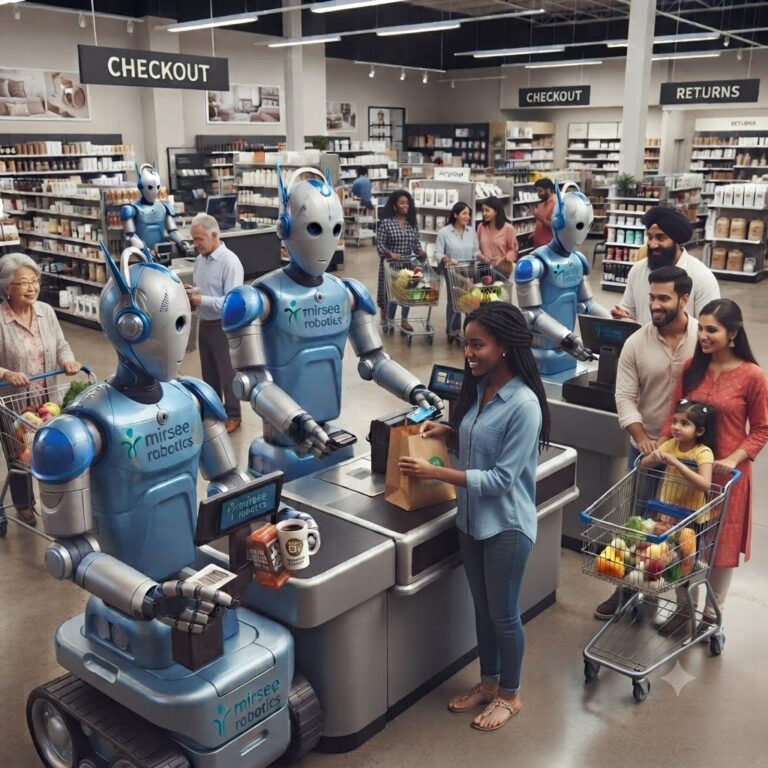
Walking remains one of the hardest problems in robotics. Bipedal humanoid robots require advanced balancing systems, multiple joints, and continuous real-time corrections to stay stable. These challenges increase cost, energy consumption, and long-term maintenance requirements.
A wheeled platform removes many of these limitations. By replacing legs with wheels, Mirsee Robotics improves stability, extends operating time, and reduces mechanical wear. This allows faster movement across flat industrial floors while maintaining precision and reliability.
As a result, businesses can adopt humanoid robotics without the high costs associated with complex walking systems.
Third-Generation AI Improves Robot Intelligence
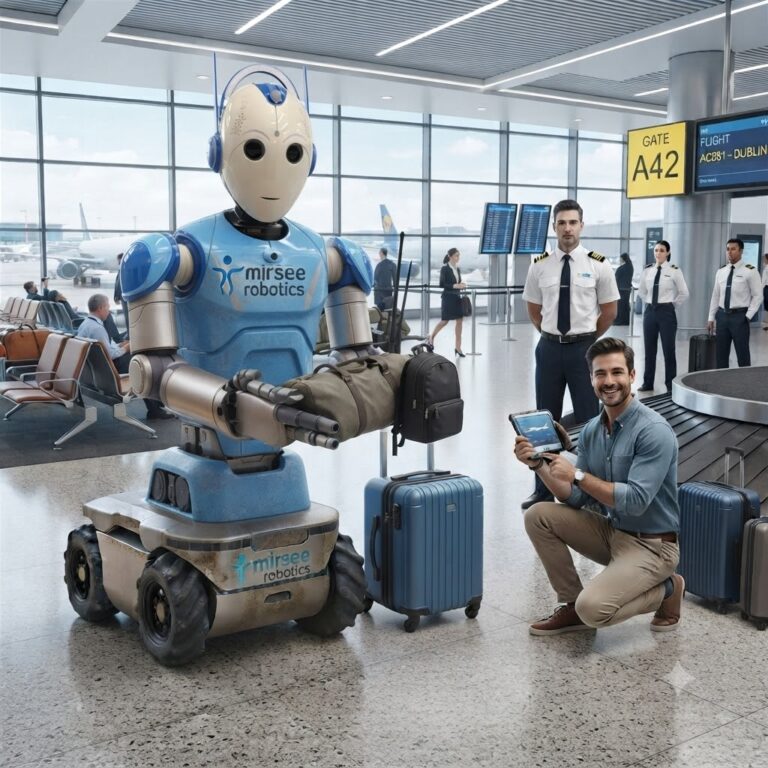
The third-generation platform developed by Mirsee Robotics integrates artificial intelligence with advanced perception systems. Using cameras, depth sensors, and machine learning models, the robot can identify objects, map environments, and make real-time decisions.
Instead of following fixed instructions, the system adapts dynamically to changing surroundings. It can avoid obstacles, adjust movement paths, and perform tasks with increasing autonomy.
As AI models continue to evolve, this type of robotics system is expected to become more capable of working safely alongside human employees in real industrial environments.
Built for Industrial Automation
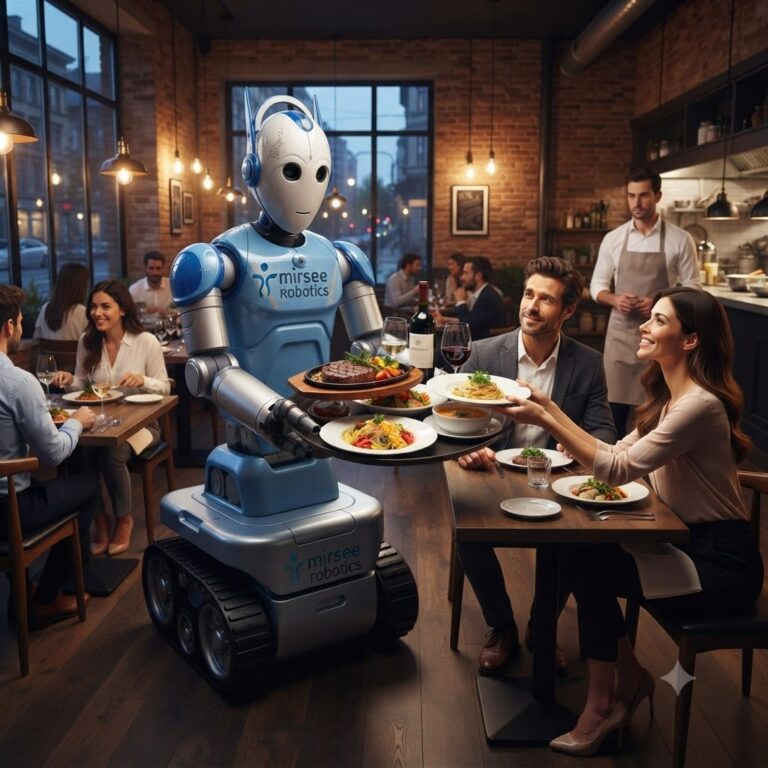
Unlike experimental robots designed only for demonstrations, Mirsee Robotics focuses on practical deployment. The humanoid robot on wheels is designed for warehouse logistics, manufacturing operations, inventory movement, material handling, inspection, and repetitive industrial tasks.
Because it combines human-like manipulation with stable mobility, the system can operate within existing facilities without requiring major infrastructure changes. This significantly reduces deployment barriers for companies adopting automation technologies.
Lower Costs Improve Commercial Scalability
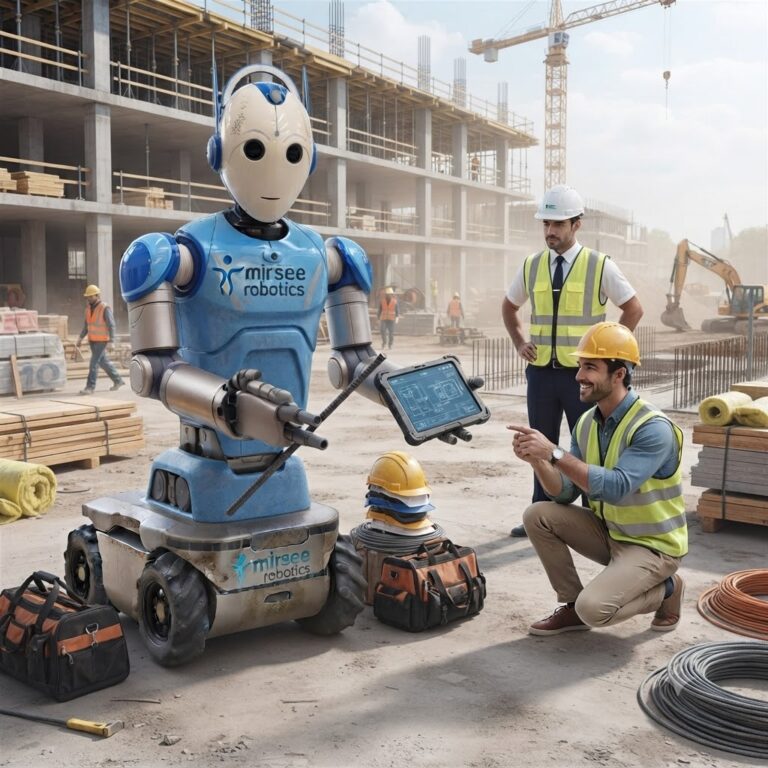
One of the biggest challenges in humanoid robotics is cost. Traditional legged robots require expensive actuators, complex control systems, and ongoing maintenance.
The wheeled architecture used by Mirsee Robotics simplifies this design. By reducing mechanical complexity, the system improves reliability and lowers maintenance costs. These advantages make large-scale commercial deployment more realistic as demand for automation continues to rise.
Competing Through Practical Engineering
Many robotics companies around the world are pursuing humanoid robots that closely mimic human walking. In contrast, Mirsee Robotics prioritizes efficiency, stability, and real-world usability over biological imitation.
In industrial environments such as warehouses and distribution centers, wheels often outperform legs. They allow faster movement, lower energy consumption, and fewer mechanical failures, especially on flat surfaces designed for human workers.
AI Is Accelerating Robotics Innovation
Artificial intelligence is rapidly transforming the robotics industry. Modern AI systems now enable machines to recognize objects, understand environments, and plan actions with increasing accuracy.
As AI infrastructure expands globally, robotics companies gain access to more powerful models that improve perception, reasoning, and autonomous decision-making. This progress is expected to significantly expand the capabilities of intelligent robots across multiple industries.

Canada’s Robotics Ecosystem Continues to Grow
Canada has become a strong player in artificial intelligence and robotics innovation. A growing number of startups are developing advanced automation systems aimed at solving real industrial challenges.
Companies like Mirsee Robotics reflect this trend by focusing on practical engineering solutions rather than purely experimental designs. The emphasis is on reliability, efficiency, and scalable deployment in real business environments.
The Future of Humanoid Robotics
The future of humanoid robotics is expected to include multiple design approaches rather than a single standard. While walking humanoids remain important for certain applications, wheeled humanoid robots offer strong advantages in industrial environments where stability and productivity are essential.
As artificial intelligence, autonomous navigation, and industrial automation continue to advance, humanoid robots are likely to play a larger role across global industries. Mirsee Robotics’ third-generation platform reflects this shift toward practical, commercially viable robotics focused on real-world performance.
This approach highlights how humanoid robots on wheels represent a functional evolution in robotics engineering by combining stability, intelligence, and adaptability. Instead of replicating human movement, the focus is on efficiency and usability in industrial environments.
At the same time, the rise of Chinese mass-produced humanoid robots is intensifying global competition, accelerating innovation, and pushing robotics companies worldwide to develop more cost-efficient and scalable automation systems.