
Stay Updated
Why Investors Are Rotating From Software to Hardware Stocks in 2026
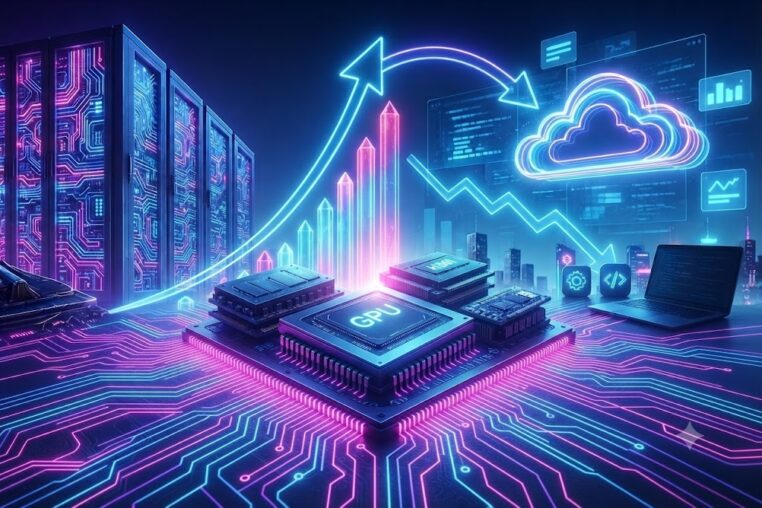
The AI infrastructure boom is changing how investors position themselves in the technology sector. Instead of spreading capital evenly across software and hardware companies, markets are now aggressively rewarding businesses that build the physical backbone of artificial intelligence.
In 2026, investors are rotating money out of many traditional software-driven narratives and into semiconductor manufacturers, memory chip producers, and AI data center suppliers. This shift reflects a simple reality: AI cannot scale without massive infrastructure first.
As a result, hardware companies are capturing immediate revenue growth, while software firms face delayed monetization timelines.
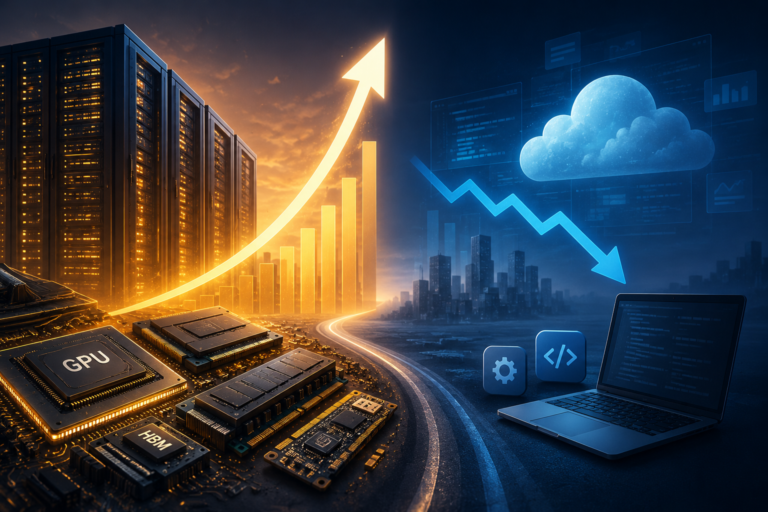
Investors Rotate Toward Semiconductor and AI Hardware Stocks
The strongest trend in the AI infrastructure boom is the rotation into semiconductor and hardware stocks. Investors now prioritize companies that directly benefit from AI buildout spending.
Chipmakers, memory suppliers, and storage companies continue to report surging demand from cloud providers and AI developers. These companies supply the essential components that power AI training and inference workloads.
Instead of waiting for long-term software adoption cycles, investors now prefer companies that already show real-time demand spikes from AI infrastructure expansion.
This shift has created one of the most aggressive sector rotations in recent years.
Memory Chipmakers Lead the AI Hardware Rally
Memory has become one of the most important bottlenecks in the AI infrastructure boom. Modern AI models require massive high-bandwidth memory (HBM) and ultra-fast storage systems to process large datasets efficiently.
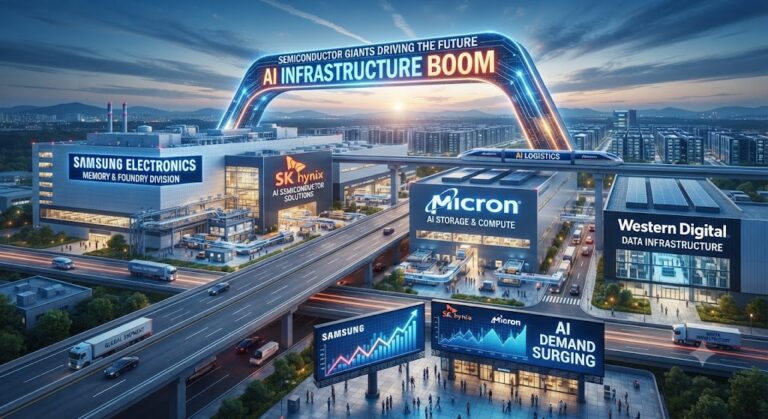
Companies such as Samsung Electronics, SK Hynix, and Micron Technology have benefited directly from this surge in demand. These firms supply critical memory components that AI data centers cannot function without.
At the same time, storage providers like Western Digital also gain attention as AI systems generate unprecedented volumes of data that require long-term storage and fast retrieval systems.
As demand outpaces supply, memory prices strengthen, and investors aggressively bid up semiconductor valuations.
Why Software Stocks Are Underperforming the Rotation
While AI software remains essential to long-term innovation, it has not led the current phase of the market cycle. Investors now question the near-term profitability of many software-driven AI strategies.
Software companies continue to invest heavily in AI development, but these investments require significant upfront capital. Cloud infrastructure, GPUs, and energy costs increase spending before revenue fully materializes.
As a result, investors focus more on companies with immediate earnings impact rather than future potential.
Software giants continue launching AI tools, copilots, and automation features, but the market rewards proven monetization rather than long-term promises.
This creates a temporary valuation gap between hardware leaders and software innovators.
AI Infrastructure Boom Follows a Classic Tech Cycle
The AI infrastructure boom follows a pattern seen in previous technology revolutions. In early cycles, infrastructure companies lead growth because they build the foundation required for adoption.
During the early internet era, networking and hardware companies benefited first. Only later did software platforms and digital services dominate returns.
AI appears to follow the same structure. First comes infrastructure expansion, then mass software monetization.
This explains why semiconductor companies currently outperform software firms in the market cycle.
Data Centers Drive the Core of AI Growth
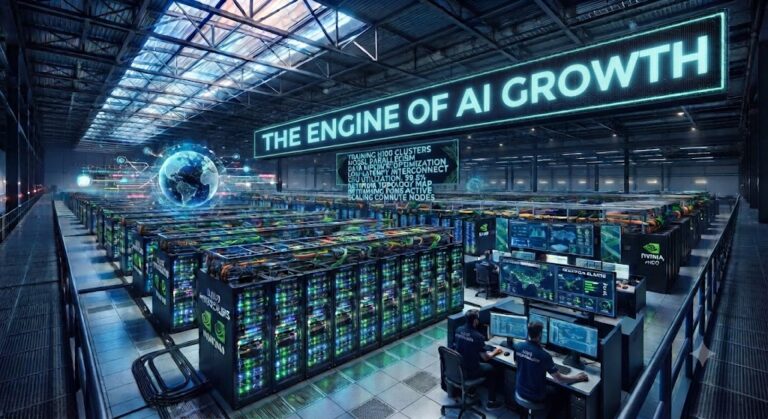
Data centers sit at the center of the AI infrastructure boom. Cloud providers and technology giants continue investing billions of dollars into expanding AI compute capacity.
Each new AI data center requires a complex ecosystem of GPUs, memory chips, storage systems, networking hardware, cooling technology, and energy infrastructure.
This creates a multi-layered supply chain where dozens of semiconductor and hardware companies benefit simultaneously.
As AI models grow larger, data center requirements increase exponentially, further strengthening hardware demand.
The Gap Between Hardware Growth and Software Monetization
The AI infrastructure boom highlights a growing gap between hardware growth and software monetization.
Hardware companies generate revenue immediately through direct infrastructure sales. Software companies, however, often depend on gradual adoption of AI-powered services.
This mismatch creates short-term investor preference for hardware over software.
However, this gap may not last forever. As AI tools become more widely adopted in enterprise workflows, software monetization could accelerate in later stages of the cycle.
Will Software Eventually Catch Up?
Many analysts believe the current rotation is temporary rather than permanent. Once infrastructure buildout stabilizes, attention may shift back toward software companies that successfully monetize AI at scale.
Enterprise automation, AI agents, productivity tools, and vertical AI applications could become major revenue drivers in the future.
If adoption accelerates, software firms may regain leadership in the next phase of the AI cycle.
For now, however, investors continue prioritizing infrastructure over applications.
What Investors Should Watch Next
The future of the AI infrastructure boom depends on three key factors.
First, semiconductor supply and demand dynamics will determine whether hardware momentum continues.
Second, cloud spending trends will show whether data center expansion maintains its current pace.
Third, software monetization results will reveal whether AI applications can convert usage into sustainable revenue.
Together, these signals will decide whether the market rotation continues or reverses.
AI Infrastructure Boom Defines the Current Market Cycle
The AI infrastructure boom is clearly shaping the 2026 technology market. Investors are rewarding companies that build the physical foundation of artificial intelligence while remaining cautious about software businesses still proving their monetization models.
Semiconductors, memory chipmakers, and data center suppliers currently lead the cycle because they benefit directly from real-world demand.
However, as AI adoption expands globally, both hardware and software will remain essential. The only difference is timing — hardware leads the buildout phase, while software dominates the monetization phase that follows.
For now, the market continues to signal one clear message: AI begins with infrastructure.