

AI Boom or AI Bubble? Why Artificial Intelligence Is Not a Bubble—Yet
Artificial intelligence has become one of the most powerful forces shaping the global economy. Companies are integrating AI into their products, governments are investing heavily in AI initiatives, and investors continue pouring billions of dollars into AI startups and infrastructure. As a result, AI-related stocks and businesses have captured enormous attention across financial markets.
Naturally, this rapid growth has sparked an important debate. Some analysts believe artificial intelligence represents the next major technology revolution, while others warn that excessive optimism could create a speculative bubble. Comparisons to the dot-com boom have become increasingly common as valuations rise and AI dominates headlines.
However, despite the excitement, the current AI surge looks fundamentally different from many technology bubbles of the past. Real-world adoption, growing enterprise demand, substantial revenue generation, and massive infrastructure investments are supporting the industry’s expansion. While risks certainly exist, the evidence suggests that artificial intelligence is experiencing a powerful growth cycle rather than a full-scale speculative bubble.
Real-World Adoption Is Driving AI Growth
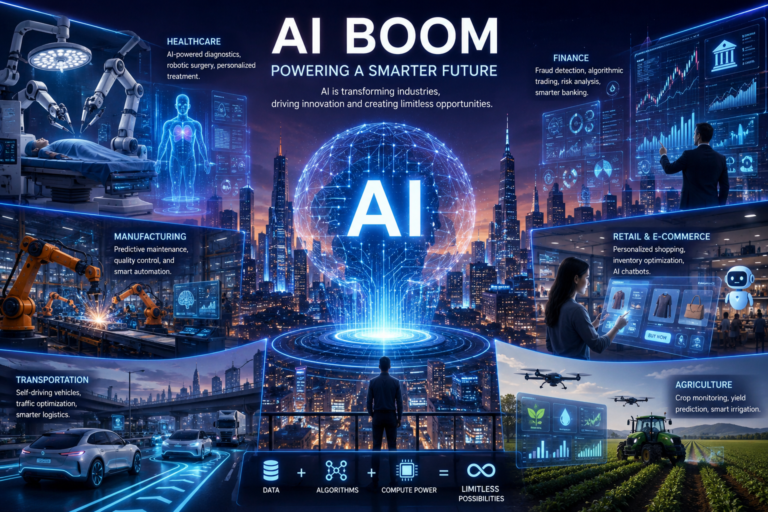
One of the strongest arguments against the AI bubble narrative is the widespread adoption of AI across multiple industries. Businesses are not investing in artificial intelligence simply because it is a popular trend. Instead, they are using it to solve real problems, reduce costs, and improve efficiency.
In healthcare, AI helps doctors analyze medical images, identify diseases earlier, and improve patient care. Hospitals increasingly rely on AI-powered systems to support diagnosis and streamline operations. Meanwhile, robotic-assisted surgical technologies continue advancing, allowing medical professionals to perform complex procedures with greater precision.
The financial sector has also embraced AI. Banks use machine learning models to detect fraud, assess risk, automate compliance tasks, and enhance customer service. These capabilities help financial institutions improve efficiency while reducing operational costs.
Similarly, retailers and e-commerce companies use AI to personalize shopping experiences, optimize inventory management, and provide customer support through intelligent chatbots. Recommendation engines analyze consumer behavior and help businesses increase sales while improving customer satisfaction.
As a result, AI has moved beyond the experimental stage and become a critical business tool. Unlike many past technology trends that relied heavily on future promises, artificial intelligence is already delivering measurable value today.
Big Tech Is Generating Real AI Revenue
Another major difference between the current AI boom and previous market bubbles is that leading technology companies are generating significant revenue from AI-related products and services.
For example, Nvidia has become one of the biggest beneficiaries of the AI revolution. The company’s advanced processors power many of the world’s most sophisticated AI models, creating unprecedented demand for its hardware. As organizations expand their AI capabilities, Nvidia’s data center business continues to experience remarkable growth.
At the same time, Microsoft has integrated AI across its cloud computing platform, productivity software, and enterprise solutions. Businesses increasingly pay for AI-powered services because they automate repetitive tasks, improve productivity, and enhance decision-making.
Likewise, Alphabet continues embedding AI throughout its cloud offerings, search technologies, and enterprise products. Thousands of organizations now depend on Google’s AI tools to support daily operations and innovation efforts.
Most importantly, these companies are generating real revenue rather than relying solely on future expectations. Investors can evaluate AI-related growth through tangible financial results instead of speculative projections alone.
Massive Infrastructure Investments Support Long-Term Growth
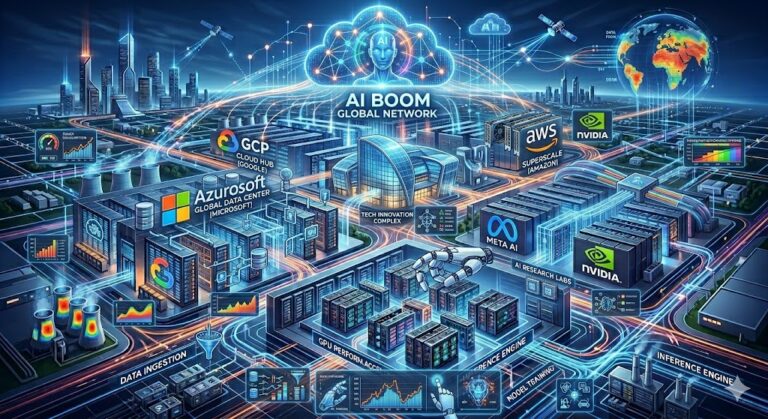
Beyond software applications, organizations are investing heavily in the infrastructure required to support artificial intelligence. This spending represents one of the most significant aspects of the current AI boom.
Technology companies are building new data centers, purchasing advanced semiconductors, expanding networking capacity, and investing in energy resources to meet growing AI demand. These investments provide the computational power necessary to train and deploy increasingly sophisticated AI systems.
Furthermore, governments and large enterprises continue signing long-term agreements for AI infrastructure and cloud services. This demand creates a strong foundation for future growth.
Unlike speculative investments that may disappear during market downturns, AI infrastructure creates tangible assets with long-term value. Even if some AI startups fail, the underlying computing infrastructure can continue supporting future applications and technological innovation.
Governments Are Supporting AI Development
Governments around the world recognize the strategic importance of artificial intelligence and are actively supporting its development.
Policymakers increasingly view AI as a critical technology for economic growth, national security, scientific research, and global competitiveness. Consequently, governments continue investing in AI research programs while developing regulatory frameworks designed to encourage responsible adoption.
In addition, public-sector organizations are deploying AI across defense, cybersecurity, healthcare, transportation, and public administration. These initiatives create additional demand for AI technologies and strengthen the industry’s long-term outlook.
At the same time, regulators are working to address concerns related to transparency, privacy, and safety. While regulations continue evolving, the growing involvement of governments demonstrates that AI has become a long-term strategic priority rather than a short-term technology trend.
Michael Burry and the Growing Cost Debate
Despite the strong fundamentals supporting artificial intelligence, some investors remain cautious. Among the most prominent critics is investor Michael Burry, who has repeatedly warned that excessive spending on AI infrastructure could create problems if future returns fail to meet expectations.
Burry’s concerns focus less on AI’s usefulness and more on the massive capital expenditures flowing into the sector. Technology companies are committing hundreds of billions of dollars to data centers, chips, cloud platforms, and supporting infrastructure. Eventually, these investments must generate sufficient revenue and profits to justify their costs.
His warnings have gained attention because AI infrastructure spending continues accelerating. Major technology firms are allocating unprecedented amounts of capital toward expanding computing capacity, and investors are increasingly watching whether revenue growth can keep pace with those expenditures.
Although Burry’s concerns do not necessarily indicate a bubble, they highlight an important risk that investors should monitor closely.
Rising Infrastructure Costs Are Becoming a Key Question
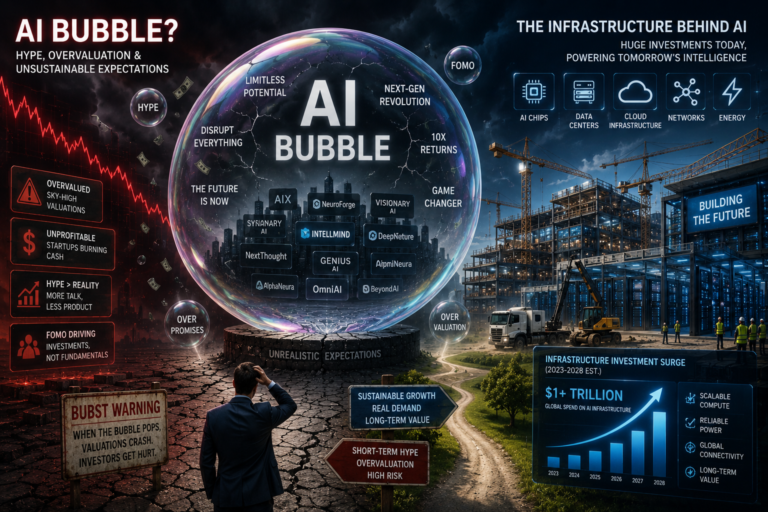
The AI industry’s rapid expansion has also sparked debate about infrastructure economics. Training and operating advanced AI models requires enormous amounts of computing power, energy, and networking resources.
Consequently, the cost of building and maintaining AI infrastructure continues rising. Data center construction, semiconductor production, electricity consumption, and cloud computing expenses all contribute to growing operational costs.
Supporters argue that these investments are necessary because demand for AI services continues increasing across industries. Critics, however, question whether infrastructure expansion could eventually outpace actual demand.
For now, demand remains strong. Nevertheless, investors are increasingly focused on whether AI companies can maintain profitability while continuing to invest heavily in infrastructure.

Competition Is Strengthening the AI Ecosystem
Another sign that the AI market is maturing rather than entering a speculative frenzy is the increasing competition among AI providers.
While OpenAI remains a major force in the industry, businesses are also adopting alternative models from companies such as Anthropic, Google, Meta, and numerous emerging AI startups. Organizations are evaluating multiple AI solutions based on performance, reliability, security, and cost-effectiveness.
Microsoft’s AI strategy reflects this trend. Although Microsoft maintains a close relationship with OpenAI, it has also broadened its AI ecosystem by supporting access to multiple models, including Anthropic’s Claude. Rather than depending on a single provider, enterprises increasingly want flexibility and choice.
As competition intensifies, AI companies must improve efficiency, reduce costs, and deliver stronger business value. This competitive environment benefits customers and encourages sustainable industry growth.
Healthy Skepticism Is a Positive Sign
Importantly, today’s AI market includes substantial debate and scrutiny. Investors, analysts, and industry leaders regularly discuss valuations, profitability, infrastructure costs, and long-term business models.
This skepticism actually strengthens the market. During true speculative bubbles, investors often ignore risks and focus exclusively on future gains. In contrast, the current AI landscape features ongoing discussions about execution, revenue generation, and return on investment.
Because market participants continue questioning assumptions and analyzing fundamentals, the industry appears more disciplined than many historical bubbles.
Warning Signs Investors Should Watch
Although artificial intelligence does not currently exhibit the characteristics of a classic bubble, investors should still monitor several warning signs.
First, some AI startups continue raising large amounts of capital despite limited revenue. If funding becomes disconnected from business fundamentals, valuations could become increasingly vulnerable.
Second, marketing hype could eventually exceed real-world adoption. Companies must continue demonstrating measurable customer value rather than relying solely on AI branding.
Third, infrastructure expansion could outpace demand. If organizations build significantly more computing capacity than the market requires, returns on investment may come under pressure.
While these risks deserve attention, they remain concerns to watch rather than evidence of an existing bubble.
Final Verdict: AI Boom, Not Bubble
Artificial intelligence is driving one of the most significant technology transformations in modern history. More importantly, the industry’s growth rests on widespread adoption, real revenue generation, strong enterprise demand, government support, and unprecedented infrastructure investment.
At the same time, critics such as Michael Burry continue raising legitimate questions about costs, profitability, and long-term returns. Investors should not ignore these concerns, especially as technology companies spend hundreds of billions of dollars expanding AI infrastructure.
Nevertheless, the biggest question today is no longer whether AI creates value. Businesses across healthcare, finance, retail, manufacturing, and countless other industries are already proving that it does.
For now, the evidence points toward an AI boom rather than an AI bubble. As long as adoption, revenue, and infrastructure utilization continue growing together, artificial intelligence appears positioned to remain one of the defining growth stories of the decade.