
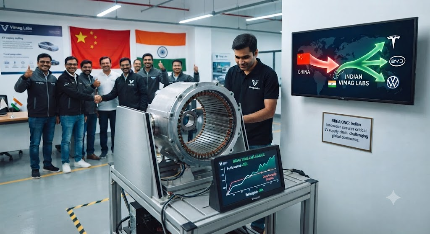
How Vimag Labs Is Single-Handedly Breaking China’s Chokehold On The EV Industry
The global race for a Rare Earth Free Motor is accelerating as countries search for alternatives to traditional electric motor technologies and reduce dependence on critical materials. For years, powerful permanent magnets made from materials such as neodymium have played a critical role in electric vehicles, robotics, wind turbines, and industrial machines. However, growing concerns around supply chain security have pushed manufacturers to explore new technologies that reduce dependence on rare-earth materials.
Against this backdrop, Indian deep-tech startup Vimag Labs is developing a breakthrough solution: a magnet free EV motor that removes the need for permanent rare-earth magnets. The company’s Vimag Labs Virtual Magnet technology introduces a new approach to electric motor design by replacing physical magnets with electronically generated magnetic fields.
As a result, the innovation places Vimag Labs among the emerging deep tech startups India is producing, with the potential to impact electric mobility, manufacturing, automation, and renewable energy industries.
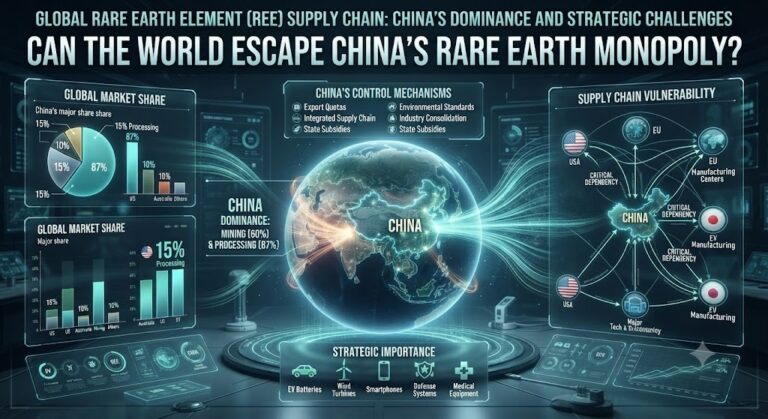
China’s Rare-Earth Dominance Creates Demand for Alternative Motors
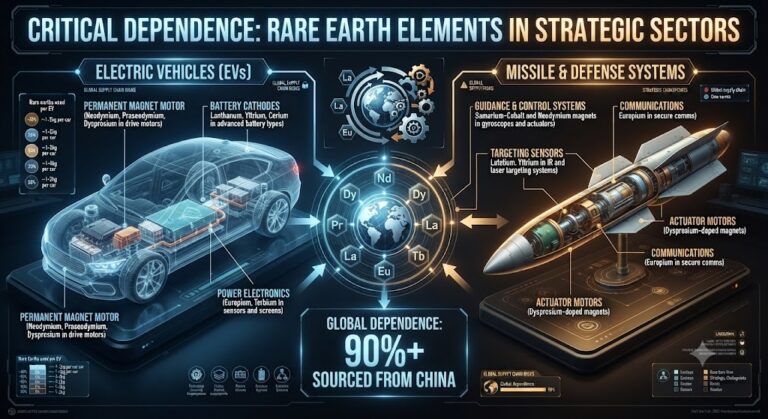
Rare-earth elements have become strategically important because they power many technologies behind the clean-energy transition. In particular, permanent magnets are widely used in high-performance electric motors because they provide strong magnetic fields while keeping motors compact and efficient.
However, global manufacturers remain concerned about supply chain concentration. China plays a dominant role in rare-earth mining, processing, and magnet manufacturing, creating challenges for companies that depend on these materials.
Therefore, the demand for a rare earth free motor has increased. Automakers, industrial companies, and governments are investing in technologies that can reduce dependence on traditional permanent magnets.
This is where Vimag Labs’ technology becomes significant. Instead of relying on imported rare-earth magnets, the company is creating a new motor architecture that generates magnetic fields electronically.
What Is the Vimag Labs Virtual Magnet Technology?
Traditional permanent magnet motors use magnets permanently installed inside the rotor. These magnets create the magnetic field needed to generate movement and torque.
By comparison, the Vimag Labs Virtual Magnet approach works differently. The company has developed a wirelessly excited synchronous motor that creates the magnetic field through controlled electrical excitation rather than permanent magnets.
Furthermore, the system transfers energy wirelessly to the rotor through a rotating transformer design. Advanced software and power electronics then control the magnetic field based on operating conditions.
Because of this, the motor can dynamically adjust performance depending on whether it needs more power, improved efficiency, or better thermal management.
In simple terms, Vimag Labs has replaced a physical magnet with a software-controlled magnetic system.
A New Opportunity for Electric Vehicle Startups in India
India’s electric vehicle market is expanding rapidly. At the same time, manufacturers continue to face challenges related to imported components and supply chain reliability.
More importantly, a magnet free electric motor for EV applications could provide Indian automakers with a new option for building electric cars, motorcycles, buses, and commercial vehicles.
As a result, this innovation positions Vimag Labs among the promising electric vehicle startups India has produced, especially because the company focuses on solving a fundamental engineering challenge rather than creating another consumer application.
Unlike traditional EV startups, Vimag Labs is targeting the core technology that powers electric mobility: the motor.
Ultimately, a locally developed rare-earth-free motor platform could help Indian manufacturers improve supply chain independence while creating opportunities for global exports.
Beyond EVs: Industrial Applications of the Magnet-Free Motor
Although electric vehicles represent the most visible market, the potential applications extend far beyond transportation.
Industrial facilities worldwide rely on electric motors for manufacturing equipment, pumps, compressors, robotics, and automation systems. Therefore, improving motor efficiency can create major cost savings and reduce energy consumption.
The Vimag Labs motor technology could potentially support:
-
Factory automation systems
-
Industrial robots
-
Renewable energy equipment
-
Mining machinery
-
Cooling systems
-
Pumps and compressors
-
Heavy industrial equipment
For example, factories could use intelligent motors that adjust performance automatically based on production requirements. Similarly, robotics companies could benefit from motors that provide precise control without depending on rare-earth materials.
Vimag Labs Funding and Investor Interest
Deep-tech innovation requires significant investment because hardware development, testing, and manufacturing require more time and capital compared with software startups.
Meanwhile, investor interest increased as Vimag Labs funding attracted attention from India’s technology ecosystem. The company raised a $5 million Accel Series A India 2026 funding round, providing resources to expand engineering capabilities, accelerate development, and move closer to commercial production.
Furthermore, the investment reflects a broader shift in venture capital. Investors are increasingly looking beyond traditional internet businesses and supporting companies developing advanced technologies in electric mobility, artificial intelligence, semiconductors, and industrial automation.
Jendamark Partnership and Commercial Expansion
In addition to funding, strategic partnerships will play an important role in transforming laboratory technology into commercial products.
The Jendamark Vimag Labs MOU represents an important step toward industrial collaboration and manufacturing development. Through partnerships like this, Vimag Labs can accelerate testing, production capabilities, and adoption across automotive and industrial markets.
For hardware startups, working with established manufacturing partners can significantly reduce the challenges involved in scaling new technology.
Why Vimag Labs Could Become a Major Indian Deep-Tech Story
The rise of Vimag Labs represents a larger transformation happening across India’s startup ecosystem. Today, the country is increasingly producing companies focused on advanced engineering, industrial innovation, and global technology challenges.
From artificial intelligence to semiconductor manufacturing and electric mobility, Indian startups are moving into areas traditionally dominated by international corporations.
If Vimag Labs successfully commercializes its technology, its rare earth free motor could become an important alternative for industries seeking more reliable and sustainable motor solutions.
Overall, the company’s Virtual Magnet wirelessly excited synchronous motor demonstrates how software, electronics, and engineering can combine to solve one of the biggest challenges in modern transportation and industry.
As the world moves toward electrification, technologies like Vimag Labs’ magnet free EV motor could play a key role in creating a more resilient and sustainable future for electric vehicles and industrial automation.