

MiCoB 3D Printed Houses: India’s Startup Is Reinventing Construction
MiCoB 3D printed houses are putting a futuristic idea into the real world: using robotic machines to build concrete structures layer by layer. The Indian startup, founded by researchers from IIT Gandhinagar, is developing construction technology that could change how homes, infrastructure and specialized buildings are built.
Instead of relying entirely on traditional construction methods, MiCoB combines 3D concrete printing, automation, specially developed concrete materials and digital construction processes. The company says it has already delivered more than 650 3D-printed structures across 13 Indian states, showing that its technology has moved beyond the laboratory.
How MiCoB 3D Printed Houses Work
The concept sounds simple, but the technology behind it is highly specialized.
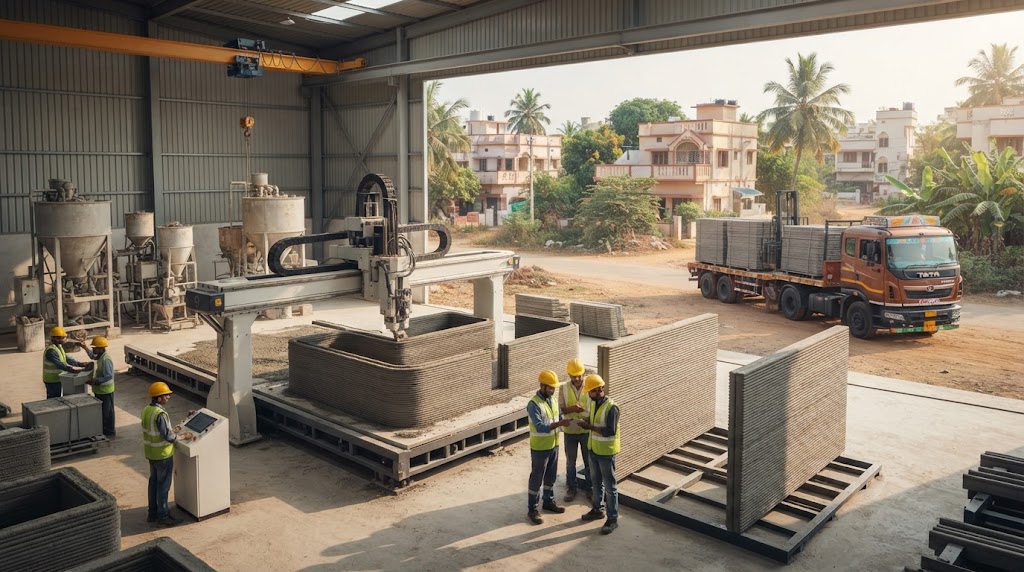
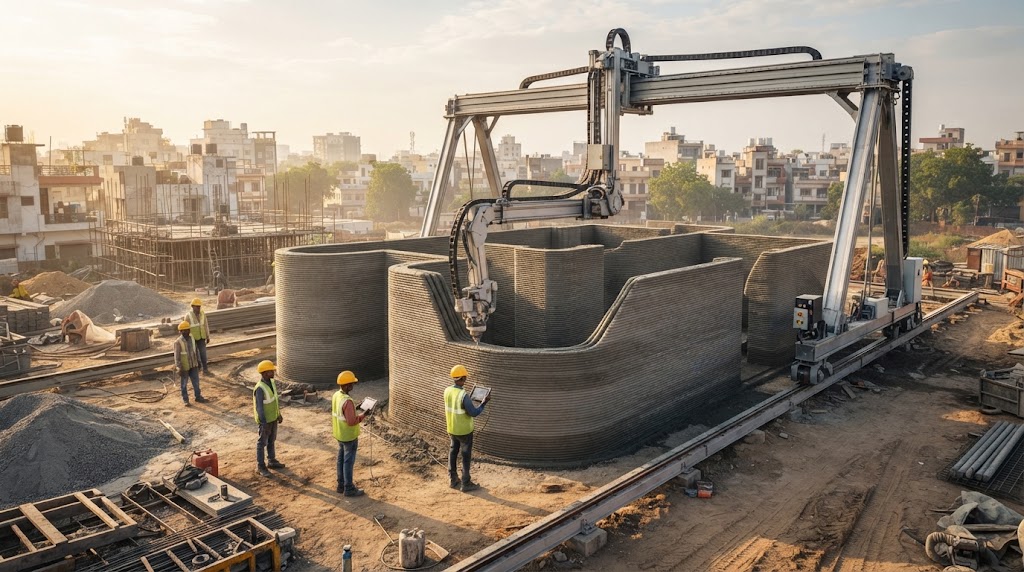
MiCoB uses a robotic 3D concrete printer that deposits concrete in controlled layers according to a digital design. The printer can create walls and other structural elements without requiring conventional formwork for every shape.
That matters because traditional construction can require significant manual work, temporary molds, multiple construction stages and considerable coordination between different teams.
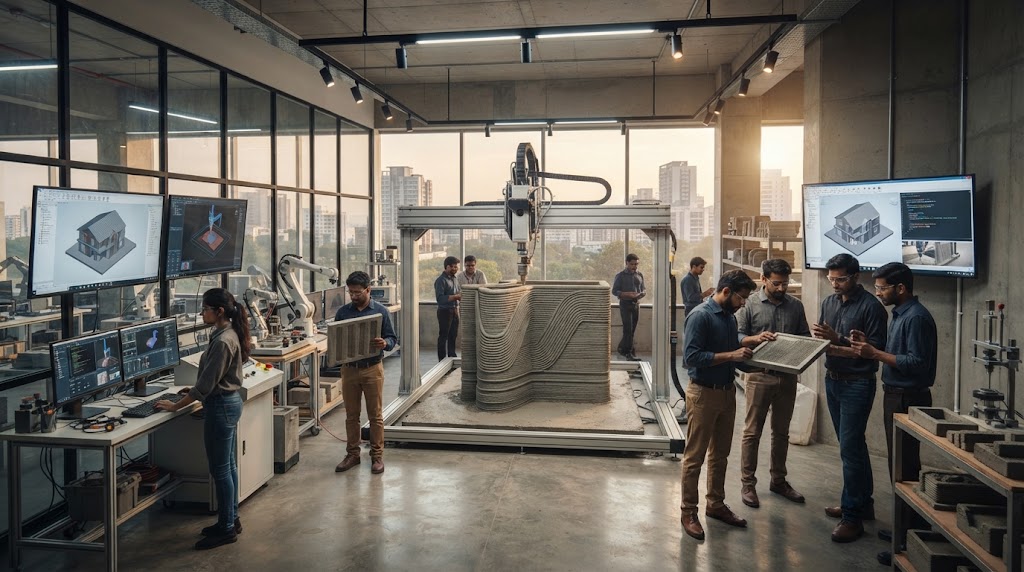
With 3D concrete printing, the digital design can guide the machine as it creates the structure. MiCoB describes its technology as combining robotics, material processing, automation, software and construction engineering.
India’s Construction Industry Could Be a Huge Opportunity
India needs enormous amounts of housing and infrastructure as its cities expand and demand for new buildings increases.
At the same time, construction companies face familiar challenges, including project delays, labor requirements, material waste and inconsistent execution. India’s Department of Science and Technology previously described MiCoB’s technology as targeting faster, economical and quality-compliant construction.
That creates an interesting opportunity for 3D printed homes in India.
Rather than replacing every construction worker overnight, the technology could automate specific parts of the building process while allowing engineers and construction teams to focus on design, reinforcement, finishing, utilities and other tasks.
MiCoB Is Already Working Beyond Houses
Interestingly, residential construction is only one part of the MiCoB story.
The startup has developed solutions for defence, infrastructure, hospitality and construction. Its website says it has delivered more than 500 impact- and blast-resistant 3D-printed bunkers to the Indian Army, including deployments in difficult terrain ranging from mountains to deserts.
That experience could be important because specialized defence structures can require rapid deployment and consistent construction quality.
MiCoB’s technology has also attracted attention from India’s government innovation ecosystem. The Department of Science and Technology identified the company as a startup working on rapid and economical housing through automated 3D concrete printing.
From IIT Gandhinagar Research to Deep-Tech Startup
MiCoB was founded in 2018 by Dr. Shashank Shekhar, Dr. Ankita Sinha and Rishabh Mathur, with roots at IIT Gandhinagar. The founders combined expertise in civil engineering, 3D concrete printing, robotics, mechanical systems, thermal engineering and automation.
The company did not start by simply buying an off-the-shelf construction printer. According to India’s Department of Science and Technology, MiCoB developed its own 3D concrete printers, printing material and software package.
That vertical integration could become important as the construction industry moves toward digital manufacturing.

MiCoB Secures $3.1 Million as Adani Backs India’s 3D-Printed Construction Revolution
Recently, MiCoB secured a ₹30 crore (about $3.1 million) investment commitment through Gautam Adani’s Vande Bharatam initiative, marking a significant step for the Indian construction-tech startup as it expands its 3D concrete-printing technology. The investment commitment was jointly offered by Flipkart CEO Kalyan Krishnamurthy and RENÉE Cosmetics co-founder Ashutosh Valani, providing MiCoB with potential capital to scale its digital construction manufacturing platform and accelerate the development of new projects. Separately, Karan Adani offered procurement support for MiCoB’s ongoing and future construction projects. That support could give the startup opportunities to deploy its robotic 3D printing systems, prefabricated concrete panels and digital construction technology across projects connected to the Adani Group. For MiCoB, the combination of fresh investment interest and potential industry procurement support could help move its technology from specialized projects toward larger-scale construction applications in India.
Could 3D Printed Homes Become Mainstream?
The biggest question is scalability.
A technology can successfully print a prototype or specialized structure without becoming a mass-market replacement for conventional construction. Building codes, structural engineering, reinforcement, plumbing, electrical systems, transportation, site preparation, finishing and local regulations still matter.
MiCoB itself currently describes its premium living offering for villas and bungalows as “coming soon,” while offering project discussions for 3D-printed houses and construction systems.
Therefore, it would be premature to describe MiCoB as delivering fully finished homes everywhere in India. The more accurate description is that the company is building the technology and construction ecosystem needed to make 3D concrete construction commercially useful.
The Bigger Future of Construction
The exciting part is what happens when robotics, digital design, automated material handling and construction converge.
A future construction site could look very different from today’s building site. Instead of dozens of workers manually constructing every wall, automated machines could produce precisely designed structural components while human teams handle engineering, installation, reinforcement and finishing.
MiCoB’s technology points toward that future.
The startup says its broader goal is to make construction faster, higher quality and more sustainable. It has also filed multiple patent applications covering its 3D concrete printing technology and related systems.
For India, the opportunity is particularly significant. If 3D concrete printing can reduce construction time, control material use and operate effectively in challenging environments, it could eventually support everything from affordable housing and villas to military bunkers, infrastructure and remote construction projects.
MiCoB 3D printed houses therefore represent more than an unusual way to build a home. They are part of a much larger shift toward robotic construction and digital manufacturing, where buildings could increasingly be produced with the precision of a factory.
And if that technology scales, the construction site of the future may look less like a traditional building project—and more like a giant 3D printer building a house in real time.