
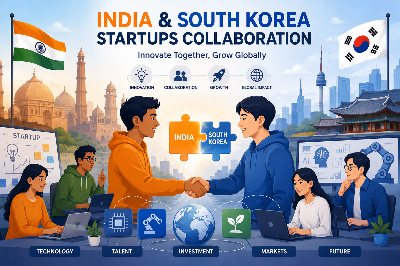
Korea–India Startup Ecosystem: Building a Global Innovation Bridge
The Korea India startup ecosystem is rapidly emerging as one of Asia’s most powerful innovation partnerships. By combining their unique strengths, South Korea and India are creating new opportunities for startups, investors, and technology companies to grow across global markets.
India contributes scale, world-class talent, and a fast-growing digital economy. At the same time, South Korea provides deep technology expertise, advanced manufacturing capabilities, and strong innovation infrastructure. Together, the Korea India startup ecosystem helps companies accelerate growth, attract investment, and expand internationally more effectively.
Recent Korea–India Venture Investment Meet-up
A major milestone in this growing partnership took place in Bengaluru, India, where South Korea’s Ministry of SMEs and Startups, along with the Korea Venture Investment Corporation and the Korea Venture Capital Association, hosted the “Korea–India Venture Investment Meet-up.”
The event focused on accelerating overseas expansion for Korean startups, particularly into India, while also strengthening collaboration between the venture capital ecosystems of both countries.
Around 30 officials and venture capital representatives from Korea and India participated in the meet-up. Investors, startup ecosystem leaders, and policy representatives from both sides actively engaged in discussions.
During the event, the Korea Venture Capital Association (KVCA) and the Indian Venture and Alternate Capital Association (IVCA) signed a Memorandum of Understanding (MOU). This agreement formally connects both countries’ investment ecosystems and strengthens cross-border collaboration.
In addition, Korean officials presented their mother fund system and global fund structure, both designed to support startup investment and facilitate international expansion.
The program also featured presentations from leading Indian venture capital firms. Participants exchanged insights on current market conditions and explored deeper cooperation opportunities for the future.
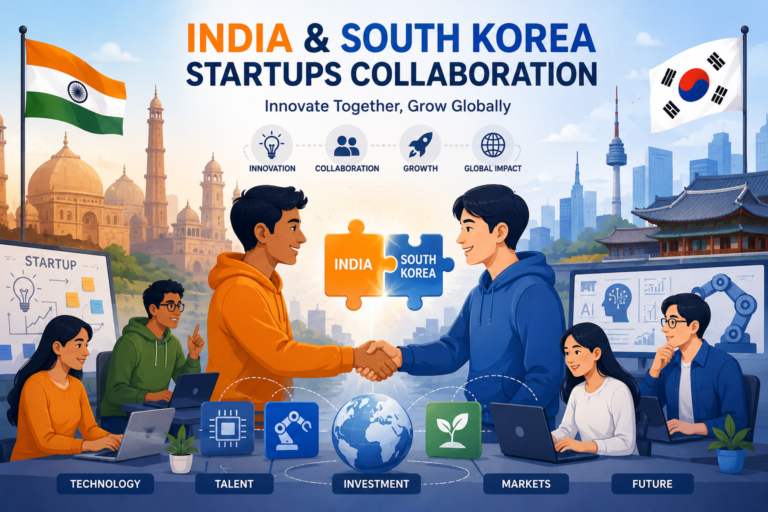
Why India Matters for Korean Startups
India has emerged as one of the most attractive startup markets globally, and for good reason.
It offers:
- A massive and rapidly growing population
- A strong digital economy supported by mobile-first adoption
- A deep pool of engineering and software talent
- A fast-expanding startup funding ecosystem
As of last year, India’s venture investment market stood at approximately $990 million, reflecting strong investor confidence and sustained growth.
Because of this, Korean startups increasingly view India as a strategic destination. Specifically, India offers:
- A large customer base for rapid product scaling
- Strong opportunities in fintech, AI, and SaaS sectors
- A well-established IT outsourcing ecosystem
- Lower-cost expansion compared to Western markets
As a result, India continues to position itself as a key global growth hub.
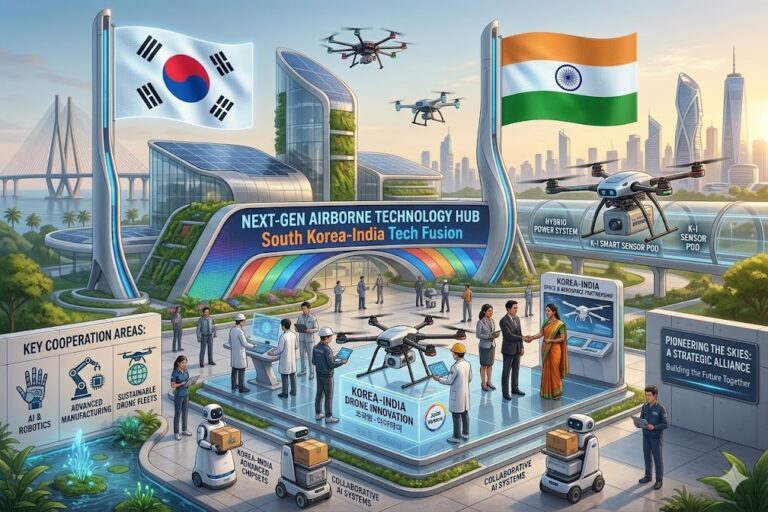
India’s Startup Ecosystem: Scale and Digital Acceleration
India has quickly developed into one of the fastest-growing startup ecosystems in the world. It stands out for its ability to scale digital products at exceptional speed.
Several key strengths drive this growth:
India benefits from a massive internet user base. It also produces a large number of skilled software engineers. At the same time, digital payments and fintech adoption continue to expand rapidly. Moreover, AI and deep tech ecosystems are gaining momentum, supported by strong government initiatives.
Indian startups particularly excel in:
- Fintech, including digital banking, payments, and lending
- SaaS platforms serving global enterprises
- AI and data analytics solutions
- E-commerce and logistics innovation
- Healthtech and edtech platforms
Importantly, India does not only innovate—it also adopts technology quickly, which significantly accelerates startup growth.
South Korea’s Startup Ecosystem: Deep Technology Leadership
In contrast, South Korea operates a smaller but highly advanced startup ecosystem. It focuses heavily on deep technology and industrial innovation.
Key strengths include:
The government actively supports innovation programs. Korea also maintains a strong export-driven manufacturing economy. In addition, global giants such as Samsung, LG, and SK provide strong industrial linkages. Furthermore, Korea invests heavily in robotics, semiconductors, and AI hardware. Finally, its research universities produce highly skilled engineering talent.
Korean startups primarily build technologies designed for global industrial applications, including manufacturing, healthcare, mobility, and digital infrastructure.
Latest Technologies in Korean Startups
South Korea continues to lead innovation across several cutting-edge sectors.
Artificial Intelligence (AI)
Korean startups actively develop AI chips for high-speed computing. They also build enterprise automation tools, advanced language and image processing models, and AI systems designed for industrial applications.
Semiconductors and Advanced Hardware
Korea remains a global leader in semiconductor technology. Startups focus on AI-optimized processors, high-performance memory chips, and energy-efficient chip architectures.
Robotics and Automation
Robotics plays a major role in Korea’s innovation ecosystem. Companies develop industrial robots, logistics automation systems, service robots for healthcare and hospitality, and early-stage humanoid robotics.
Mobility and EV Technology
Korean startups advance electric vehicle batteries, autonomous driving systems, hydrogen energy solutions, and smart transportation platforms.
Gaming and Digital Content
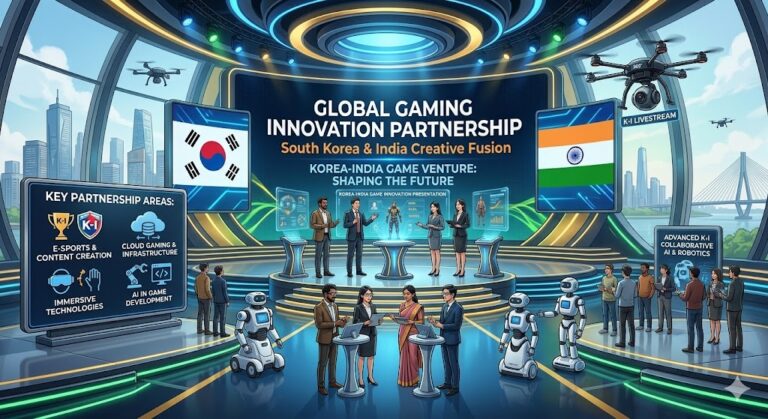
Korea also leads in digital entertainment. Startups build next-generation gaming platforms, AR/VR technologies, AI-powered content tools, and globally competitive gaming ecosystems.
Why Korea and India Complement Each Other
The partnership works effectively because both ecosystems fill each other’s gaps.
India provides:
- Large-scale markets
- Strong software development capabilities
- Rapid user adoption
- Cost-efficient innovation environments
Korea contributes:
- Advanced hardware and semiconductor technologies
- Robotics and manufacturing expertise
- Deep-tech research capabilities
- Strong industrial innovation systems
Together, they create a complete innovation pipeline:
India develops scalable software and digital platforms, while Korea builds advanced hardware and industrial systems that power them.
Venture Capital Cooperation
Venture capital plays a central role in strengthening this partnership.
Through initiatives like the Bengaluru meet-up, both countries now actively work to:
- Increase co-investment in startups
- Improve cross-border market entry support
- Share ecosystem insights and data
- Expand investor networks between regions
The MOU between KVCA (Korea) and IVCA (India) formalizes this cooperation. It also helps investors better understand each other’s markets and reduces friction in cross-border investments.
Startup Expansion Opportunities
This growing partnership opens up significant expansion pathways for startups in both countries.
Indian startups entering Korea:
- AI and SaaS companies targeting enterprise markets
- Fintech platforms integrating with Korean digital banking systems
- Software service providers collaborating with Korean industries
Korean startups entering India:
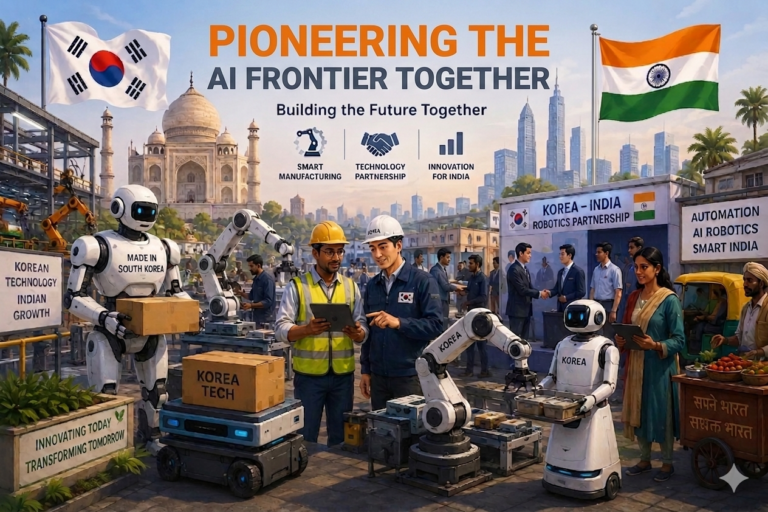
- Robotics companies entering manufacturing and logistics sectors
- Semiconductor and AI hardware firms partnering with Indian tech companies
- Consumer technology startups scaling into India’s large market
Final Take
The Korea–India startup ecosystem is rapidly evolving into a strong global innovation bridge. The recent venture investment meet-up in Bengaluru highlights the increasing commitment from both nations to deepen collaboration.
India provides scale, speed, and digital-first growth. Korea delivers deep technology, robotics, semiconductors, and advanced manufacturing. Together, they form a complete innovation ecosystem that enables startups to build, test, and scale globally.
As venture capital cooperation expands and cross-border innovation strengthens, both countries are shaping a future where startups grow beyond borders and emerge as global companies from the very beginning.