
Stay Updated
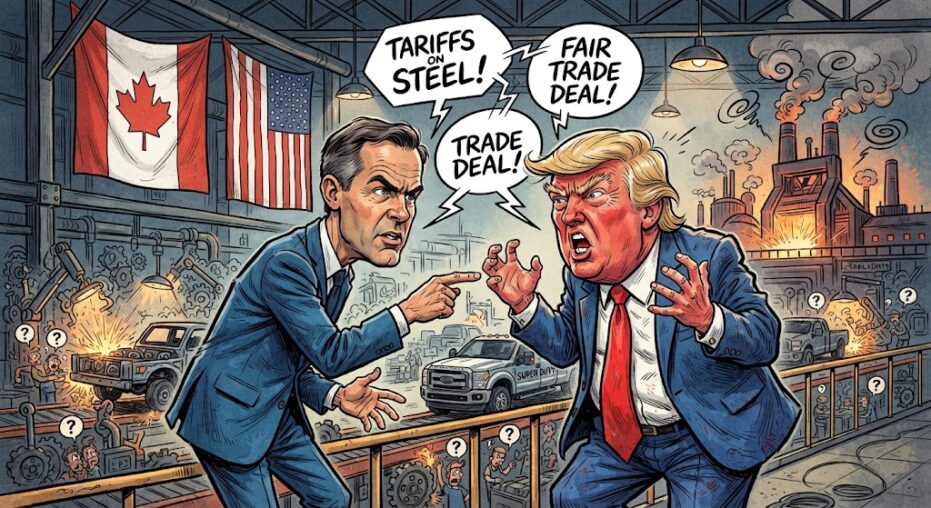
Carney Rejects Trump Tariff Demands as Oakville Ford Plant Faces New Trade Pressure
Carney rejects Trump tariff demands as Canada-U.S. trade relations take a dramatic turn, with Prime Minister Mark Carney rejecting last-minute proposals from U.S. President Donald Trump’s administration, suspending trade negotiations and promising dollar-for-dollar retaliation against new American tariffs. The move sets up a new confrontation between Ottawa and Washington and could have major consequences for Ontario’s auto industry, with Ford’s Oakville Assembly Complex entering a crucial phase of production for F-Series Super Duty trucks just as tariffs on vehicles, steel and aluminum threaten to reshape North American manufacturing.
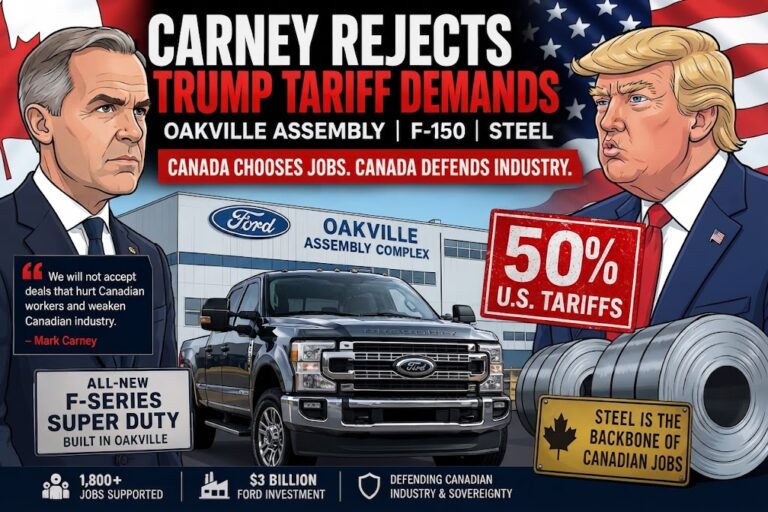
Carney said Canada was prepared to make substantial compromises to secure lower U.S. tariffs on strategic industries, including autos, steel and aluminum. In his Mark Carney speech today, the prime minister argued that the latest American proposals had become economically damaging and unfair. Canada was unwilling to accept conditions that would undermine Canadian industries or restrict the country’s ability to pursue independent trade relationships.
The dispute is especially important for Ford because Oakville is being transformed into a major Super Duty truck manufacturing hub. Ford is investing about $3 billion to expand F-Series Super Duty production, including roughly $2.3 billion for assembly and integrated stamping operations at Oakville. The facility is designed to eventually produce as many as 100,000 Super Duty trucks annually.
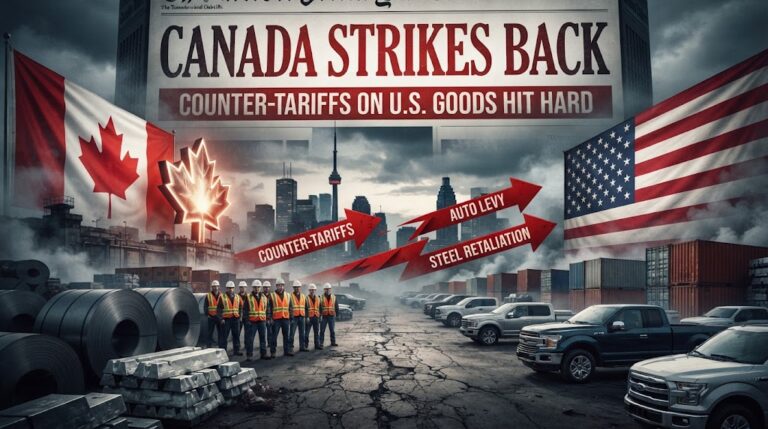
Oakville’s F-Series Bet Meets a Tariff Storm
Ford’s Oakville strategy was already a major industrial investment before the latest tariff confrontation. The plant is transitioning from its previous vehicle production toward the F-Series Super Duty lineup. Ford’s current global plant information lists Oakville as producing F-250 through F-450 Super Duty trucks, with the facility employing roughly 2,600 people as of June 2026.
The Canadian government has also committed significant financial support. Ottawa approved a $464.5 million contribution to refurbish the Oakville complex, support Super Duty production and establish a new onsite stamping facility. The federal program says the project is intended to support annual production of up to 100,000 trucks and approximately 1,800 jobs at the complex.
That investment makes the tariff dispute more than a political argument. It is now directly connected to the economics of manufacturing trucks in Ontario and selling them into the enormous U.S. market.
As Carney rejects Trump, the Ford Oakville plant has become a key example of what is at stake for Canada’s auto industry. Carney specifically pointed to Ford’s Oakville operation when explaining why Canada could not accept the U.S. proposal. According to Carney, Washington wanted certain reductions in automotive tariffs but sought to exclude some heavy-duty trucks from the lower tariff treatment. He cited Ford’s Oakville-produced F-350, F-450 and F-550 vehicles as examples that could have been left outside the proposed relief. Carney argued that such treatment would make production increasingly uneconomic over time.
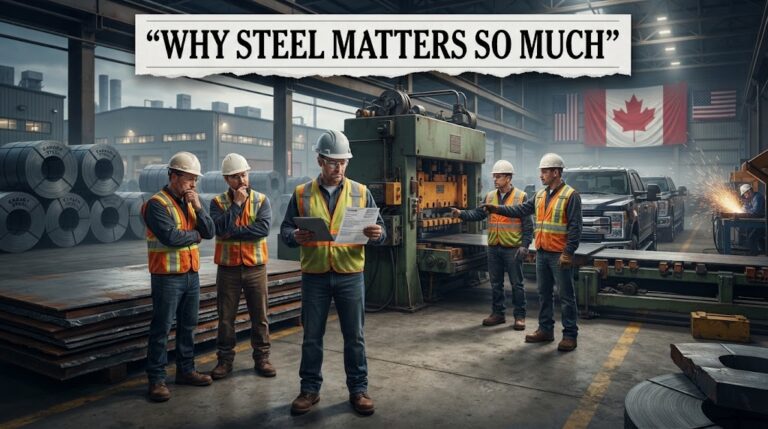
Why Steel Matters So Much
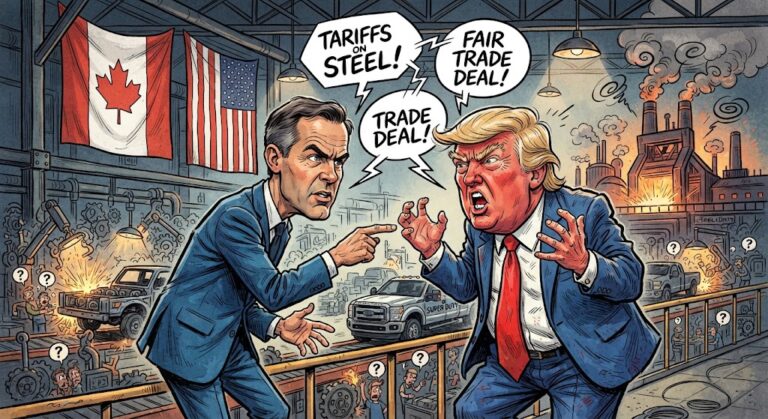
On August 21, Carney announced that Canada would suspend negotiations after concluding that the latest U.S. proposals were unfair and economically damaging. Washington subsequently moved ahead with a new 50% tariff on roughly $28 billion of Canadian goods. Canada said it would respond dollar for dollar, with new measures scheduled to take effect on September 8, targeting areas including steel, dairy, appliances, agricultural equipment, pulp and paper and electronics.
The decision represents a major escalation.
For manufacturers, the biggest concern is not simply the headline tariff rate. It is uncertainty. Companies making long-term investments need to know where components can be sourced, how much imported material will cost and whether finished products can cross the border competitively.
Ford’s Oakville investment was designed around an integrated North American manufacturing strategy. The plant is expected to produce high-demand Super Duty trucks while eventually supporting next-generation multi-energy vehicles.
A prolonged tariff war could therefore force automakers and suppliers to reconsider sourcing decisions that were previously based on the assumption of relatively open North American trade.
A Test for Ontario Manufacturing
The Oakville plant has become a symbol of what is at stake for Canadian manufacturing.
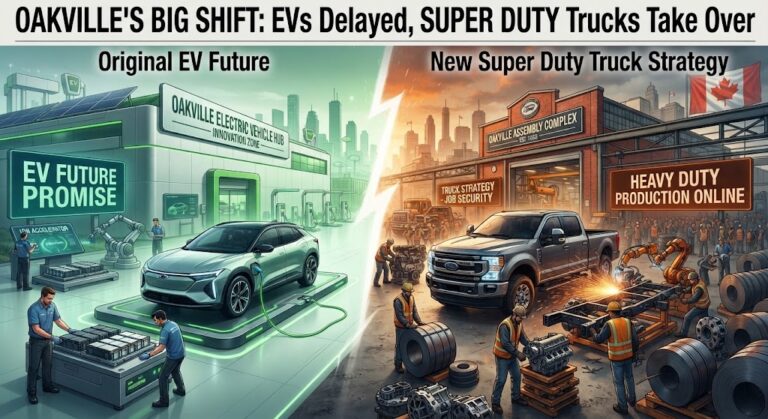
Ford originally planned to transform the facility into an electric-vehicle manufacturing complex, but later shifted its strategy toward Super Duty trucks after delaying the planned EV launch. The new plan was welcomed by Unifor because it was expected to bring production back sooner and protect thousands of manufacturing jobs over the longer term.
Now the plant is entering production at exactly the moment when North American trade rules are becoming less predictable.
That creates a difficult situation for Ford. Demand for Super Duty trucks remains strong, and Ford has said its U.S. Super Duty plants are operating at high capacity. Oakville provides additional production capacity close to the company’s North American supply chain.
But if tariffs make Canadian-built trucks significantly more expensive to sell in the United States, the economics of that additional capacity could change.
The Bigger North American Battle
As Carney rejects Trump’s latest demands, Canada is signaling that it is no longer willing to accept tariff relief at any cost. Ottawa is betting that protecting Canadian industrial capacity, maintaining control over trade policy and diversifying export markets will ultimately strengthen the economy.
For Oakville, the stakes are unusually high. The community is watching a historic Ford facility move into a new era built around F-Series Super Duty trucks, while the plant’s supply chain remains deeply connected to American consumers and North American steel.
The conflict could ultimately determine how competitive that model remains.
Ford’s Oakville plant is not simply an assembly facility. It sits at the intersection of Canadian steel, Ontario jobs, U.S. truck demand and the future of North American trade. As Carney and Trump move further apart, the economics of an F-Series truck built in Oakville could become one of the clearest real-world tests of whether Canada and the United States can maintain an integrated auto industry while fighting an increasingly aggressive tariff war.