

Stay Updated
Lake America: Trump’s Lake Ontario Proposal Sparks Canada-U.S. Trade War
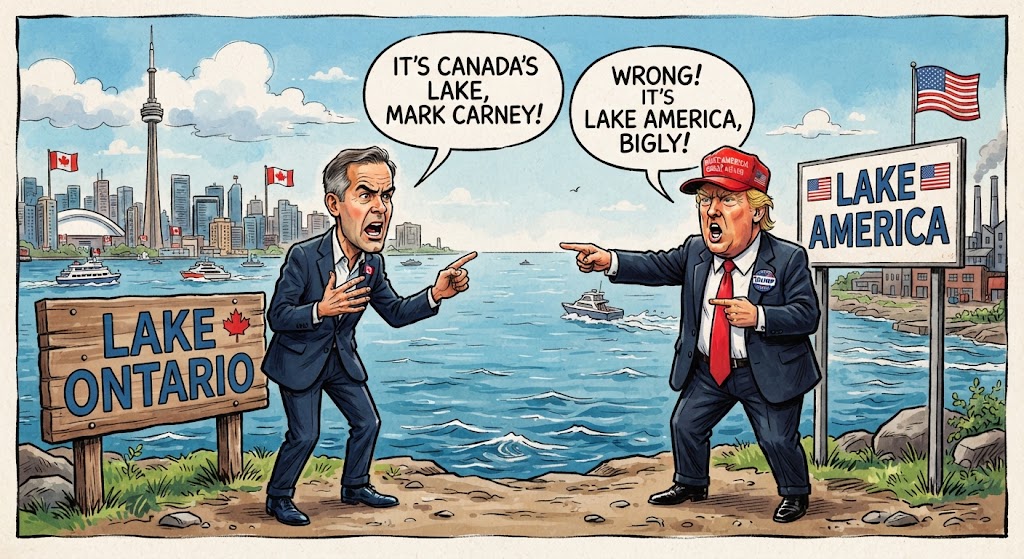
Lake America has become a new flashpoint in the escalating Canada-U.S. trade war after President Donald Trump suggested renaming Lake Ontario “Lake America.” Trump made the proposal as trade negotiations between Washington and Ottawa broke down, adding a provocative political dispute to an already serious economic confrontation. Because Toronto sits directly on the Canadian shore of Lake Ontario, the proposal has attracted particular attention across Ontario and Canada.
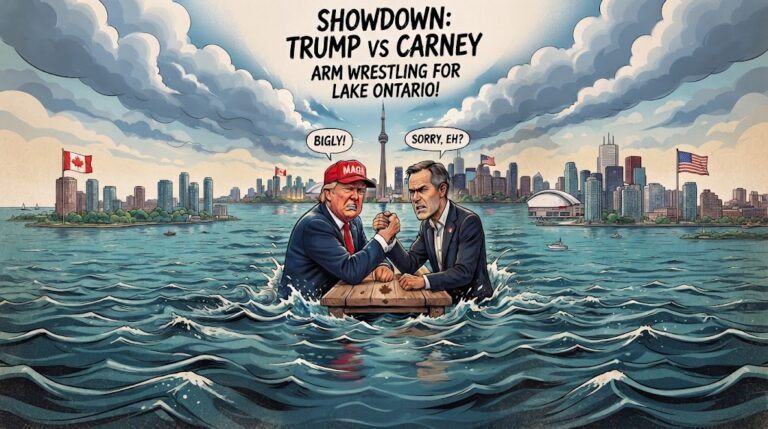
Trump’s Lake America Proposal
Trump’s suggestion has turned one of North America’s best-known waterways into a political talking point. Lake Ontario forms part of the Great Lakes and sits between Ontario and New York State. Toronto, Hamilton and other Canadian communities line its northern shore, while American communities occupy the southern side.
For Canadians, the lake carries strong cultural and geographic significance. Toronto’s waterfront, including the CN Tower, overlooks Lake Ontario, making the proposed name Lake America particularly provocative for residents across the Greater Toronto Area.
The proposal also follows Trump’s earlier effort to rename the Gulf of Mexico as the “Gulf of America.” However, Trump’s suggestion does not automatically change Lake Ontario’s official name in Canada. Because the lake is shared by Canada and the United States, any internationally recognized name change would involve more than a U.S. political announcement.
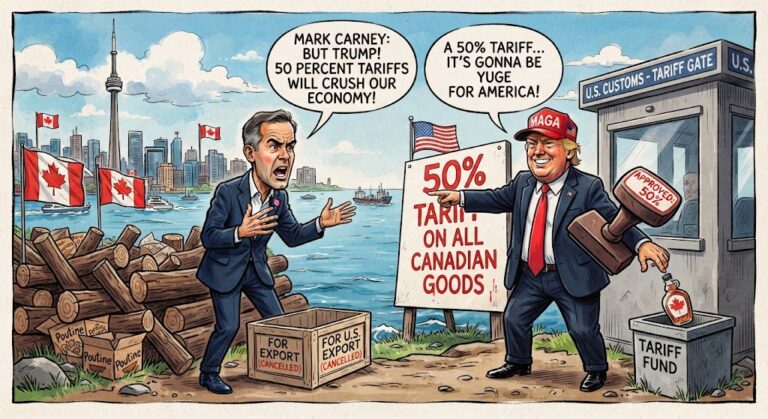
Trump Imposes 50% Tariffs on Canadian Goods
The Lake America controversy comes as the Canada-U.S. trade relationship faces a much more serious economic battle. Trump has imposed 50% tariffs on approximately $20 billion worth of Canadian goods, increasing pressure on Canadian exporters and businesses.
The tariffs have intensified uncertainty across industries that depend on cross-border trade. Moreover, Trump has threatened additional measures affecting major Canadian industries, including automobiles, auto parts and steel. Those threats have placed Ontario’s manufacturing economy directly in the spotlight.
Carney Responds With Canadian Counter-Tariffs
Prime Minister Mark Carney has responded with retaliatory measures of his own. Canada announced counter-tariffs on approximately $20 billion of U.S. imports, with tariff rates of 15%, 25% and 50% applying to roughly 700 American products.
The Canadian measures will affect a broad range of U.S. goods, including steel, aluminum, machinery, furniture, clothing, food and electronics. Ottawa plans to use the counter-tariffs to push back against Washington’s trade restrictions while protecting Canadian businesses and workers.
As a result, American exporters will also feel the pressure. Canadian importers could face higher costs on affected products, while U.S. companies may need to reconsider pricing, suppliers and their Canadian distribution strategies.
Why Ontario Faces Major Trade Pressure
Ontario sits at the center of the dispute because its economy depends heavily on cross-border commerce. The province has major automotive, manufacturing and steel industries, and companies routinely move components and finished products between Ontario and the United States.
Consequently, prolonged tariffs could increase production costs and disrupt supply chains. Automotive manufacturers face particular risks because vehicles and components can cross the Canada-U.S. border multiple times during production.
Trump’s threatened 50% tariffs on Canadian automobiles and auto parts therefore represent a major concern for Ontario. Any significant disruption could affect manufacturers, suppliers, transportation companies and workers throughout the province.
Lake America Becomes a Symbol of the Trade War
Against this backdrop, Trump’s Lake America proposal has taken on a much larger symbolic meaning. The trade dispute already affects businesses and consumers, but the proposed name change touches on Canadian identity and sovereignty.
Furthermore, the timing has made the controversy even more striking. Trump introduced the Lake America idea while Canada and the United States were already fighting over billions of dollars in tariffs. As a result, the lake has become an unexpected symbol of the deteriorating relationship between the two countries.
The phrase “Lake America Trump” has also appeared prominently in online discussions surrounding the proposal, as users debate Trump’s comments and Canada’s response.
Carney Faces Pressure to Protect Canadian Industries
Meanwhile, Carney faces pressure to protect Canadian businesses while keeping the door open for negotiations. His government’s counter-tariffs demonstrate that Ottawa intends to respond directly to American trade restrictions.
At the same time, Canada must manage the economic risks created by retaliation. Canadian businesses that depend on American products could face higher costs, while exporters could encounter weaker demand if U.S. tariffs remain in place.
Therefore, the trade battle presents Carney with a difficult balancing act: defend Canadian economic interests while avoiding a prolonged confrontation that could damage both economies.
Canada’s Power Grid Adds Another Pressure Point
Beyond tariffs on manufactured goods, Canada’s electricity exports to the United States could become another pressure point in the dispute. Ontario, Quebec, Manitoba and British Columbia are connected to U.S. electricity markets, allowing power to flow across the border when regional demand and supply conditions require it. That interconnected grid gives Canada an important economic relationship with the United States, but it also creates vulnerabilities if trade tensions continue to escalate. At the same time, Ontario is investing heavily in electricity generation and grid infrastructure as demand rises from manufacturing, data centers and electrification. As the Canada-U.S. trade war intensifies, energy could become an increasingly important part of the broader negotiations, particularly if either side considers tariffs or other restrictions affecting cross-border electricity flows.
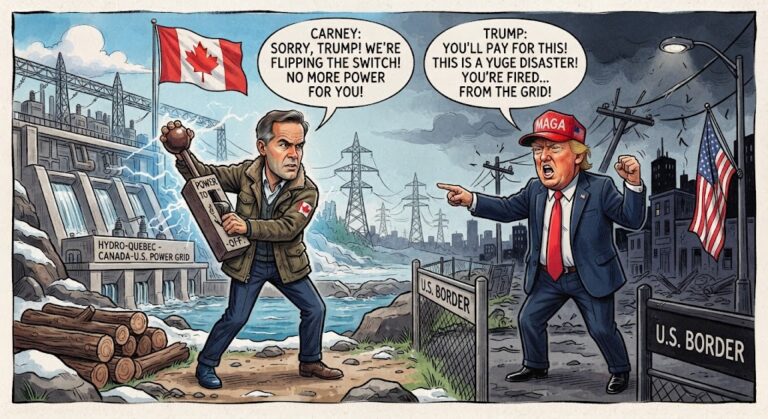
What Happens Next?
For now, Lake Ontario remains Lake Ontario. Trump’s proposal has not automatically changed the lake’s recognized name in Canada or internationally.
However, the economic dispute continues to escalate. Trump has imposed 50% tariffs on roughly $20 billion of Canadian goods, while Carney’s government has announced Canadian counter-tariffs of up to 50% on approximately $20 billion of U.S. imports. The two governments now face growing pressure to prevent the conflict from spreading further.
The Lake America controversy may have started as an unusual proposal, but it has become part of a much larger confrontation. With Trump pushing tariffs, Carney responding with counter-tariffs and Ontario facing significant exposure to cross-border trade, the future of the Canada-U.S. relationship could depend on what happens next at the negotiating table.
For Canadians, however, one thing remains unchanged: Lake Ontario is still Lake Ontario. Trump’s proposed Lake America name may dominate headlines, but the real stakes of this confrontation remain Canada’s economy, its relationship with the United States and the future of cross-border trade.