
Mark Carney’s $1 Trillion Canada Bet: The Global Investors Bringing $120 Trillion to Toronto
The Mark Carney Canada Investment Summit is shaping up to be one of the most closely watched economic events in Canada this year, bringing major global investors and business leaders to Toronto.
The first-ever summit is scheduled for September 14–15, 2026, as Prime Minister Mark Carney pushes an ambitious plan to attract more investment into Canada and strengthen the country’s position as a global destination for capital.
The headline number is enormous.
Participating investment organizations are reportedly connected to approximately $120 trillion in assets under management. But there is an important distinction: that does not mean $120 trillion is coming to Canada. The figure represents the combined assets managed by participating global investment organizations.
What Canada is actually targeting is far smaller—but still enormous.
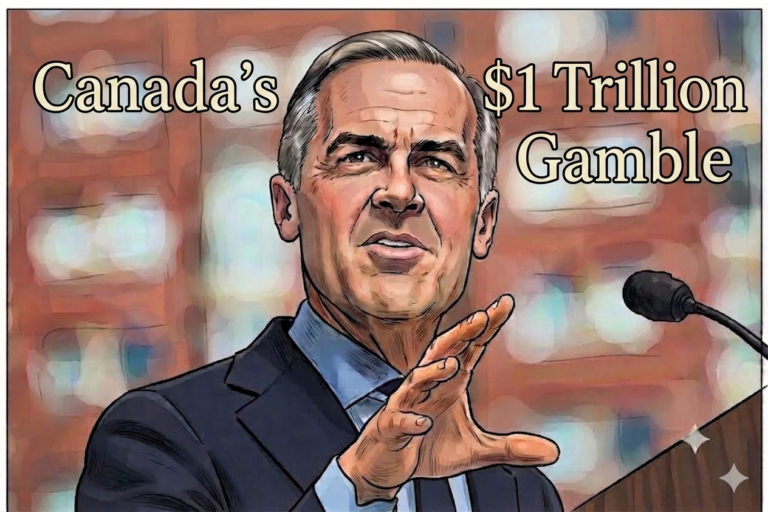
Carney’s government has set an objective of catalyzing $1 trillion in total investment in Canada over five years.
That makes the summit much more than another gathering of CEOs and financiers. It is a test of whether Canada can turn global capital into factories, infrastructure, housing, technology, energy projects and new businesses.
Why Mark Carney Is Betting Big on Investment
Canada has traditionally attracted significant foreign investment, but Carney’s government wants to accelerate that process.
The strategy comes at a critical moment for the Canadian economy.
Canada is facing pressure to increase productivity, expand infrastructure, build more housing and develop major energy and critical-mineral projects. At the same time, the country is trying to reduce its economic vulnerability to changing trade relationships with the United States.
That makes investment increasingly important.
Carney’s message to global investors is straightforward: Canada has the resources, talent, institutions and market access to support large-scale long-term investment.
The challenge is convincing investors to actually deploy capital.
The $120 Trillion Number Gets Attention
The $120 trillion figure is one of the most powerful hooks surrounding the summit.
Nearly 100 global investment organizations from dozens of countries are expected to participate, according to reporting about the event. Collectively, those organizations represent an extraordinary amount of capital.
But the number needs context.
If an investment manager oversees $500 billion, that does not mean the manager has $500 billion available to invest in Canada.
Assets under management can include stocks, bonds, private companies, real estate and other assets held for clients around the world.
Still, the scale matters.
Even if only a tiny fraction of that global capital is directed toward Canadian opportunities, the economic impact could be substantial.
That is precisely why Carney wants the world’s biggest investors in the same room.
Where Could the Money Go?
The investment summit comes as Canada identifies several industries as strategic priorities.
Artificial intelligence and technology are obvious targets.
Canada has developed internationally recognized AI research capabilities, but attracting more private capital could help turn research into companies, data centers, computing infrastructure and commercial applications.
Then there is critical minerals.
Canada has significant deposits of minerals required for batteries, electronics, defense systems and clean-energy technologies. Global companies are looking for alternatives to concentrated supply chains, creating an opportunity for Canada to become a more important supplier.
Energy is another major piece of the strategy.
Canada remains one of the world’s largest energy producers, while demand for electricity and infrastructure is rising because of data centers, industrial expansion and electrification.
Infrastructure could become another major investment category.
Ports, railways, electricity grids, housing and transportation networks all require enormous amounts of capital.
If the government can combine public investment with private financing, Canada could potentially accelerate projects that might otherwise take years to develop.
Housing Could Be the Wild Card
Canada’s housing shortage creates another enormous investment opportunity.
The country needs more homes, but construction costs, financing conditions, land availability and infrastructure constraints have made development difficult.
Institutional investors could provide capital for rental housing, residential development and large-scale communities.
That could help Canada address two problems simultaneously: attracting investment and increasing housing supply.
However, investors will demand competitive returns.
Government announcements alone will not be enough.
Canada must make projects financially viable.
Carney’s Biggest Challenge Is Execution
This is where the summit becomes more interesting.
Attracting investors to Toronto for two days is relatively easy compared with convincing them to commit billions of dollars over the next decade.
Global investors have choices.
They can put capital into the United States, Europe, Asia, Australia or emerging markets.
Canada therefore has to compete on taxes, regulation, infrastructure, labor, permitting, energy costs and expected returns.
Carney’s government has already emphasized the need to reduce barriers to major projects.
The real test will be whether those promises translate into faster approvals and actual construction.
Canada Wants More Than Foreign Money
There is also a broader economic objective.
The Carney government wants Canada to become more productive and less dependent on a narrow group of industries and trading relationships.
That means attracting investment into sectors capable of generating high-value jobs, exports and technological innovation.
A successful investment strategy could therefore create a multiplier effect.
A new manufacturing facility can create construction jobs.
A technology investment can create high-skilled employment.
A critical-minerals project can generate exports.
A new data center can create demand for electricity and infrastructure.
That is why investment is becoming such a central part of Canada’s economic strategy.
The Global Capital Race
The timing is particularly important.
Governments around the world are competing aggressively for capital.
The United States continues to attract enormous investment into technology, energy and manufacturing. Europe is trying to strengthen its industrial base. Asian economies are competing for advanced manufacturing and technology projects.
Canada cannot assume investors will come simply because the country is politically stable.
It has to make the economic case.
That is the real purpose of Carney’s summit.
The $120 trillion figure creates the headline, but the $1 trillion Canadian investment target is the real test.
Can Canada convert global investor interest into factories, housing, mines, energy projects, AI infrastructure and new companies?
Trump Tariffs Push Canada to Attract Global Investment
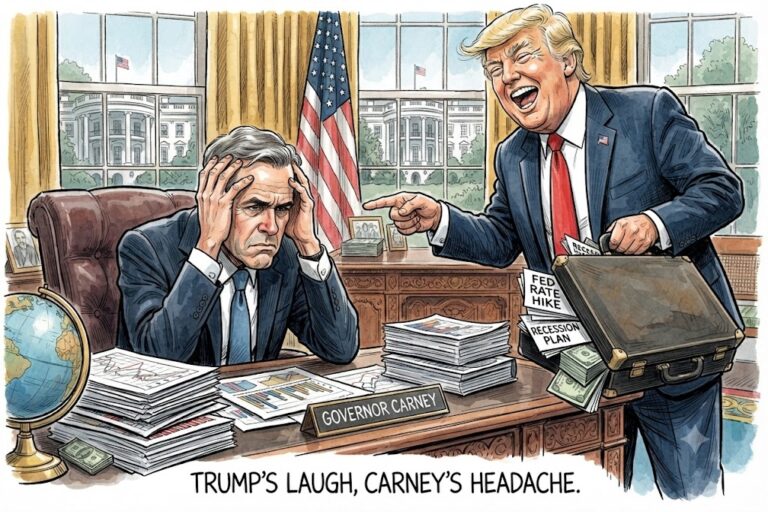
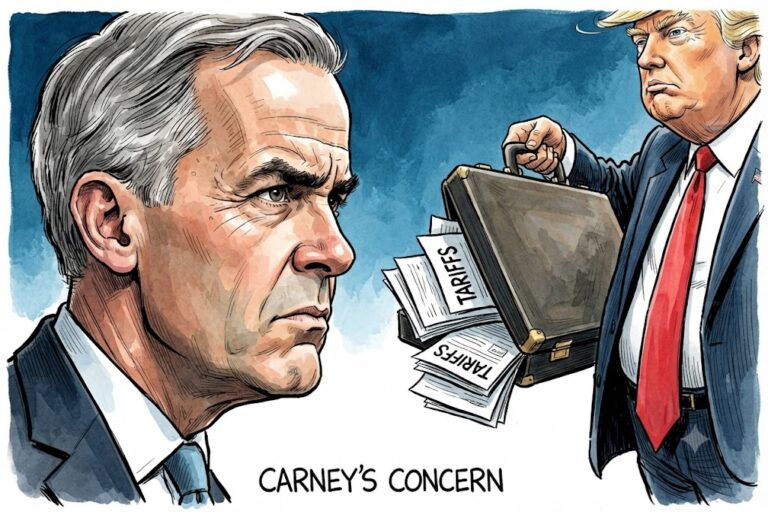
Trump’s tariffs have added another layer of uncertainty to Canada’s economic outlook, pushing businesses and policymakers to rethink the country’s dependence on the U.S. market. For Mark Carney, the trade pressure makes attracting global investment even more important. Canada is seeking new capital for critical minerals, energy, technology, AI infrastructure, manufacturing and housing while working to strengthen trade relationships beyond the United States. As tariffs reshape North American supply chains and raise costs for businesses, Carney’s investment strategy could give Canada an opportunity to attract companies looking for stable, resource-rich alternatives and diversify the economy.
Mark Carney Hours Reduction Comes as Canada Faces Key Priorities
The Mark Carney hours reduction comes as Canada continues to navigate major economic and trade priorities ahead of the September investment summit. Carney is
scheduled to spend a week in Italy under previously planned arrangements while remaining in contact with his team and monitoring key government issues, including U.S. trade
negotiations. The timing adds another layer of attention as Canada prepares to host major global investors in Toronto and push its ambitious $1 trillion investment target.
Mark Carney’s $1 Trillion Test
For Carney, the summit represents an opportunity to redefine Canada’s investment story.
The country has natural resources, educated workers, major cities, a sophisticated financial system and close connections to global markets.
But those advantages only matter if capital flows into productive projects.
The September summit could therefore become a defining moment for Carney’s economic agenda.
If major investors leave Toronto with concrete commitments, Canada could begin attracting a new wave of capital into strategic industries.
If the event produces speeches, announcements and little actual investment, critics will argue that the $1 trillion ambition was more political messaging than economic transformation.
For now, the opportunity is enormous.
Mark Carney is putting Canada on the global investment stage. The world will be watching to see whether the capital actually follows.
And with investment organizations representing roughly $120 trillion in assets under management expected to participate, Toronto is about to become one of the most important meeting points between global capital and Canada’s economic ambitions.