
Stay Updated
Artelus Wins Startup India Drishti HealthTech Challenge: How AI is Transforming Eye Care in India
The Indian healthtech ecosystem is rapidly evolving, and one of the most notable recent developments is the success of Artelus, which won the Startup India Drishti HealthTech Challenge. This achievement highlights how artificial intelligence is no longer a futuristic concept in healthcare—it is already reshaping diagnostics, especially in areas like eye care where early detection can prevent lifelong blindness.
The challenge, supported under Startup India and industry partners including Roche Pharma India, was designed to identify innovative solutions that can improve healthcare access, affordability, and early diagnosis across India.
A Breakthrough Moment for AI in Healthcare
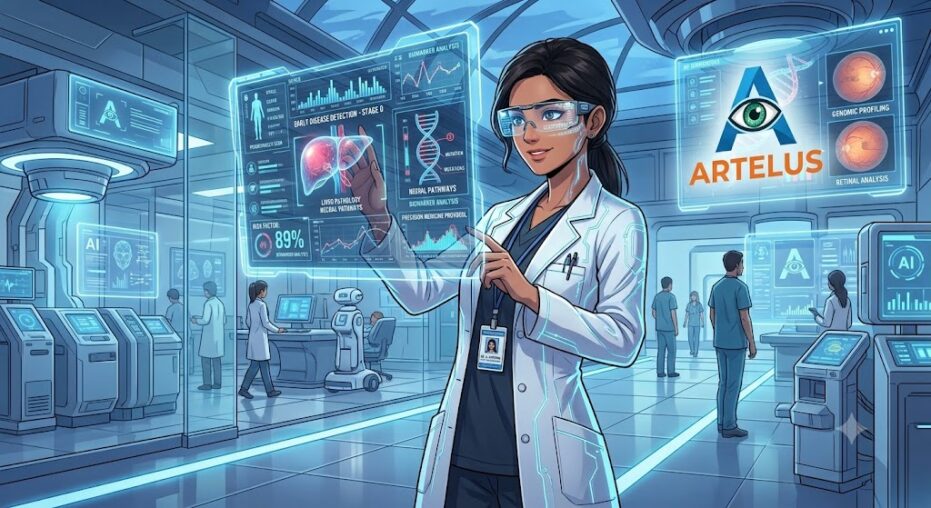
At its core, Artelus focuses on using artificial intelligence to detect diseases of the eye at an early stage. The startup has built systems that analyze retinal images and identify warning signs of conditions such as:
-
Diabetic Retinopathy
-
Glaucoma
-
Other retinal disorders that can lead to vision loss if untreated
What makes this especially important is that these diseases often progress silently. Many patients only realize there is a problem when vision loss has already become severe. Artelus addresses this gap by making early screening faster, more accessible, and more scalable.
The Problem They Are Solving
India faces a significant healthcare challenge when it comes to eye diseases. Millions of people are at risk, but there are several barriers:
-
Shortage of trained ophthalmologists in rural areas
-
Lack of early screening infrastructure
-
Delayed diagnosis due to hospital overload
-
Limited access to advanced diagnostic equipment
In many small towns and villages, patients must travel long distances just to get a basic eye examination. This delay often leads to preventable vision loss.
Artelus is trying to change this by shifting eye screening from hospital-based diagnosis to AI-assisted early detection at the point of care.

How Artelus Technology Works
The innovation behind Artelus lies in combining AI software with medical imaging tools. Their system typically works in three steps:
Capturing retinal images
A patient’s eye is scanned using a portable imaging device. This can be done in clinics, camps, or even rural health centers.
AI-based analysis
The captured image is processed using machine learning models trained on large datasets of retinal scans. The AI identifies patterns that may indicate disease.
Instant screening results
Within seconds, the system provides a risk assessment. This helps healthcare workers decide whether the patient needs further specialist consultation.
One of the most impactful aspects of this approach is speed. Traditional eye screenings require expert interpretation, but Artelus reduces this dependency by automating the first level of diagnosis.
Why the Drishti HealthTech Challenge Matters
The Drishti HealthTech Challenge was created to support startups that are solving real-world healthcare problems using innovation. It focuses particularly on:
-
Early disease detection
-
Affordable diagnostic tools
-
Scalable healthcare solutions
-
Rural healthcare accessibility
By winning this challenge, Artelus demonstrated that its solution is not only technically strong but also practical for large-scale deployment in India’s healthcare system.
The recognition also provides validation that AI-driven diagnostics are becoming an essential part of modern healthcare infrastructure rather than experimental tools.
What Made Artelus Stand Out
Several factors contributed to Artelus emerging as a winner:
Real-world applicability
The solution is designed for real clinical environments, not just lab conditions. It can be deployed in small clinics and outreach programs.
Focus on accessibility
The system is built to work even in areas with limited infrastructure, making it suitable for rural and semi-urban regions.
Speed and efficiency
The AI reduces diagnosis time from days or weeks to seconds, allowing healthcare providers to serve more patients.
Preventive healthcare approach
Instead of treating diseases after they become severe, the system helps identify risks early, which improves patient outcomes.
The Bigger Picture: AI in Indian Healthcare
The success of Artelus reflects a broader shift happening in India’s healthtech landscape. Artificial intelligence is increasingly being used for:
-
Medical imaging analysis
-
Predictive diagnostics
-
Remote patient monitoring
-
Telemedicine support
Government-backed initiatives like Startup India are actively encouraging this transformation by funding and mentoring startups that build scalable healthcare solutions.
This is especially important for a country like India, where population density and healthcare demand often exceed available medical infrastructure.
Economic and Social Impact
The impact of solutions like Artelus extends beyond technology. It has both economic and social implications:
Reduced healthcare burden
Early detection reduces the cost of treating advanced diseases, which often require complex procedures.
Improved productivity
Preventing vision loss helps individuals remain active in the workforce.
Better rural healthcare access
AI-powered screening tools bring quality healthcare closer to underserved populations.
Scalable healthcare delivery
Instead of relying solely on specialists, AI enables a hybrid model where machines assist healthcare workers.
Future Potential of Artelus
Winning the Drishti HealthTech Challenge positions Artelus for further growth. With continued development, the startup could expand into:
-
Large-scale national screening programs
-
Integration with hospital networks
-
Partnerships with insurance providers
-
Global expansion in developing countries
The combination of AI and portable diagnostics is especially powerful in regions where medical infrastructure is limited.
Final Thoughts
The success of Artelus at the Startup India Drishti HealthTech Challenge is more than just an award win. It represents a shift in how healthcare is delivered—moving from reactive treatment to proactive, AI-driven prevention.
Supported by initiatives like Startup India and industry partners such as Roche Pharma India, this recognition highlights the growing importance of technology in solving real healthcare gaps.
As AI continues to evolve, startups like Artelus are likely to play a critical role in shaping a future where early diagnosis is accessible to everyone, regardless of geography or income.