
Stay Updated
Justin Sun vs World Liberty Financial: WLFI Crashes 50% as Trump-Linked Crypto Project Faces Explosive Allegations
November 28, 2026
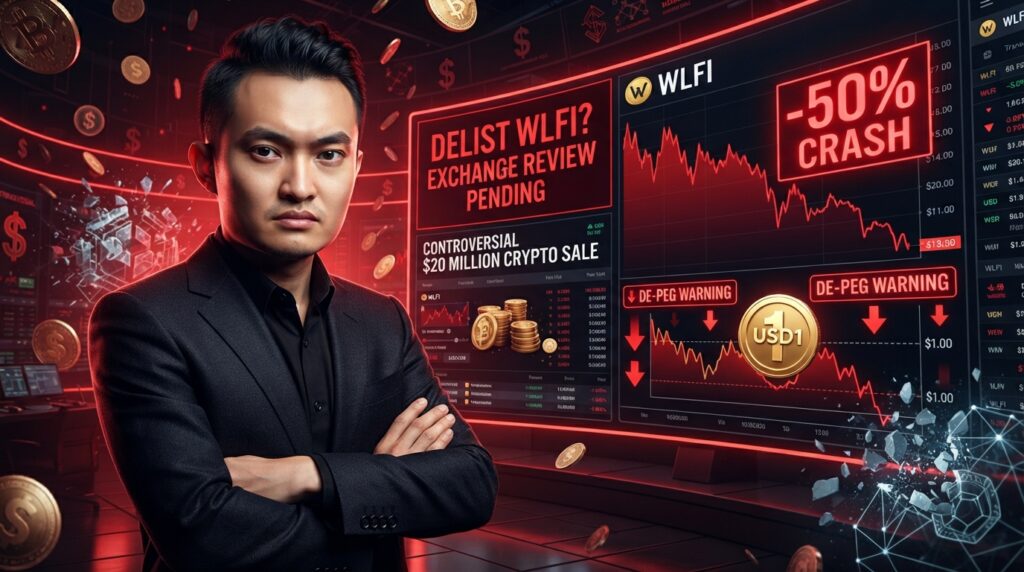
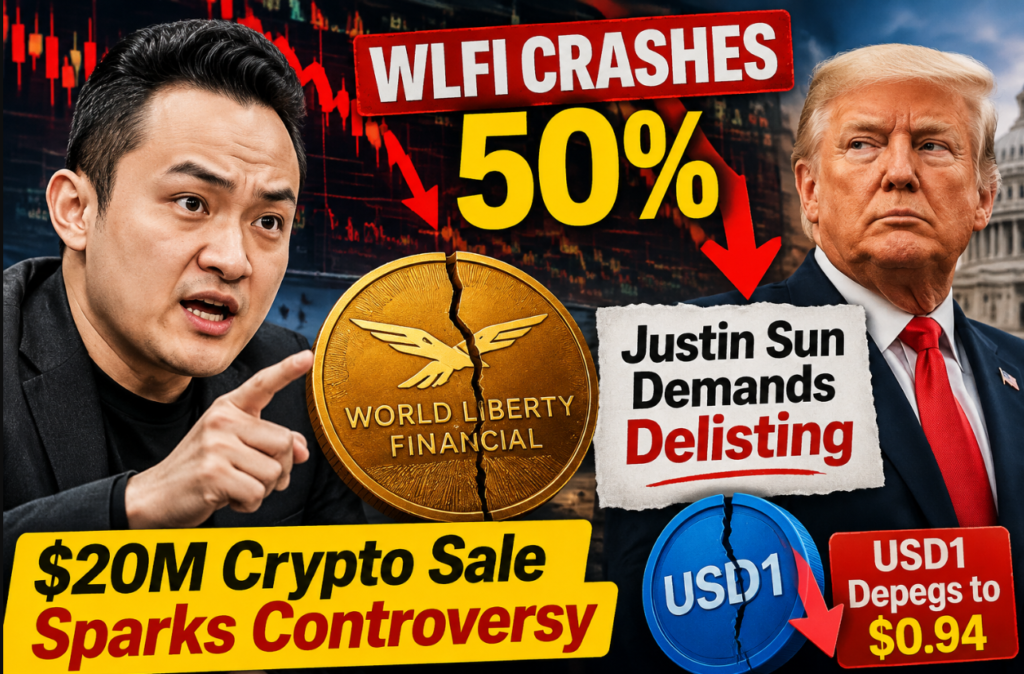
A dramatic confrontation between cryptocurrency billionaire Justin Sun and World Liberty Financial (WLF) has intensified following the WLFI crash, which saw the Trump family-linked crypto project’s native token plunge more than 50% within hours. The selloff also affected its dollar-pegged stablecoin, USD1, which briefly dropped to approximately $0.94.
The WLFI crash followed a controversial $20 million Ethereum treasury sale that reportedly locked in an estimated $19.26 million loss. Meanwhile, Sun, one of World Liberty Financial’s earliest major investors, publicly accused the project of investor fraud, unauthorized asset sales and questionable lending practices.
However, the dispute goes beyond a cryptocurrency price crash. Sun and World Liberty Financial already face each other in separate legal proceedings, and the latest developments have brought renewed attention to the project’s financial arrangements.
Why Did World Liberty Financial Sell $20 Million in Ethereum?
The WLFI crash intensified scrutiny after blockchain trackers identified a major transaction involving a wallet associated with World Liberty Financial’s strategic reserve.
On November 28, blockchain data showed that the wallet had sold approximately $20.06 million in Ethereum-related assets, receiving roughly $17.58 million in USDC and $2.48 million in USD1.
According to blockchain analyst EmberCN, the transaction locked in an estimated $19.26 million loss. The project had accumulated its Ethereum at an average price of approximately $3,244, but the latest sale fetched around $1,655 per ETH.
So, why would a major cryptocurrency project sell valuable digital assets at such a steep loss?
The answer involves decentralized finance (DeFi) lending and the financial pressure surrounding the WLFI token collapse.
Earlier in April 2026, World Liberty Financial borrowed approximately $75 million in stablecoins through the Dolomite lending protocol. The company pledged roughly 5 billion WLFI tokens as collateral to secure the loan.
As WLFI’s market price declined during the WLFI crash, the value of that collateral also weakened. Consequently, the company faced increasing pressure to maintain a safe collateral position and avoid liquidation.
World Liberty Financial used proceeds from its Ethereum sale to reduce outstanding debt and strengthen its collateral position.
The company described the move as responsible treasury management rather than an attempt to dump its own token.
WLFI Crashes More Than 50% to a Record Low
The WLFI crash triggered a severe market reaction.
On November 28, World Liberty Financial’s WLFI token plunged more than 50% within 24 hours, briefly touching approximately $0.0158 on Binance.
The decline pushed WLFI to a new record low and erased a substantial amount of market value.
The token has now fallen approximately 95% from its September 2025 peak of around $0.33, deepening concerns surrounding the WLFI price crash.
However, the timing of the selloff deserves attention.
According to The Block, WLFI remained relatively stable for several hours after the treasury’s Ethereum transaction. Heavy selling subsequently hit Binance, sending the token sharply lower.
The precise reason behind that sudden wave of selling remains unclear.
Furthermore, the WLFI crash triggered significant liquidations in leveraged cryptocurrency positions. CoinGlass data cited by The Block showed more than $15 million in WLFI futures liquidations over 24 hours.
World Liberty Financial also pointed to Binance’s handling of perpetual futures positions. The exchange acknowledged reports about WLFI futures activity and said it was reviewing market execution data.
USD1 Stablecoin Briefly Loses Its $1 Peg
The turmoil surrounding the WLFI crash did not stop with the token itself.
World Liberty Financial also operates USD1, a stablecoin designed to maintain a value of $1.
Unlike ordinary cryptocurrencies, stablecoins aim to maintain a relatively stable price by linking their value to traditional currencies such as the US dollar.
However, during the WLFI selloff, USD1 briefly dropped to approximately $0.94 against USDT on Binance, adding another concern to the WLFI crash controversy.
That six-cent deviation raised concerns about market confidence and liquidity surrounding the Trump-linked crypto project.
Nevertheless, a major cryptocurrency trading firm, Jump Crypto, reportedly moved quickly to exploit the price difference.
Blockchain analytics account Lookonchain reported that Jump Crypto withdrew approximately 43.26 million USD1 from exchanges and subsequently redeemed the tokens through BitGo at their $1 redemption value.
The activity helped push USD1 back towards its intended dollar peg.
Importantly, a temporary exchange-price depeg does not automatically establish that USD1’s underlying reserves have suffered losses.
Justin Sun Accuses Trump-Linked Crypto Project of Investor Fraud
As the WLFI crash intensified, Justin Sun took his dispute with World Liberty Financial public.
The founder of the TRON blockchain and one of World Liberty Financial’s earliest major investors urged cryptocurrency exchanges, regulators and judicial authorities to intervene.
Sun accused the project of insider circular lending, unauthorized asset sales, investor fraud and the unlawful freezing of investor holdings.
He also called on major cryptocurrency exchanges to issue investor warnings, restrict deposits and consider delisting both WLFI and USD1 amid the controversy surrounding the WLFI token crash.
In addition, Sun alleged that individuals connected to World Liberty Financial were deleting social media posts and communications to conceal evidence of wrongdoing.
However, Sun has not provided independently verified evidence to establish that the team deleted communications to hide misconduct.
World Liberty Financial has also disputed his characterization of the treasury transactions, saying that it did not sell WLFI tokens as part of its debt-management operations.
These accusations remain contested, and no court has established the alleged fraud. The WLFI crash has nevertheless brought renewed attention to the dispute between Sun and the Trump-linked cryptocurrency project.
Why Are Justin Sun and World Liberty Financial Fighting?
The latest controversy represents another chapter in a dispute that began long before the November cryptocurrency crash.
Sun started investing in World Liberty Financial in late 2024, committing approximately $30 million to the project.
However, the relationship deteriorated after World Liberty Financial froze his WLFI holdings in September 2025, shortly after the token began trading publicly.
According to CoinDesk, the freeze affected approximately 595 million unlocked WLFI tokens in Sun’s wallet, worth around $107 million at the time.
Sun subsequently filed a federal lawsuit in April 2026, accusing World Liberty Financial of wrongdoing and seeking access to his frozen holdings.
World Liberty Financial responded with its own lawsuit in May 2026, accusing Sun of defamation and alleging that he attempted to short WLFI to damage its market price.
The two sides have therefore taken their dispute into the courtroom as well as social media.
Now, the latest WLFI collapse has intensified their public confrontation.
Did Justin Sun Really Lose $492 Million?
One of the most widely circulated claims surrounding the controversy suggests that Justin Sun invested $500 million in World Liberty Financial and lost approximately $492 million, leaving him with just $8 million.
However, available reporting does not support that calculation.
CoinDesk reported that Sun invested approximately $30 million in the project beginning in late 2024. He also received an additional allocation of WLFI tokens as an adviser.
Furthermore, his frozen holdings reportedly included approximately 595 million unlocked tokens worth around $107 million when World Liberty Financial froze his wallet.
These figures do not establish a $492 million realized investment loss.
Investors must also distinguish between the value of frozen tokens, unrealized losses and actual money lost through completed transactions.
Consequently, the viral $500 million investment and $492 million loss claim should not appear as an established financial fact.
What Happens Next for WLFI, USD1 and Justin Sun?
The confrontation leaves several important questions for cryptocurrency investors.
First, traders will watch whether WLFI can stabilize after its record-breaking selloff. The token’s approximately 95% decline from its 2025 peak highlights the risks associated with highly volatile governance tokens.
Second, investors will monitor USD1’s ability to maintain its $1 peg during periods of market stress.
Third, the lending arrangements involving WLFI collateral and the Dolomite protocol will likely attract further scrutiny.
Finally, the legal confrontation between Justin Sun and World Liberty Financial could bring additional disclosures about the project’s operations, token freezes and financial relationships.
For now, the market has witnessed a sharp WLFI collapse, a multimillion-dollar treasury loss and a temporary USD1 depeg. Meanwhile, Justin Sun continues to challenge the project publicly and through the courts.
The central question is no longer just how far WLFI can fall. Investors also want greater clarity about the project’s lending arrangements, treasury management and the dispute with one of its biggest early backers.