

Stay Updated
The $8 Million Janitor vs. the Tech Day Trader: Why Boring Stocks Often Beat Market Hype
The Quiet Millionaire Nobody Expected
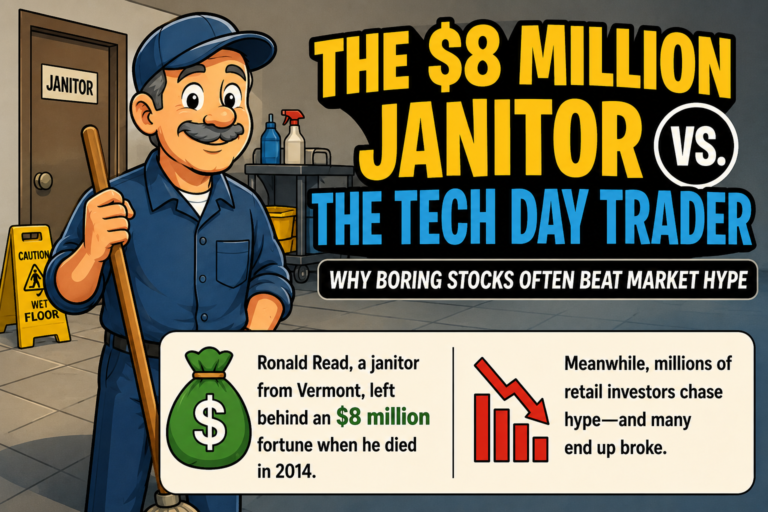
The day trader vs long term investor debate becomes very real when you study one of the most viral investing stories ever—the janitor becomes millionaire story of Ronald Read.
Ronald Read was an ordinary man from rural Vermont. He worked as a gas station attendant and later as a janitor. He lived frugally, wore old clothes, and drove a used car throughout his life.
Yet when he died in 2014, he left behind an $8 million fortune, making him one of the most surprising stock market millionaire stories ever recorded.
The day trader vs long term investor comparison explains his success clearly. He did not chase stock market hype or follow trending AI stocks or viral stocks. Instead, he quietly invested in stable dividend-paying companies like Procter & Gamble and Colgate-Palmolive and held them for decades.
Meanwhile, in today’s world of the day trader vs long term investor mindset, millions of investors chase quick profits, follow social media tips, and try to catch the next hot stock trend—yet many struggle to build wealth.
This contrast highlights a powerful truth:
👉 Boring stocks beat hype stocks in the long run.
The Reality of Tech Hype: The Innovation Death Trap
The day trader vs long term investor debate becomes even more important in today’s AI stock boom and tech stock hype cycle.
Technology stocks attract investors because they represent the future—AI, robotics, clean energy, quantum computing, and biotech all promise massive disruption.
But the day trader vs long term investor reality shows that innovation does not always mean profit.
Many investors fall into what can be called the stock market bubble mentality or Innovation Death Trap.
Prices rise much faster than earnings, driven by FOMO investing and hype.
In the day trader vs long term investor cycle, traders often buy during peak excitement and exit during crashes—leading to losses.
The Hype Cycle (Stock Market Reality)
Massive Publicity
↓
Extreme Valuation
↓
Unrealistic Expectations
↓
Disappointing Results
↓
Sharp Stock Market Crash
Companies like Nokia, BlackBerry, and Yahoo are classic examples of tech stock collapse stories.
The day trader vs long term investor lesson is clear: leadership in technology does not guarantee long-term survival.
The Exception That Proves the Rule: Palantir (AI Stock Boom)
Every day trader vs long term investor discussion includes extreme AI stock success stories.
One major example is Palantir Technologies (PLTR), which became one of the most talked-about AI millionaire stocks.
Driven by artificial intelligence demand, Palantir surged over 1,600%, creating real retail millionaire stories.
One investor, Etienne Breton, turned his investment into over $2.2 million after holding through volatility.
However, the day trader vs long term investor truth remains:
👉 For every Palantir success story, thousands lose money chasing the next viral stock rally.
Why Boring Stocks Quietly Win the Market
The day trader vs long term investor comparison strongly favors boring companies over hype-driven stocks.
These companies include essential businesses such as:
- Electricity providers
- Food producers
- Water supply companies
- Waste management firms
- Infrastructure and transport
- Household product companies
These are the backbone of passive income investing strategies.
The day trader vs long term investor difference is simple:
- Traders chase excitement
- Investors rely on consistency
Three Reasons Boring Stocks Beat Market Hype
Pricing Power (Inflation Protection Stocks)
In the day trader vs long term investor debate, boring companies win because they can raise prices during inflation without losing customers.
People may skip luxury tech, but they never stop buying essentials.
Strong Competitive Moats
The day trader vs long term investor difference is clear here. Infrastructure and utility companies are extremely hard to replace, creating long-term stability.
Reliable Cash Flow (Dividend Stocks Strategy)
Stable companies generate consistent profits, making them strong dividend investing stocks.
The day trader vs long term investor model shows that predictable cash flow beats unpredictable trading outcomes.
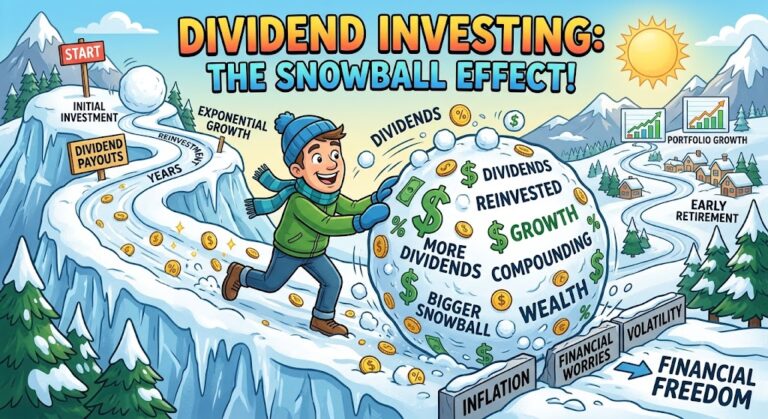
Dividend Investing: The Snowball Effect
Another major advantage in the day trader vs long term investor debate is dividend reinvestment.
This creates what investors call the dividend snowball effect.
Year 1 → 100 Shares
↓
Reinvest Dividends
↓
Year 5 → 125 Shares
↓
Year 20 → 300+ Shares
This is one of the strongest passive income strategies in stock market investing.
Emotional Control: The Hidden Factor in Wealth Building
The day trader vs long term investor difference is not just financial—it is psychological.
Day traders face:
- Fear during crashes
- Greed during rallies
- Emotional decision-making
This leads to panic selling and FOMO buying, two major reasons investors lose money.
Long-term investors avoid emotional traps and focus on long-term compounding.
How to Build a “Boring Stocks” Portfolio
The day trader vs long term investor strategy for wealth building is simple and proven.
Step 1: Invest in ETFs (Safe Investing Strategy)
- S&P 500 ETFs
- Dividend Aristocrats ETFs
- Broad market index funds
Step 2: Automate Investing
Invest monthly and enable DRIP (Dividend Reinvestment Plan).
Step 3: Ignore Market Noise
Avoid reacting to:
- Social media stock hype
- Breaking news headlines
- Viral stock predictions
Final Thoughts: Day Trader vs Long Term Investor Reality
The day trader vs long term investor debate ultimately reveals a simple truth:
Ronald Read didn’t chase stock market hype, AI stock trends, or viral investment opportunities. He built wealth quietly through patience, dividends, and time.
In the end, the day trader vs long term investor lesson is clear:
👉 Real wealth is not built through viral stocks or trading speed—it is built through patience, compounding, and long-term thinking.