

Stay Updated
Startup Idea: Lease Parking Spaces and Offer Luggage Storage to Tourists
Every year, millions of tourists visit popular destinations without realizing one of their biggest travel challenges begins before they even reach the attractions. Finding convenient parking and managing luggage can quickly turn an exciting trip into a frustrating experience. This common problem creates an excellent opportunity for entrepreneurs willing to provide simple yet valuable services.
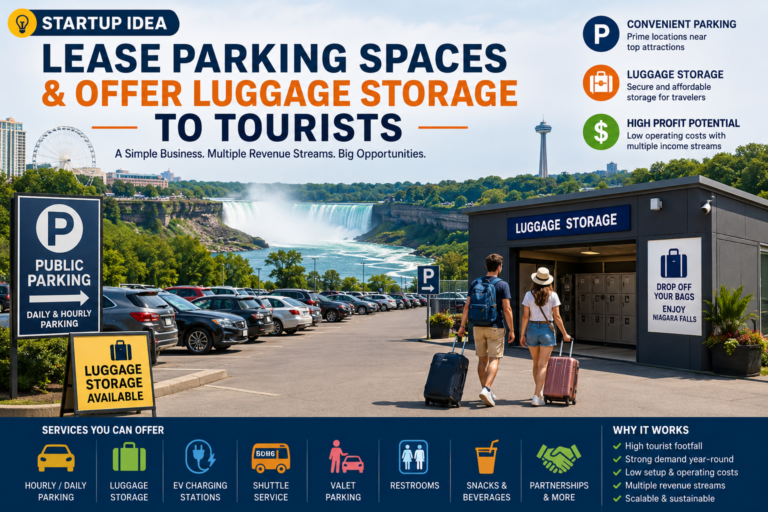
A startup that combines parking space rentals with secure luggage storage can generate multiple income streams while solving two major problems for travelers. In tourist destinations such as Niagara Falls, Canada, this business model has tremendous potential because demand for convenient parking consistently exceeds supply during peak travel seasons.
Rather than investing in expensive real estate, entrepreneurs can lease unused land from private property owners and transform it into a profitable tourism business. By adding value-added services such as luggage storage, EV charging, shuttle transportation, and valet parking, operators can increase customer satisfaction while maximizing revenue.
Why Niagara Falls Is the Perfect Market
Niagara Falls ranks among Canada’s most visited tourist destinations, attracting more than 12 million visitors every year. Families, international tourists, business travelers, and tour groups visit throughout the year, creating a constant need for parking near the city’s major attractions.
During summer vacations, long weekends, and holiday seasons, parking lots often reach full capacity early in the day. As a result, visitors spend valuable time searching for available spaces instead of enjoying their vacation. This shortage creates an ideal opportunity for entrepreneurs to lease vacant land or underutilized commercial properties and convert them into professionally managed parking facilities.
Moreover, tourists willingly pay premium prices for parking that saves time and reduces walking distances. Properties located near Clifton Hill, Niagara Parks attractions, casinos, hotels, and the Falls naturally command higher parking rates because of their convenience.
How the Startup Works
The business model remains relatively straightforward while offering significant earning potential.
First, entrepreneurs lease vacant lots, unused commercial land, church parking lots, or private residential properties located near tourist attractions. After obtaining the necessary permits, insurance, and municipal approvals, they prepare the property with proper lighting, pavement markings, security cameras, directional signs, and automated payment systems.
Customers can then reserve parking online or pay upon arrival using contactless payment terminals, QR codes, or mobile applications. Automated systems reduce labor costs while allowing the business to operate efficiently throughout the day.
Because operating expenses remain relatively low, most revenue flows directly toward profitability once the initial setup costs have been recovered.
Add Luggage Storage for Higher Profits
Parking alone creates a profitable business. However, adding secure luggage storage significantly increases revenue while attracting a broader customer base.
Many tourists arrive hours before hotel check-in or must check out long before their flights depart. Instead of carrying heavy suitcases through crowded attractions, visitors prefer leaving their luggage in a safe, monitored location.
This startup can offer secure lockers or a supervised baggage storage facility where travelers pay hourly or daily storage fees. Customers appreciate the convenience, while the business earns additional income from every transaction.
Furthermore, luggage storage attracts customers who may not even require parking. Backpackers, train passengers, bus travelers, and Airbnb guests frequently need temporary storage, creating another valuable revenue stream.
Create Multiple Revenue Streams
One of the biggest advantages of this startup is its ability to generate income from several complementary services instead of relying solely on parking fees.
Beyond hourly and daily parking, operators can introduce premium services that increase average customer spending.
Potential revenue opportunities include:
- Hourly parking fees
- Daily and overnight parking
- Monthly parking passes
- Business parking leases
- Secure luggage storage
- Electric vehicle (EV) charging stations
- Valet parking
- Shuttle transportation
- Bicycle and e-bike rentals
- Snack and beverage kiosks
- Public washrooms
- Tourist information services
- Souvenir shops
- Digital advertising displays
- Referral commissions from nearby hotels and tour operators
Together, these services create a diversified business capable of generating consistent cash flow throughout the tourism season.
Lease Parking Spaces to Local Businesses
In addition to serving tourists, entrepreneurs can lease parking spaces to nearby businesses that require additional parking capacity.
Hotels, restaurants, seasonal vendors, tour companies, and local employers often struggle to accommodate customers and employees during busy periods. Instead of constructing expensive parking facilities, they can lease dedicated spaces through monthly or seasonal agreements.
These commercial contracts provide predictable recurring revenue while reducing dependence on daily tourist traffic.
Businesses may also purchase premium services such as reserved parking, overnight vehicle storage, security monitoring, lighting, snow removal, EV charging, or maintenance packages.
Long-term leasing agreements help stabilize revenue even during slower tourism months.
Technology Makes Operations Easier
Technology has transformed parking management into a highly efficient business.
Modern parking operators use automated gates, license plate recognition systems, cloud-based management software, surveillance cameras, and digital payment platforms to simplify daily operations.
Customers can locate available parking spaces, reserve spots in advance, and complete payments using their smartphones. Meanwhile, operators can monitor occupancy rates in real time, adjust prices based on demand, and analyze customer behavior to improve profitability.
As automation increases, staffing requirements decline, allowing entrepreneurs to operate larger facilities with fewer employees.
Challenges Every Startup Should Consider
Although this business offers excellent potential, entrepreneurs must carefully evaluate several important factors before launching.
Municipal zoning regulations, business licenses, insurance requirements, accessibility standards, and safety regulations vary by location. Entrepreneurs should complete thorough research before leasing property or investing in infrastructure.
Competition also exists, particularly from municipal parking lots, hotels, and established operators. Nevertheless, businesses that provide cleaner facilities, better security, online reservations, and value-added services often distinguish themselves from competitors.
Seasonality presents another challenge. Tourism naturally slows during colder months, making diversified revenue streams increasingly important for maintaining year-round profitability.

Why This Startup Has Strong Long-Term Potential
Tourism continues to expand worldwide, and travelers increasingly expect convenient, technology-driven services that save time and improve their overall experience.
A parking business that also offers luggage storage addresses two persistent traveler pain points while creating several profitable income opportunities. The startup requires relatively modest capital compared to many tourism ventures, and entrepreneurs can scale operations by adding new locations or expanding service offerings.
As electric vehicles become more common, operators can install EV charging stations to attract environmentally conscious travelers. Partnerships with hotels, Airbnb hosts, tour operators, and local businesses can further strengthen customer acquisition while creating recurring referral income.
Ultimately, this startup transforms underutilized land into a productive business asset. By combining strategic location, modern technology, customer-focused services, and diversified revenue streams, entrepreneurs can build a sustainable tourism business capable of generating consistent returns for years to come.