

BRICS Summit, De-Dollarization and the U.S. Dollar: Is the Petroyuan Rising?
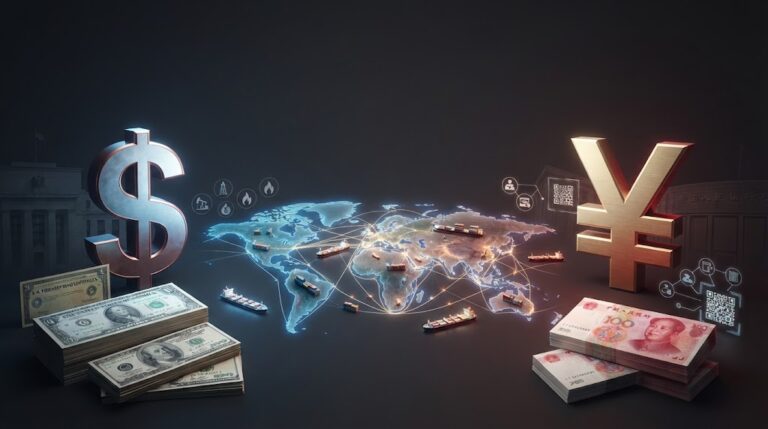
The BRICS Summit is putting de-dollarization, the U.S. dollar and the petroyuan back in focus as emerging economies expand local-currency trade and dollar alternatives. With China promoting the yuan, Russia reducing reliance on Western financial systems and Gulf economies strengthening ties with Asia, debate over dollar dominance, U.S. debt and the global reserve currency is growing. The BRICS Summit is becoming an important story for global finance, oil trade and the future of money.

What the BRICS Summit Is Trying to Change
The BRICS Summit is not simply about creating a replacement for the U.S. dollar. The broader objective is to give member countries more choices when they trade, invest and move money across borders. In this context, BRICS de-dollarization is better understood as a gradual attempt to reduce the role of the dollar rather than an immediate plan to eliminate it. is therefore better understood as a gradual attempt to reduce the role of the dollar rather than an immediate plan to eliminate it. Countries can increase the use of their own currencies, establish alternative payment channels and settle more transactions directly with trading partners. If those systems become easier and cheaper to use, companies and governments may have less reason to convert everything through the dollar-based financial system. Over time, that could reduce the dollar’s role in some areas of global commerce even while the currency remains the world’s dominant reserve and financial currency.
Why De-Dollarization Is Becoming More Important
The discussion around de-dollarization has become more important because international trade has traditionally depended heavily on the U.S. dollar. Energy, commodities, international debt, banking and foreign-exchange transactions have all benefited from the dollar’s liquidity and global acceptance. The BRICS Summit is giving member countries an opportunity to develop alternatives that could reduce that dependence. However, replacing the dollar completely would be extremely difficult because the United States still has the world’s deepest financial markets and one of the largest and most liquid government bond markets. For BRICS countries, the more realistic strategy is therefore to create additional options rather than attempt an overnight transformation of the global monetary system.
India Has Its Own Strategy
India is one of the most important countries to watch at the BRICS Summit because New Delhi is unlikely to support a financial system that simply replaces U.S. dollar dependence with dependence on the Chinese yuan. India has major economic relationships with the United States, Europe, Russia, the Gulf states and China, giving it an incentive to maintain flexibility. India has already developed one of the world’s most important digital payment systems through UPI and has explored greater use of the rupee in international transactions. This makes India an important part of the BRICS de-dollarization discussion because its strategy is focused more on payment diversification and local-currency settlement than on creating a single BRICS currency.
Russia Has Already Reduced Dollar Dependence
Russia represents one of the clearest examples of de-dollarization among the BRICS countries. Western sanctions have pushed Russia to develop alternative financial channels and increase its use of currencies other than the dollar and euro. The Chinese yuan has become particularly important because China is one of Russia’s largest trading partners. As the BRICS Summit brings Russia and other member states together, Moscow has a strong incentive to support payment systems that reduce reliance on Western-controlled financial infrastructure. Russia’s experience also demonstrates why building a genuine alternative to the dollar is difficult, because any replacement currency needs sufficient liquidity, international acceptance and financial infrastructure to support large-scale trade.
China and the Petroyuan
China is at the center of the petroyuan story because Beijing wants the yuan to play a larger role in global energy transactions. China is one of the world’s largest oil importers, giving it significant economic influence when negotiating with major energy producers. If more oil transactions between China and exporters are settled in yuan, those transactions can take place without relying entirely on the dollar. This does not mean that the BRICS Summit is creating a new global oil currency or that the dollar has been removed from energy markets. Instead, the petroyuan represents China’s longer-term effort to increase the international use of its currency and create a larger yuan-based financial ecosystem.
Saudi Arabia and the Gulf Could Change the Energy Equation
The role of Saudi Arabia and other Gulf economies makes the BRICS Summit particularly important for the future of energy finance. China is a major customer for Gulf oil, while Gulf states are increasingly expanding their economic relationships with Asian economies. This creates opportunities for greater currency diversification in energy trade. However, diversification should not be confused with abandoning the dollar. Saudi Arabia and other Gulf producers can continue to use the dollar extensively while also accepting other currencies or developing new financial relationships. If those arrangements expand over time, however, they could gradually weaken the dollar’s exclusive position in international energy transactions and strengthen the broader de-dollarization trend.

BRICS Is Building Alternative Payment Systems
The financial infrastructure being discussed around the BRICS Summit may ultimately be more important than the question of whether BRICS creates a common currency. India has UPI, Brazil has Pix, China has an enormous digital-payment ecosystem and Russia has developed alternatives to Western payment networks. These systems demonstrate that large economies can build payment infrastructure outside the traditional financial channels dominated by Western institutions. The long-term BRICS strategy could therefore focus on connecting different national payment systems so that countries can conduct more cross-border transactions without relying on the dollar for every stage of settlement. Such a development would make de-dollarization more practical because countries would have both the currencies and the infrastructure needed to conduct more international trade outside the traditional dollar system.
BRICS Is Not About to Create a Common Currency
One of the biggest misconceptions surrounding the BRICS Summit is that the member countries are preparing to launch a single currency that will immediately compete with the U.S. dollar. A common BRICS currency would require enormous coordination between economies with very different monetary policies, inflation rates, financial systems and political interests. China and India, for example, have major strategic and economic differences even though both are important BRICS members. The more realistic approach is for BRICS countries to increase local-currency trade, improve payment interoperability and expand financial cooperation. That strategy could produce meaningful de-dollarization without requiring the creation of a single BRICS currency.
The U.S. Treasury Market Adds Another Dimension
The BRICS Summit is taking place while the United States is also dealing with pressure in its Treasury market. The U.S. Treasury recently increased its long-term bond-buyback operation to as much as $6 billion, targeting Treasury securities with maturities of roughly 10 to 20 years in an effort to improve market liquidity. The move does not mean that the U.S. government is running out of money or that the Treasury market is collapsing, because buybacks are primarily a tool for improving market functioning. However, the timing is significant because long-term Treasury yields have remained elevated as investors consider large government borrowing requirements, inflation risks, heavy debt issuance and the fiscal outlook.
Why the Treasury Bond Buyback Matters
The recent Treasury bond buyback is important to the broader U.S. dollar story because the health of the Treasury market is closely connected to confidence in the American financial system. The Treasury purchased about $5.2 billion of long-term bonds in the latest operation, but long-term yields remained elevated, with the 30-year Treasury yield reaching levels not seen since 2004. That suggests the buyback alone is not enough to remove the deeper concerns investors have about long-term U.S. debt and borrowing requirements. The buyback should therefore not be presented as evidence of a dollar crisis, but it does show that U.S. officials are paying close attention to conditions in the Treasury market.
Could Treasury Market Problems Hurt the Dollar?
Higher Treasury yields do not automatically mean a weaker dollar. In fact, higher yields can attract international capital because investors may seek better returns from U.S. government securities. The bigger concern arises if yields remain high because investors demand a greater premium to compensate for rising debt, large fiscal deficits, inflation risk or uncertainty about the long-term supply of Treasury securities. In that situation, the U.S. dollar could eventually face pressure if international investors become less comfortable holding U.S. assets. This is where the Treasury market connects with the BRICS Summit and the broader de-dollarization debate, although it would be incorrect to claim that BRICS is responsible for rising U.S. Treasury yields.
The Dollar Is Still Dominant
Despite the growing de-dollarization movement, the U.S. dollar remains firmly at the center of the global financial system. IMF data showed that the dollar represented 57.13% of allocated global foreign-exchange reserves in the first quarter of 2026, compared with 56.42% in the previous quarter. That demonstrates that central banks have not suddenly abandoned the dollar, even as countries explore alternatives. The United States also continues to benefit from deep capital markets, enormous Treasury liquidity, a large economy and a financial system that remains heavily integrated into global trade.
BRICS Does Not Need to Replace the Dollar
The most important point coming from the BRICS Summit is that BRICS does not necessarily need to replace the U.S. dollar to reduce its influence. If member countries can conduct more trade using local currencies, settle some energy transactions in yuan or other currencies, connect alternative payment systems and diversify their foreign-exchange reserves, the dollar could gradually become less essential without losing its position as the world’s leading currency. This is why BRICS de-dollarization should be viewed as a long-term structural shift rather than a single event that suddenly changes the global financial system.
The Petroyuan Could Become More Important
The petroyuan is likely to remain one of the most closely watched parts of the BRICS financial strategy because energy is one of the largest sources of international currency demand. If more oil and gas transactions involving China are settled in yuan, international energy companies and exporters may have greater incentives to hold and use the Chinese currency. The BRICS Summit could strengthen discussions around this trend as China deepens relationships with major energy producers. However, the dollar remains deeply embedded in global energy markets, so the petroyuan should be viewed as an expanding alternative rather than a replacement for the dollar.

The Real Risk Is a More Fragmented Financial System
The long-term impact of the BRICS Summit may therefore be less about one currency defeating another and more about the global financial system becoming fragmented across several major currencies. China could increase the international use of the yuan, India could expand rupee-based settlement, Russia could continue using alternative currencies and Gulf economies could diversify their financial relationships. At the same time, the United States could retain the dollar’s leading role in global reserves, financial markets and international investment. Such a system would be more complicated than today’s dollar-centered system, but it could also give governments more choices over how they conduct international commerce.
What This Means for the U.S. Dollar
The BRICS Summit does not signal an immediate collapse of the U.S. dollar, but it does highlight a long-term challenge to the dollar’s dominance. The United States still possesses enormous financial advantages, yet the combination of BRICS de-dollarization, the growth of the petroyuan, alternative payment networks and pressure in the Treasury market creates a financial environment that looks increasingly different from the one that existed decades ago. The dollar can remain dominant while simultaneously losing some of its previous monopoly over international transactions.
The Bigger Financial Battle
The global financial battle is therefore moving beyond the simple question of whether BRICS can replace the dollar. The more important question is whether BRICS countries can successfully build enough financial infrastructure, local-currency liquidity and international trade relationships to make the dollar less necessary. At the same time, investors will continue watching the United States for signs that its Treasury market, fiscal position and debt burden remain sustainable. The BRICS Summit is bringing these issues together at an important moment because changes in global trade, energy markets and government bond markets are increasingly connected.
The Dollar Is Still King — But the Challenge Is Growing
The BRICS Summit is not about the immediate end of the U.S. dollar. Instead, it represents a broader effort by emerging economies to create more alternatives to the dollar-based financial system through local currencies, alternative payment networks, greater use of the yuan and potentially expanding petroyuan transactions. At the same time, pressure in the U.S. Treasury market, elevated long-term yields and the recent bond-buyback program are giving investors another reason to examine the long-term strength of the American financial system. The dollar remains dominant today, but the world is gradually moving toward a more diversified financial system in which BRICS de-dollarization could play an increasingly important role.