

Stay Updated
Binance Hack: $6.3B Crypto Heist as NXTT Considers $450M Bitcoin Sale
The Binance hack has sent shockwaves through the cryptocurrency industry after hackers stole approximately $6.3 billion in digital assets in what is being described as one of the largest crypto thefts on record. The FBI has linked the attack to North Korea, while Binance says it has replaced around 95% of the stolen assets and plans to resume withdrawals in phases.
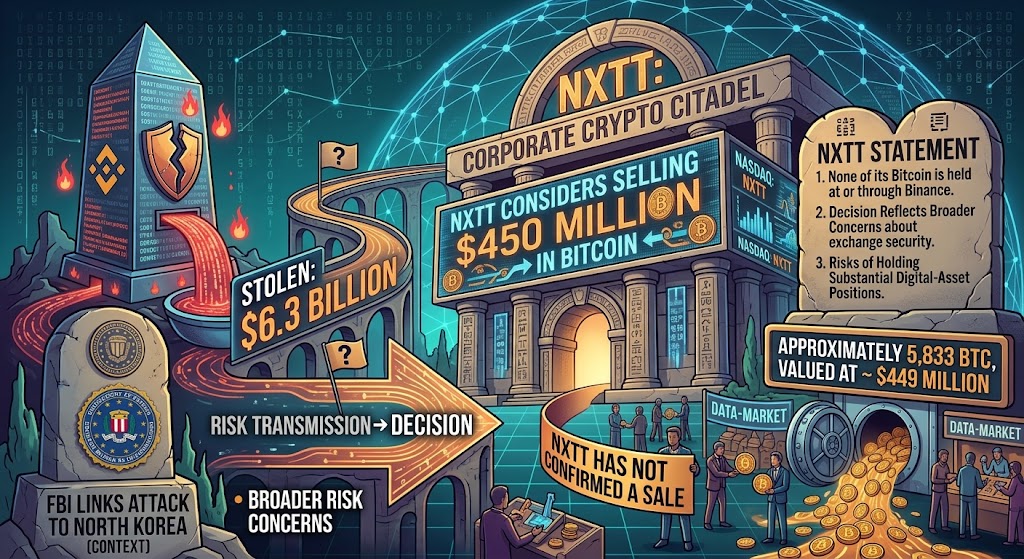
The incident is also influencing corporate Bitcoin decisions. Nasdaq-listed Next Technology Holding (NASDAQ: NXTT) has authorized management to sell or borrow against approximately 5,833 Bitcoin, worth about $449 million, citing concerns that include the Binance breach and potential quantum-computing threats.

What Happened in the Binance Hack?
The reported theft involved approximately $6.3 billion in Bitcoin and other digital assets held in Binance wallets. Blockchain intelligence firms traced the movement of funds across ten blockchains, with a significant portion reportedly moved within roughly 20 minutes.
The FBI has attributed the operation to North Korean cyber actors associated with the TraderTraitor group. Investigators say the stolen assets have been converted and moved through cryptocurrency networks, with Ethereum playing a major role in the reported laundering activity.
The attribution is significant because North Korean-linked hacking groups have previously been connected to major cryptocurrency thefts. However, identifying the group does not mean investigators have publicly identified every individual involved or recovered all the stolen assets.
How Was the Binance Hack Executed?
The exact technical details remain under investigation. Binance’s preliminary explanation pointed to a compromised employee or development-operations laptop and multiple possible points of access. The exchange said it had found no evidence that wallet private keys were leaked.
The reported attack appears to have involved access to internal systems and the movement of assets from affected wallets. Once the attackers gained the ability to initiate unauthorized transactions, funds were transferred across multiple blockchain networks.
Blockchain analytics firms reported that a large volume of assets moved rapidly, making it difficult for exchanges and other service providers to identify and freeze every transaction before the funds moved again.
It is important to distinguish what has been disclosed from what remains unknown: Binance has not publicly established every step of the intrusion, and the compromised-laptop explanation should not be treated as a complete technical account of the attack.

Binance Responds and Moves to Cover the Losses
Binance has said it will cover the financial impact on users. Recent reporting indicates that the exchange has replaced approximately 95% of the stolen assets and plans to resume cryptocurrency withdrawals in phases.
The company has also worked with industry partners to freeze a substantial amount of affected funds. These figures should not be confused: the estimated amount stolen, the amount frozen and the assets Binance has replaced measure different things.
The response is important for customer confidence. However, covering losses does not remove the security questions raised by an incident of this scale.
NXTT Considers Selling $450 Million in Bitcoin
The Binance hack has also become part of the risk discussion for companies holding large Bitcoin reserves.
Next Technology Holding (NASDAQ: NXTT) has authorized management to sell or borrow against approximately 5,833 BTC, valued at around $449 million based on the reported valuation. The company has not confirmed that it has completed a sale.
NXTT has said none of its Bitcoin is held at or through Binance. Its decision therefore appears to reflect broader concerns about cryptocurrency exchange security and the risks involved in holding substantial digital-asset positions.
The reported value of the Bitcoin reserve is also striking compared with the company’s reported market capitalization. However, the identity of its custodians and the public wallet addresses for the holdings have not been disclosed, limiting independent verification of the reserve.
Why NXTT Is Reconsidering Its Bitcoin Exposure
Binance exchange security: The $6.3 billion Binance hack demonstrated the potential risks associated with cryptocurrency exchange infrastructure.
Cryptocurrency custody risks: The incident has renewed concerns about how institutions store, protect and manage large Bitcoin holdings.
Quantum computing threats: NXTT also cited potential quantum computing risks to Bitcoin’s cryptographic security.
The company’s authorization gives management flexibility. It does not mean NXTT has decided to liquidate its entire Bitcoin position, and investors should not interpret the announcement as confirmation of an imminent sale.
What the Binance Hack Means for Bitcoin Investors
The incident highlights a distinction that every cryptocurrency investor should understand: Bitcoin’s blockchain and the companies that provide access to it are not the same thing.
A blockchain can continue operating while an exchange, wallet provider or internal corporate system experiences a security breach. Investors therefore face risks beyond the market price of Bitcoin, including custody arrangements, operational controls and the security of third-party platforms.
The NXTT decision also shows how a major exchange incident can influence companies that are not directly affected by the breach. Institutional holders may reassess where they store assets, how much exposure they maintain to exchanges and whether borrowing against Bitcoin is preferable to selling it.
The Binance hack is therefore more than a story about stolen cryptocurrency. It is a reminder that institutional adoption depends not only on Bitcoin’s long-term potential but also on the security and reliability of the infrastructure surrounding it.