
Stay Updated
Future Trends in MVP Development: How Startups Will Build Faster
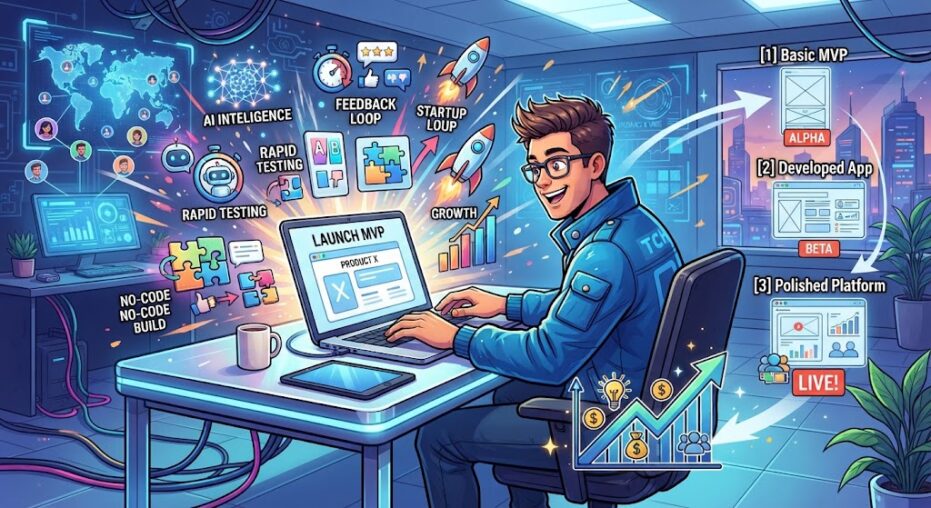
The future of startups is closely connected to MVP development, as entrepreneurs look for faster and more cost-effective ways to turn ideas into successful businesses. A Minimum Viable Product (MVP) allows a startup to launch a basic version of a product with its most important features, test the idea with real users, and gather valuable feedback before investing heavily in development. As technology changes and competition increases, startups need to move quickly while avoiding unnecessary costs. Therefore, MVP development will continue to play an important role in helping founders validate ideas, understand customers, and build products that solve real problems.
Agile MVP Development Will Become the Standard
First, agile development will make MVP development faster and more flexible. Instead of spending months creating a complete product, startups can release an initial version, monitor customer behavior, and improve the product through multiple development cycles. This approach allows founders to respond quickly when customers request new features or market conditions change. Moreover, agile development gives startups the flexibility to change direction when an original idea does not produce the expected results. As a result, more founders will treat an MVP as the beginning of an ongoing product-development process rather than a one-time launch.
AI Will Transform MVP Development
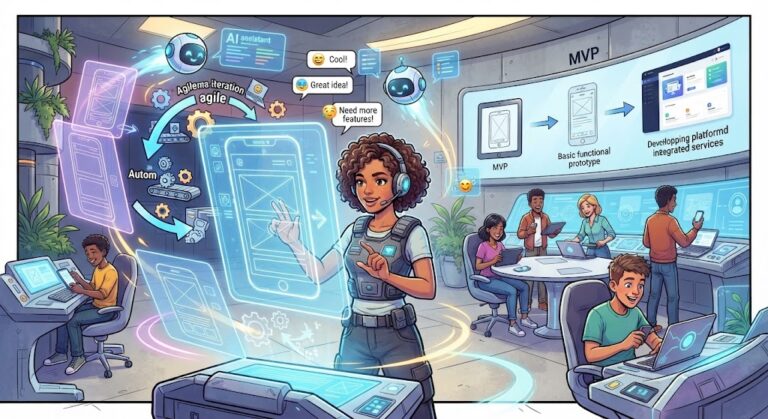
At the same time, artificial intelligence will significantly change MVP development. Startups can already use AI tools to support coding, design, research, customer service, content creation, data analysis, and software testing. In the future, these capabilities could allow small teams to build and test products much faster. For example, an AI system could analyze customer feedback and identify the features users request most frequently. It could then help developers prioritize those improvements. Consequently, startups may accomplish more with smaller teams while reducing the time and resources required to test new ideas.
AI will also help founders understand their markets before they build. Instead of relying entirely on traditional research, entrepreneurs can analyze large amounts of customer data, online discussions, reviews, and behavioral information to identify potential problems. However, founders still need to verify those insights with real customers. AI can accelerate the research process, but real-world validation remains essential.
No-Code Tools Will Make MVPs More Accessible
Another major trend will be the continued growth of no-code and low-code platforms. Traditionally, entrepreneurs needed experienced developers to build even a basic digital product. Now, no-code tools allow founders to create websites, applications, marketplaces, dashboards, and other digital products with significantly less technical expertise. This development can reduce the cost of MVP development and allow entrepreneurs to test concepts before hiring larger technical teams.
Furthermore, no-code platforms can help founders experiment with multiple ideas. If one concept fails to attract users, the entrepreneur can move on without losing a large development budget. If the MVP succeeds, the startup can later invest in a more sophisticated technical infrastructure. Therefore, no-code development will likely become an important part of the early-stage startup ecosystem.
Communities Will Help Startups Build Better MVPs
In addition, startups will increasingly involve users in MVP development from the beginning. Instead of developing products privately and revealing them at launch, founders can create beta programs, online communities, waitlists, and early-access groups. These communities can provide direct feedback about product features, pricing, usability, and customer needs.
More importantly, early users can become some of a startup’s strongest supporters. When customers participate in product development, they can develop a stronger connection with the company. Startups can then use that early community to generate feedback, referrals, and initial demand. Thus, community-driven development can help entrepreneurs validate both their products and their potential customer base.
Startups Will Build More Localized MVPs
Meanwhile, global markets will encourage startups to create more localized MVPs. A product that works well in one country may not work equally well in another because customers have different languages, payment preferences, regulations, and purchasing habits. Instead of launching everywhere at once, startups can test their products in specific markets.
For example, a fintech startup might create an MVP for one market before expanding into additional countries. The company can learn from its first users, adjust its product, and then enter new markets with greater confidence. This approach can reduce expansion risks while giving founders a clearer understanding of local demand.
Bootstrapping Will Keep MVP Development Lean
Financial considerations will also influence the future of MVP development. Although venture capital can help startups grow quickly, many founders want to maintain greater control over their companies. Bootstrapping, crowdfunding, subscriptions, pre-orders, and early customer revenue can provide alternatives to raising large amounts of outside capital.
A strong MVP can help founders demonstrate that customers actually want their product before they approach investors. Consequently, entrepreneurs may be able to negotiate from a stronger position when they eventually seek funding. At the same time, revenue generated from an early product can help finance additional development without immediately depending on outside investors.
MVPs Will Become Continuous Experiments
Perhaps the biggest change will involve how entrepreneurs define an MVP. In the past, founders often viewed an MVP simply as a smaller version of their final product. Today, an MVP can take many forms, including a prototype, landing page, waitlist, manual service, beta application, or basic software platform.
Therefore, the purpose of MVP development is not simply to build something quickly. The real objective is to test an important business assumption with the least amount of wasted time and money. A startup might discover that customers want a completely different feature than the founder originally expected. Learning this information early can save significant resources.
Airbnb, Dropbox and Twitter Show the Power of MVP Thinking
Several successful technology companies demonstrate why early product validation matters. Airbnb began with a simple approach to testing whether people would pay to stay in a private home. Dropbox used an early demonstration to communicate its product concept before building the complete service. Twitter also evolved considerably from its original concept. These examples show that successful companies do not always begin with the polished platforms that customers see years later.
Instead, founders can start small, learn from users, and gradually expand. This principle remains particularly relevant today because modern startups face intense competition and rapidly changing technology.
The Future of Startups Will Depend on Faster Validation
Ultimately, MVP development will remain a powerful strategy for startups because it helps founders replace assumptions with evidence. AI will accelerate research and development, no-code tools will lower technical barriers, agile methods will speed up experimentation, and online communities will provide continuous customer feedback. At the same time, bootstrapping and alternative funding models can help entrepreneurs maintain control while they validate their ideas.
The startups that succeed in the coming years will not necessarily be the companies with the biggest teams or the largest initial budgets. Instead, they may be the companies that learn fastest. By building an MVP, measuring real customer behavior, listening to feedback, and continuously improving their products, entrepreneurs can reduce risk and discover opportunities earlier. As a result, MVP development will remain at the center of how ambitious startups turn ideas into scalable businesses.