
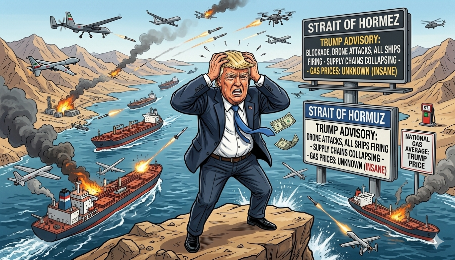
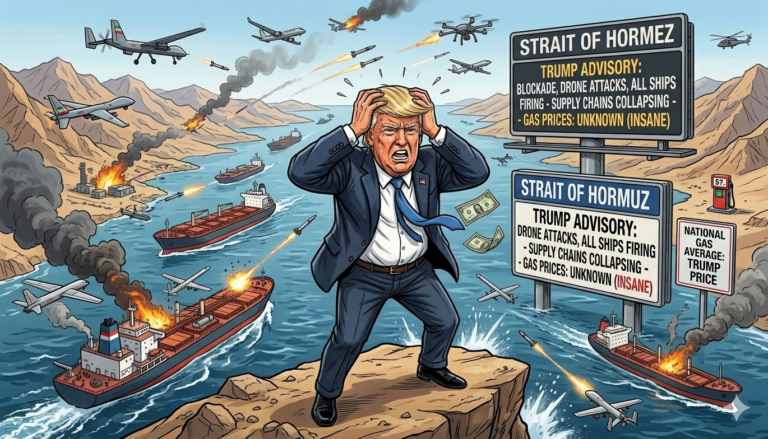
Strait of Hormuz Reversal Sparks Global Shock in Oil, Shipping, and U.S. Strategy
Global markets entered the weekend expecting relative stabilization in the Strait of Hormuz after early signals suggested limited easing of tensions. That optimism collapsed rapidly on Saturday, April 18, 2026, when reports of the Strait of Hormuz Reversal confirmed that violence had resumed in one of the world’s most critical shipping corridors.
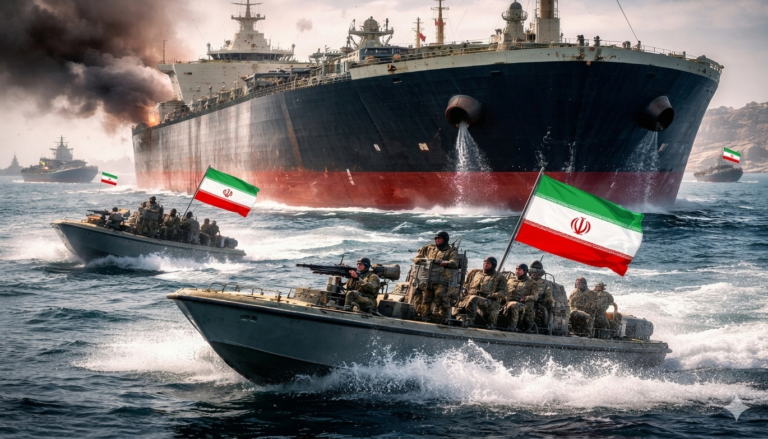
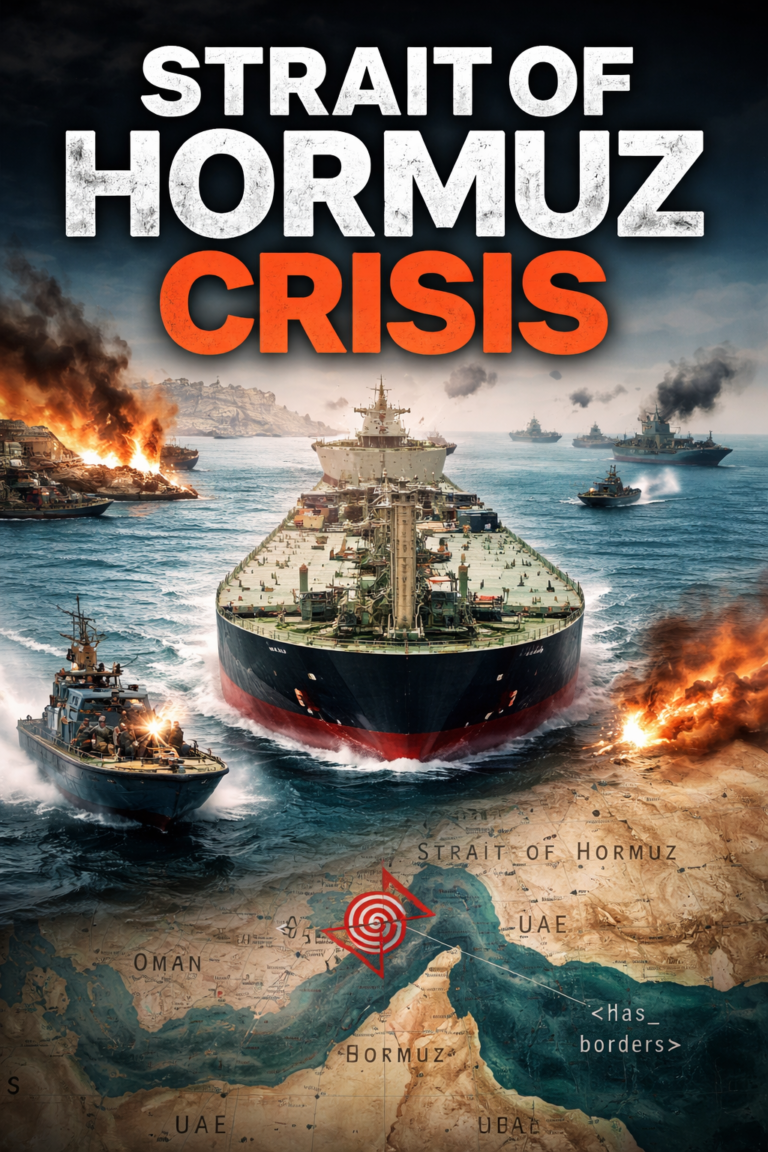
Within hours, Iranian Revolutionary Guard Corps (IRGC) naval units engaged commercial shipping activity near the Strait, forcing vessels to abort transit attempts and reverse course. Maritime tracking sources confirmed that two IRGC gunboats opened fire on a commercial tanker approximately 20 nautical miles northeast of Oman, triggering immediate panic across global shipping networks.
At nearly the same time, the Indian-flagged supertanker was forced to turn back mid-transit, reinforcing the perception that safe passage through the Strait had once again broken down. What had appeared to be a temporary de-escalation quickly transformed into a renewed crisis.
By Saturday evening, the situation escalated further when Iranian authorities issued a formal directive confirming that the Strait of Hormuz had been closed again, reversing any earlier assumptions of reopening. Brigadier General Mohammad Reza Naqdi stated that vessels attempting to approach the Strait would be treated as acting in cooperation with hostile forces.
This rapid sequence — partial calm, naval engagement, and full closure — marked one of the most volatile 24-hour cycles in recent maritime history.
🛢️ Oil Markets Reprice Global Supply Risk in Real Time
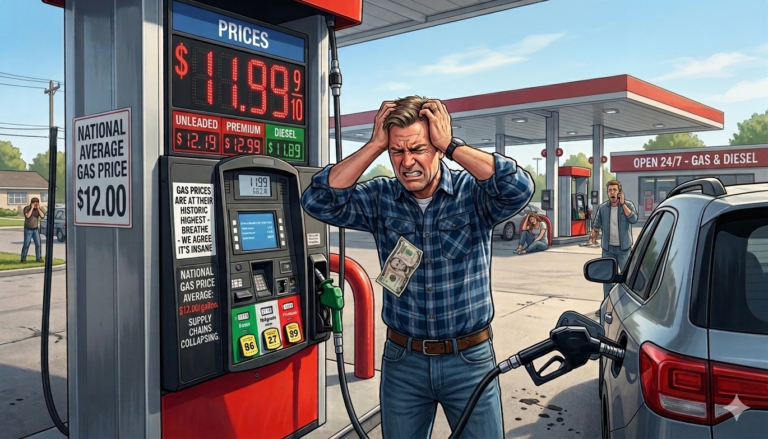
Oil markets reacted instantly to the renewed closure and the ongoing Strait of Hormuz Reversal. Crude prices surged as traders aggressively reintroduced a geopolitical risk premium tied to the Strait of Hormuz Reversal, reflecting the vulnerability of global supply chains passing through the Strait of Hormuz.
The Strait is one of the most important energy chokepoints in the world, and even partial disruption forces immediate repricing of global crude flows. As uncertainty returned, investors rotated aggressively into energy exposure, particularly major producers such as Exxon Mobil, Occidental Petroleum, and Suncor Energy.
At the same time, downstream markets began adjusting. Gasoline and diesel prices are expected to rise as refiners pass through higher input costs, while aviation fuel markets tighten due to logistics uncertainty. The broader trend is clear: energy pricing is no longer driven purely by demand fundamentals but increasingly by geopolitical risk cycles.
🚢 Shipping Confidence Breaks Down After Gunboat Incident
The maritime impact of the Strait of Hormuz Reversal has been immediate and severe. The reported IRGC gunboat engagement near Oman significantly weakened confidence in the reliability of transit through the Strait.
Even in the absence of widespread vessel destruction, the operational effect is identical: shipping companies can no longer assume safe passage. As a result, global logistics firms have begun:
- Rerouting tankers away from high-risk corridors
- Increasing reliance on naval escorts
- Raising war-risk insurance premiums
- Delaying time-sensitive cargo movements
The key shift is psychological. Maritime systems rely on predictability, and this breakdown has erased that predictability. When confidence breaks, global supply chains slow—even without a full blockade.
🏭 Pentagon Moves Toward Detroit as Industrial Defense Capacity Tightens
While maritime markets absorbed the shock of the Strait of Hormuz Reversal, a parallel transformation unfolded in U.S. industrial policy. Reports indicate that the Pentagon has expanded engagement with Ford and General Motors, exploring the potential conversion of automotive manufacturing capacity into defense production systems.
This development reflects a broader structural shift often described as the “Arsenal of Democracy 2026” pivot, where civilian manufacturing infrastructure is increasingly evaluated as strategic defense capacity.
The focus is not theoretical. Modern automotive production already integrates robotics, AI-assisted systems, electric powertrains, and advanced sensor networks — all of which align directly with next-generation defense manufacturing requirements.
As a result, Detroit is being repositioned as a dual-use industrial base, capable of shifting between civilian vehicle production and military systems such as drones, autonomous vehicles, and electronic warfare platforms.
This transition reflects a broader recognition that industrial flexibility has become a national security asset.
🛢️ Exxon’s Guyana Expansion Emerges as Key Supply Alternative
As Middle Eastern supply risk intensifies, investors are increasingly rotating toward alternative production hubs outside geopolitical chokepoints. One of the most closely watched developments is ExxonMobil’s expanding operations in Guyana.
Guyana is entering a major production acceleration phase that is reshaping global supply expectations. The country is on track to surpass 1 million barrels per day of total output in late 2026, positioning it as one of the fastest-growing offshore oil regions globally.
A key driver of this expansion is the Uaru development, where the Errea Wittu FPSO is scheduled to begin production in 2026. This project alone is expected to add approximately 250,000 barrels per day to global supply.
At the same time, Exxon is actively pursuing optimization of the Yellowtail project, with ongoing debottlenecking efforts targeting output levels near 290,000 barrels per day, pending regulatory approval.
Together, these expansions are transforming Guyana into a critical non-OPEC supply hub. In the current environment, this is not just a growth story — it is increasingly viewed as a strategic hedge against Middle Eastern chokepoint instability.
🧠 AI Becomes the Invisible Layer Connecting Energy and Defense
Underlying both the energy shock and industrial shift is a deeper structural trend: the rapid integration of artificial intelligence into critical infrastructure systems.
AI is now being deployed across maritime surveillance, autonomous threat detection, energy forecasting, and defense coordination systems. This creates a unified operational layer where energy security, logistics management, and military response systems are increasingly interconnected.
As volatility increases, AI is no longer a standalone technology sector. It is becoming the coordination infrastructure for global risk management.
⚡ Market Outlook for Monday: Volatility and Rotation Expected
Heading into Monday’s trading session, markets are expected to open under significant pressure and volatility. The rapid escalation and reversal cycle over the weekend has created an environment where traders must continuously reprice geopolitical risk in real time.
Energy markets are likely to gap higher as supply risk remains elevated. Defense and security-related equities are expected to outperform as investors continue to position for sustained geopolitical tension. At the same time, sectors exposed to global logistics, transportation, and discretionary consumption may face downside pressure due to rising fuel costs and uncertainty in shipping flows.
The key theme heading into the week is not resolution — it is continued uncertainty and repeated disruption cycles.
⚠️ Final Take: Markets Enter a Structural Geopolitical Pricing Phase
The events of April 18–19, 2026, represent more than a regional escalation. They mark a broader shift in how global markets interpret risk.
Energy is now priced around supply vulnerability rather than just demand. Shipping systems are operating under persistent uncertainty. Industrial policy is shifting toward dual-use manufacturing capability. And AI is becoming the underlying infrastructure connecting all three.
What is emerging is a global environment where geopolitical instability is no longer episodic — it is structural. The Strait of Hormuz is no longer just a shipping route. It has become one of the central pressure points in the global economic system, shaping energy markets, defense strategy, and industrial transformation simultaneously.