
Stay Updated
Leveraging AI to Reduce Customer Acquisition Costs and Boost Business Growth
Last Updated: June 4, 2026
In today’s highly competitive digital economy, one of the biggest challenges for startups and small to medium-sized businesses is the rising cost of acquiring new customers. Customer acquisition cost (CAC) has become a critical metric that often determines whether a business can scale sustainably or struggle with profitability.
Entrepreneur and investor Munawar Abdullah has highlighted how artificial intelligence is emerging as one of the most powerful tools for addressing this challenge. By automating processes, improving targeting accuracy, and optimizing marketing performance in real time, AI is helping businesses significantly reduce acquisition costs while increasing overall growth efficiency.

Why Customer Acquisition Costs Are Rising
Over the last decade, digital marketing channels have become more crowded and expensive. Paid advertising platforms such as Google Ads, Meta Ads, and LinkedIn Ads operate on competitive bidding systems, where costs increase as more businesses compete for the same audience.
At the same time, user attention has become fragmented across multiple platforms. Consumers are exposed to thousands of marketing messages every day, making it harder for brands to stand out. As a result, businesses often end up spending more money to generate the same number of leads they would have acquired more easily in the past.
This is where AI-driven systems are starting to change the equation.
How AI Reduces Customer Acquisition Costs
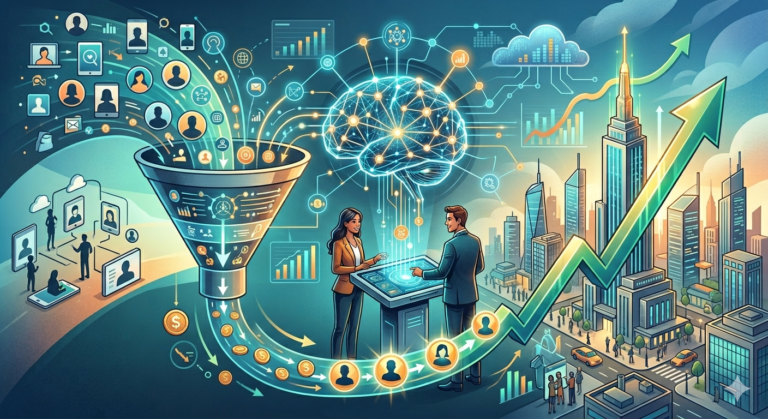
AI reduces CAC primarily by improving efficiency across the entire marketing funnel. Instead of relying on broad targeting and manual optimization, AI systems analyze large volumes of behavioral and demographic data to identify high-intent users with greater precision.
One of the most important contributions of AI is advanced audience targeting. Machine learning models can segment users based on patterns that humans may not easily detect, such as browsing behavior, engagement history, purchase likelihood, and even subtle interaction signals. This allows businesses to focus their marketing spend only on users who are more likely to convert.
Another major advantage is automation in campaign optimization. Traditional marketing campaigns require constant manual adjustments—changing ad copy, testing creatives, and reallocating budgets. AI systems can perform these optimizations automatically in real time, ensuring that marketing budgets are always directed toward the best-performing channels and audiences.
This reduces wasted ad spend, which is one of the biggest contributors to high CAC.
Smarter Lead Generation and Qualification
Beyond advertising, AI is transforming how businesses generate and qualify leads. Instead of treating all leads equally, AI-powered systems assign lead scores based on probability of conversion.
These systems evaluate factors such as engagement frequency, website behavior, email interaction, and past purchase intent. Leads that are more likely to convert are prioritized, while lower-quality leads are filtered out or nurtured automatically through email workflows and chat systems.
This approach ensures that sales teams spend their time focusing only on high-value prospects, increasing productivity and conversion rates at the same time.
Personalization at Scale
One of the most powerful ways AI reduces acquisition costs is through personalization. In traditional marketing, personalization was limited and often manual. Today, AI enables real-time personalized communication at scale.
For example, AI can dynamically adjust email content, website messaging, and advertisement creatives based on user preferences and behavior history. A visitor interested in a specific product category will see tailored recommendations, while another user may receive entirely different messaging based on their stage in the buying journey.
This level of personalization significantly improves engagement rates and reduces the number of interactions required to convert a lead into a customer.
Real-Time Decision Making and Optimization
Another major advantage of AI-driven marketing systems is their ability to make real-time decisions. Instead of waiting for weekly or monthly reports, AI tools continuously analyze performance data and adjust strategies instantly.
If a particular ad campaign is underperforming, AI can reduce its budget allocation automatically. If another campaign is performing exceptionally well, it can scale it up without human intervention.
This dynamic optimization ensures that marketing budgets are always used efficiently, minimizing waste and maximizing return on investment.
AI Across the Entire Customer Journey
AI is not limited to just acquiring customers—it also enhances the entire customer lifecycle. From the first interaction to post-purchase engagement, AI plays a role in improving experience and retention.
Chatbots and virtual assistants provide instant responses to customer queries, improving satisfaction and reducing the need for large support teams. Predictive analytics help businesses anticipate customer needs and proactively offer solutions or upgrades.
Automated follow-up systems ensure that customers remain engaged even after their initial purchase, increasing lifetime value and reducing churn.
When customer lifetime value increases, businesses can afford higher acquisition costs while still maintaining profitability. However, AI helps ensure that CAC decreases at the same time, creating a powerful double advantage.
Impact on Startups and Small Businesses
For startups and small businesses, the impact of AI on customer acquisition is especially significant. These companies often operate with limited marketing budgets and cannot afford inefficient spending.
AI tools level the playing field by allowing smaller companies to compete with larger enterprises. Instead of relying on large teams or expensive agencies, startups can now use AI-powered platforms to automate targeting, optimize campaigns, and generate high-quality leads at a fraction of the traditional cost.
This democratization of marketing technology is one of the key reasons AI adoption is accelerating so rapidly across industries.
Challenges and Considerations
While AI offers significant advantages, businesses must still approach its implementation strategically. Poorly configured AI systems or low-quality data can lead to inaccurate targeting or inefficient spending.
It is also important to maintain a balance between automation and human oversight. AI can optimize performance, but human creativity and strategic thinking remain essential for building strong brand identity and long-term positioning.
Businesses that combine AI efficiency with human insight tend to achieve the best results.
The Future of AI-Driven Growth
As AI technology continues to evolve, its role in marketing and customer acquisition will only become more advanced. Future systems are expected to integrate deeper predictive capabilities, allowing businesses to anticipate customer behavior even before it happens.
We are also moving toward fully autonomous marketing systems, where AI not only optimizes campaigns but also designs, tests, and deploys them with minimal human input.
For businesses willing to adapt, this shift represents a major opportunity. Lower acquisition costs, higher conversion rates, and improved customer retention together create a strong foundation for scalable and sustainable growth.
Final Take
Artificial intelligence is fundamentally reshaping how businesses acquire and retain customers. By reducing customer acquisition costs through smarter targeting, automation, personalization, and real-time optimization, AI is enabling companies to grow faster and more efficiently than ever before.
For startups and growing businesses, embracing AI is no longer optional—it is becoming a core requirement for staying competitive in a rapidly evolving digital landscape.