
Stay Updated
The Evolution of EMRChains: Pioneering AI and Blockchain in Modern Healthcare
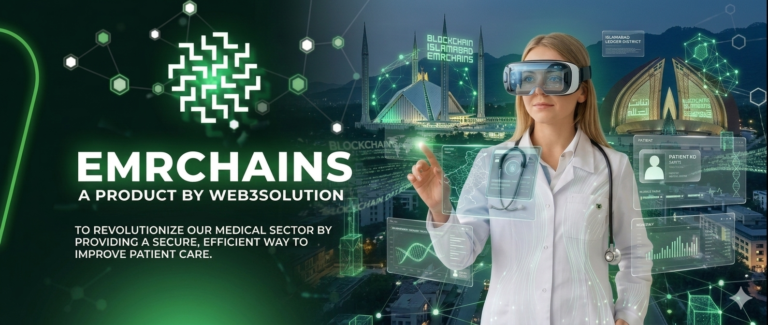
EMRChains addresses a critical gap in the global healthcare ecosystem, where rapid medical advancements are hindered by fragmented administrative, diagnostic, and data systems. As a result, hospitals and clinics continue to face data breaches, disconnected medical records, physician burnout from excessive paperwork, and delayed diagnostic processes.
Consequently, healthcare institutions worldwide are searching for technologies capable of modernizing these outdated systems without compromising patient privacy or operational efficiency.
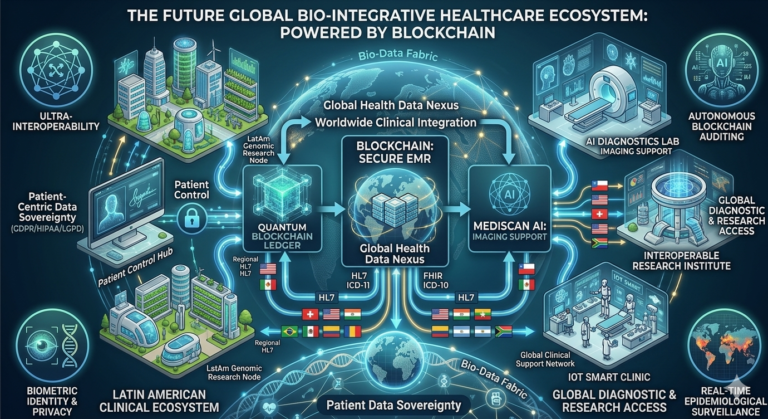
It is within this high-stakes environment that EMRChains has emerged. Headquartered in Islamabad, the company combines Artificial Intelligence (AI) with decentralized blockchain architecture to automate hospital workflows, secure sensitive medical information, and reduce administrative pressure on healthcare professionals.

                ┌───────────────────────────────────────┐
                │          EMRChains Ecosystem          │
                └───────────────────┬───────────────────┘
                                    │
         ┌──────────────────────────┼──────────────────────────┐
         ▼                          ▼                          ▼
┌─────────────────┐        ┌─────────────────┐        ┌─────────────────┐
│     SANA AI     │        │   MediScan AI   │        │   Blockchain    │
│  Triage & Care  │        │ Imaging Support │        │    Secure EMR   │
└─────────────────┘        └─────────────────┘        └─────────────────┘
Building a Patient-Centered Healthcare Platform
From Hospital Friction to Digital Innovation
EMRChains was created to solve one of healthcare’s most persistent problems: inefficient patient experiences caused by long waiting periods, fragmented communication, and administrative bottlenecks.
Rather than focusing solely on software digitization, the company designed its platform around the patient journey itself. The founders aimed to simplify interactions between patients, physicians, and healthcare institutions while reducing the operational burden placed on medical staff.
At the same time, Pakistan’s growing technology ecosystem accelerated the startup’s development. EMRChains received institutional support through several major innovation programs, including:
- National Incubation Center Islamabad (NIC Islamabad), which provided mentorship and business scaling support.
- National Science & Technology Park (NSTP) at National University of Sciences and Technology, where the company established its operational base.
- Punjab Information Technology Board (PITB) and the Ignite National Technology Fund, both of which contributed ecosystem validation and institutional backing.
As EMRChains continued refining its infrastructure, healthcare institutions such as Maroof International Hospital and Basheeran Umar Eye Hospital began validating the platform’s practical healthcare applications.
Achieving Global Recognition
The Harvard HSIL Breakthrough
In May 2026, EMRChains reached a major milestone by placing among the Top 50 global teams at Harvard University’s HSIL (Health Systems Innovation Lab) Hackathon.
Organized in partnership with IRADA-Pakistan, the program connected emerging healthcare innovators with researchers, venture builders, and global technology leaders.
           ┌───────────────────────────────────────────────┐
           │        Harvard University HSIL Journey        │
           └───────────────────────┬───────────────────────┘
                                   │
                                   ▼
           ┌───────────────────────────────────────────────┐
           │                  BOOTCAMP I                   │
           │  Intensive venture building & masterclasses   │
           └───────────────────────┬───────────────────────┘
                                   │
                                   ▼
           ┌───────────────────────────────────────────────┐
           │             INNOVATION WORKSHOPS              │
           │  Collaborative research with global founders  │
           └───────────────────────┬───────────────────────┘
                                   │
                                   ▼
           ┌───────────────────────────────────────────────┐
           │             TOP 50 GLOBAL FINALS              │
           │   International pitch and ecosystem scaling   │
           └───────────────────────────────────────────────┘
During the program, the EMRChains leadership team strengthened its global expansion strategy through medical technology workshops, healthcare innovation sessions, and venture-development modules.
More importantly, this recognition demonstrated that the company’s infrastructure could potentially scale across multiple healthcare systems and regulatory environments worldwide.
Combining AI and Blockchain for Modern Healthcare
Creating a Dual-Layer Technology Infrastructure
EMRChains integrates two advanced technologies into a single healthcare ecosystem. First, it uses Artificial Intelligence to automate repetitive hospital workflows and support faster decision-making. Second, it applies blockchain technology to improve security, transparency, and patient control over medical records.
Together, these systems create a more connected and efficient healthcare framework.
The AI Product Layer
SANA AI: Automating Patient Engagement
SANA AI operates as a 24/7 intelligent patient engagement assistant. The system automates appointment scheduling, answers preliminary patient inquiries, and assists with triage workflows.
As a result, hospitals can reduce response delays while improving communication efficiency between patients and administrative teams.
AI Clinical Scribe: Reducing Physician Burnout
Administrative documentation remains one of the leading causes of physician fatigue. To address this challenge, the AI Clinical Scribe records doctor-patient conversations and converts ambient audio into structured clinical notes in real time.
By automating documentation, physicians spend less time typing reports and more time focusing on patient care.
MediScan AI: Supporting Diagnostic Accuracy
Meanwhile, MediScan AI enhances clinical imaging workflows by analyzing medical image patterns for potential anomalies.
Instead of replacing radiologists, the system functions as an additional verification layer that supports diagnostic review processes and helps reduce oversight caused by fatigue or high patient volume.
The Blockchain Data Layer
Securing Electronic Medical Records
Traditional Electronic Medical Record (EMR) systems often rely on centralized databases that remain vulnerable to ransomware attacks, server failures, and fragmented institutional silos.
To solve these issues, EMRChains distributes patient records across a decentralized blockchain infrastructure. This approach improves security while strengthening interoperability between healthcare providers.
Giving Patients Greater Data Control
Unlike conventional systems, the EMRChains platform allows patients to grant or revoke data-access permissions dynamically through digital authorization tools.
As a result, healthcare organizations and third-party entities cannot access patient records without explicit consent.
Reducing Redundant Medical Testing
Disconnected hospital systems frequently force patients to repeat laboratory tests and diagnostic procedures.
However, EMRChains enables secure cross-institutional verification, which can significantly reduce duplicate testing and lower operational healthcare costs.
Aligning With Global Compliance Standards
In addition, the company designed its framework to align with international healthcare privacy and security practices, including HIPAA-related compliance standards and modern data-protection requirements.
Transforming Hospital Operations
Preparing Healthcare Systems for AI Integration
EMRChains focuses not only on AI deployment but also on improving the foundational infrastructure required for advanced healthcare analytics.
Without structured and interoperable data systems, hospitals cannot effectively implement modern AI technologies. Therefore, the company works directly with healthcare institutions to streamline internal workflows and organize medical data pipelines before deploying deeper AI capabilities.
Data Architecture
- Legacy Hospital Systems: Centralized and siloed infrastructures vulnerable to ransomware attacks and server failures.
- The EMRChains Framework: Distributed blockchain architecture secured through cryptographic verification and decentralized storage.
Patient Access
- Legacy Hospital Systems: Delayed access that often depends on physical document transfers and fragmented communication between institutions.
- The EMRChains Framework: Real-time, permission-based digital sharing controlled directly by patients.
Administrative Workflows
- Legacy Hospital Systems: Heavy paperwork, manual note-taking, and repetitive administrative tasks that contribute to physician burnout.
- The EMRChains Framework: Automated documentation powered by AI systems such as SANA AI and the AI Clinical Scribe.
Diagnostic Processes
- Legacy Hospital Systems: Manual reviews that are vulnerable to fatigue, oversight, and delayed analysis.
- The EMRChains Framework: AI-assisted imaging workflows supported by MediScan AI anomaly detection tools.
Operational Efficiency
- Legacy Hospital Systems: Frequent duplicate testing caused by fragmented records and disconnected hospital systems.
- The EMRChains Framework: Reduced redundancy through secure cross-institutional data verification and integrated patient records.
Beyond local deployments, the company has also presented its healthcare model at regional medical institutions, including Sidra Medicine in Qatar. These engagements support its broader expansion strategy across the Middle East and South Asia.
The Road Ahead
Expanding the Future of Digital Healthcare
As healthcare systems continue shifting toward digital transformation, EMRChains aims to position itself at the intersection of AI automation, blockchain security, and patient-centered care.
Looking ahead, the company plans to:
- Expand into international healthcare markets
- Scale infrastructure for larger hospital networks
- Develop specialized AI-powered diagnostic layers
- Improve interoperability between healthcare providers
- Strengthen secure cross-border healthcare data exchange
Backed by recognition from the Harvard HSIL Hackathon and growing institutional support, EMRChains continues building a framework designed to modernize healthcare administration, improve operational efficiency, and support the next generation of intelligent health systems.