
Stay Updated
The Great Digital Reset: Why 99% of Your NFT Portfolio is Now Obsolete
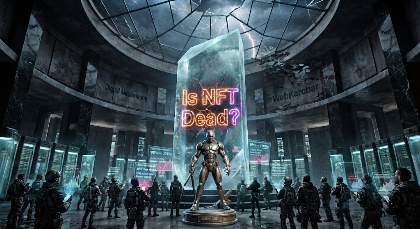
The “NFT” as you knew it in 2021 is dead.
If you are still waiting for your pixelated profile pictures to return to their “all-time highs,” you aren’t investing—you’re participating in a digital memorial. As of July 2026, the digital asset market has undergone a brutal, necessary “Great Reset.” The speculative frenzy has vanished, and what remains is a streamlined, institutional-grade infrastructure that is quietly reshaping global finance.
The 99% Washout
The data is uncompromising: approximately 96–99% of all PFP (profile picture) collections launched during the 2021 hype cycle now have zero trading volume. The “floor price” models that fueled the initial boom relied entirely on speculative momentum—the assumption that someone else would always pay more for a digital status symbol.
When macro-economic conditions tightened and speculative capital exited, that lack of underlying utility caused the secondary market to collapse. If an asset failed to offer a clear, productive use case—such as commercial licensing rights, structural governance, or sustainable ecosystem utility—it effectively ceased to exist as an investment tool.
The Institutionalization of Digital Gold
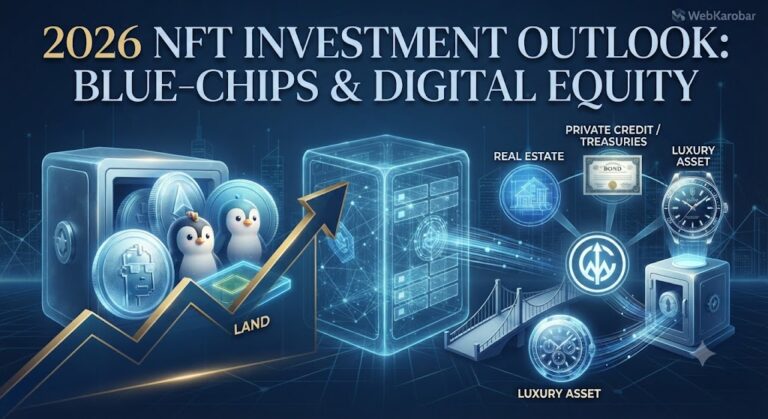
This crash did not destroy the digital asset class; it stratified it. The original pioneers of the space—such as the historic pixelated portraits natively minted on the Ethereum blockchain—have solidified their status as the digital equivalent of fine art. No longer viewed as mere profile pictures, these select legacy assets now sit in family offices and institutional funds as a hedge against digital asset inflation.
Because their supply remains algorithmically fixed and their historical provenance stays unmatched, institutions treat them as a programmatic store of value. Their volatility has substantially decreased compared to previous market cycles, and they appear more frequently in prestigious contemporary auctions alongside physical masterpieces.

Case Study: GrimCat and the “Decentralized Studio”
The gaming sector represents the most aggressive frontier of this structural transition. Following a harsh evolutionary phase where most early Web3 gaming concepts failed due to unsustainable tokenomics, the surviving sector has adopted a strict, product-first methodology.
The July 2026 launch of GrimCat serves as a primary blueprint for this evolution. Rather than positioning the 10,000-piece collection as a standalone speculative asset, the project acts as a strategic funding and digital equity layer for the upcoming title, GrimCat: Vigilante.
Every asset functions directly as a playable in-game character. The creator, LeFluffy, engineered a workflow that maps unique character metadata—including color configurations, behavioral markings, and rarity traits—directly into functional 3D models. When an investor holds a GrimCat, they don’t just own an isolated image on a ledger; they own the verified digital identity and utility of an interactive asset.
This approach demonstrates the practical rise of the “Decentralized Studio” model. By using the public minting phase as a crowd-sourced seed round to fund an active development team rather than an exit strategy for founders, independent creators bypass traditional publishing gatekeepers. For developers, this provides absolute creative sovereignty and direct distribution, fostering an unmediated connection with their player base.
The $340B Infrastructure Shift
While retail traders remain focused on floor prices, institutional capital has migrated toward Tokenized Real-World Assets (RWAs). The underlying ledger technology that once powered the speculative boom now functions as the invisible infrastructure for global finance, a market that has scaled into a multi-hundred-billion-dollar sector by mid-2026.
Financial institutions deploy this technology to tokenize real-world legal and financial instruments, including private credit, institutional funds, and debt securities. This shift brings instant settlement, automated compliance, and fractional liquidity to traditionally illiquid markets. The asset is no longer valued based on internet sentiment; it is valued based on the contractual yield, physical backing, or underlying cash flows it generates. Firms like BlackRock and Franklin Templeton have already moved billions in assets on-chain, proving that this “digital plumbing” is now a core requirement for modern asset management.
The Regulatory Moat: Why Compliance is the New “Killer App”
Recent mandates from Brussels regarding MiCA (Markets in Crypto-Assets) confirm that the era of “wild west” trading is over. Brussels now aims to bring DeFi, staking, and non-fungible assets into a clear regulatory fold.
Many retail investors fear regulation, but it serves as the ultimate competitive filter. We see a distinct split in the market: global exchanges that anticipated these mandates—like Coinbase and OKX—leverage their compliance as a competitive weapon. By meeting these rigorous standards, they “nibble” market share from legacy players who struggle to bridge the gap. When investors receive regulatory clarity, they don’t flee; they pour in capital. The 128% jump in compliant euro-stablecoin capitalization over the last year proves that regulatory clarity attracts, rather than repels, large-scale liquidity.
Scaling to the Future: The Growth Outlook
We are currently witnessing the transition from “experimental” to “operational.” Major financial infrastructure providers—including the DTCC, NYSE, and Nasdaq—integrate tokenization into their core issuance, trading, and settlement workflows. This marks mass adoption; the technology is becoming the standard.
Forecasts suggest a $5 trillion to $8 trillion market for tokenized assets by 2030. This growth stems from three inescapable trends:
-
Demand for 24/7 Liquidity: Modern investors demand the instant, “always-on” settlement that blockchain rails provide.
-
Programmable Collateral: Assets like U.S. Treasuries now live on-chain, allowing them to serve as yield-bearing collateral in automated lending protocols.
-
Invisible Integration: The “Wallet” will soon disappear into the background. As SDK-integrated wallets become standard in retail apps and gaming platforms, the average user will interact with tokenized assets without even knowing they touch a blockchain.
Strategic Outlook
The technology once categorized as “NFTs” has successfully matured beyond its experimental, speculative phase. It is rapidly becoming the enterprise-grade standard for asset verification, digital identity, and cross-border settlement.
For the serious allocator, chasing speculative hype waves is a strategy built on legacy data. The genuine opportunity in the 2026 economy lies within Digital Infrastructure—specifically, allocating capital to the highly verifiable, programmable, and operationally useful assets that serve as the bedrock of a modern, efficient digital marketplace.
If you are still hunting for the next “Bored Ape,” you are looking at the past. If you are looking for how digital ownership will power the next $800 billion in gaming and finance, you have finally arrived at the right place.
Disclaimer: This analysis is for educational purposes only and does not constitute financial advice. Always perform independent due diligence before allocating capital to digital asset projects.