
Why Toronto Startup Kepler Is Building Data Centers in Space
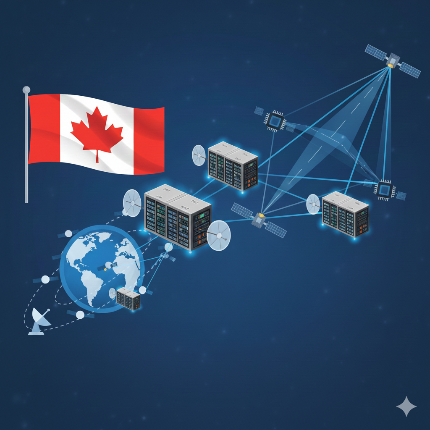
A Toronto-based startup, Kepler Communications, is taking satellite technology far beyond traditional internet relays. Instead of simply moving data from Earth to space and back, Kepler is architecting a future where data is processed directly in orbit. In January 2026, the company reached a historic milestone that transitions this vision from theory into an operational reality. By building the foundation for space-based data centers, Kepler is reshaping how satellites, governments, and global enterprises utilize the orbital environment.
The Core Problem: The “Downlink Bottleneck”
Modern satellites are more capable than ever, equipped with high-resolution sensors and hyperspectral cameras that generate terabytes of raw data. However, a significant problem persists: latency and congestion. Traditionally, a satellite must wait until it passes over a specific ground station to “dump” its data. This creates a massive delay—sometimes hours—between the moment data is captured and the moment it is analyzed.
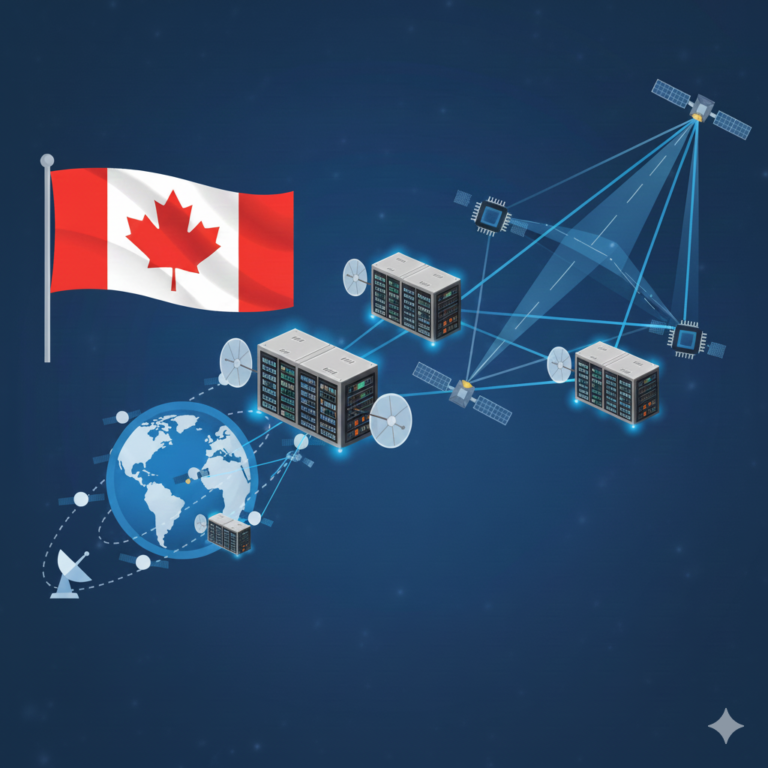
For critical applications like defense, wildfire monitoring, or autonomous mission operations, these delays are unacceptable. Kepler tackles this problem head-on by moving the “brain” of the operation into space. Their network allows spacecraft to process, route, and analyze data in-orbit using optical (laser) links, effectively bypassing the terrestrial bottleneck and delivering finished insights directly to the user.
The Historic “Twilight Mission” of 2026
On January 11, 2026, Kepler made history with the successful launch of its first operational tranche of optical relay satellites. Dubbed the “Twilight Mission,” a SpaceX Falcon 9 rocket carried ten of Kepler’s next-generation 300-kg satellites into Low Earth Orbit (LEO) from Vandenberg Space Force Base in California.
This wasn’t just a routine deployment; it was the world’s first commercially operational optical relay network. These satellites are significantly larger and more capable than Kepler’s earlier 12-kg pathfinders, reflecting a massive shift in technical ambition. Key specifications of the Tranche 1 satellites include:
SDA-Compatible Optical Terminals: Each satellite features a minimum of four terminals enabling high-speed laser communication interoperable with U.S. Space Development Agency standards.
On-Orbit Edge Computing: Each satellite features multi-GPU and CPU compute modules with terabytes of secure storage, allowing for AI-driven processing in the vacuum of space.
100-Gigabit Potential: While initial links are operational at gigabit speeds, future tranches are designed to scale to 100-Gbps, ensuring the network can handle the massive data demands of the late 2020s.
Why Space-Based Data Centers Matter
The shift from “bent-pipe” relays to orbital data centers matters because modern applications demand real-time decision-making. We are moving toward a “plug-and-play” space economy where a customer can host their software directly on Kepler’s hardware.
By moving compute power into orbit, Kepler enables:
Ultra-Low Latency: Data moves at the speed of light via lasers rather than radio waves, providing near-instantaneous connectivity across the globe and sub-second end-to-end latency.
Reduced Bandwidth Costs: By processing raw data in space—for example, filtering out clouds from Earth observation images—and only sending the “results” back to Earth, companies save millions in downlink fees.
Secure, Resilient Infrastructure: Optical links are virtually impossible to jam or intercept compared to traditional RF signals. This creates a “sovereign” data layer for defense agencies, a fact validated by Kepler’s recent multi-year contract with Defence Research and Development Canada (DRDC) for Arctic defense.
Human Spaceflight Support: Kepler’s collaboration with Axiom Space is using these orbital nodes to support the next generation of commercial space stations. In early 2026, Axiom deployed two orbital data center nodes as part of Kepler’s network, ensuring astronauts have the same “cloud” access we enjoy on Earth.
The SpaceX Partnership: A Strategic Alignment
Kepler’s ambitious vision is made economically viable through its deep integration with the SpaceX ecosystem. While Kepler focuses on the “intelligence” of the network, they rely on SpaceX for the “transportation.”
The January 2026 launch via the Falcon 9 demonstrates the reliability of the SpaceX rideshare program. By utilizing frequent, low-cost launches, Kepler can scale its constellation in phases rather than waiting years for a dedicated heavy-lift mission. Furthermore, the partnership is a symbiotic one in the broader “New Space” narrative; as SpaceX pushes toward the Moon with its Starship missions, Kepler is positioned to be the primary data architect for deep-space missions, potentially extending the “Earth-Cloud” to the lunar surface.
How Kepler Funds Big Ideas With Smart Strategy
Space infrastructure is notoriously capital-intensive, yet Kepler has managed to raise over US$300 million in funding to date, including a major Series C led by IA Ventures. Their strategy is designed to balance long-term moonshots with immediate revenue:
Modular Scaling: They don’t launch “perfect” billion-dollar platforms. They launch tranches of satellites that can be upgraded every few years, ensuring they always lead in technology while complying with FCC rules regarding satellite de-orbiting.
Vertical Integration: Kepler maintains a 30,000-square-foot production facility in the heart of downtown Toronto. This allows them to manufacture, test, and operate their satellites on-site, drastically reducing the cost and time of the development cycle.
Public-Private Partnerships: Beyond commercial deals, Kepler is a trusted partner for the Canadian Space Agency (CSA). In late 2025, they were awarded a contract to develop a concept study for Canada’s next-generation Earth observation system.
The Competitive Landscape: A Race for Orbital Dominance
As we move further into 2026, the race to build the “cloud in orbit” has intensified, placing Kepler in direct competition with global aerospace titans. While SpaceX’s Starlink remains the leader in consumer-facing satellite internet, Kepler has carved out a distinct high-margin niche by focusing on the inter-satellite relay market. This strategy is critical because as more companies launch small satellites (SmallSats) for weather tracking and intelligence, the physical airwaves on Earth (Radio Frequencies) are becoming dangerously overcrowded. By utilizing laser-based optical links, Kepler effectively moves its data highway into an unlicensed, interference-free spectrum. This technological edge has forced giants like Amazon, with its Project Kuiper, and established defense contractors like Lockheed Martin to accelerate their own optical programs. However, Kepler’s “first-mover” advantage—validated by its January 2026 launch—gives it a head start in setting the industry standards for how space-based data is routed and secured.
The 2026-2030 Roadmap: Beyond Low Earth Orbit
Looking past the success of the current “Twilight” mission, Kepler’s roadmap points toward a multi-tranche expansion that will redefine the scale of the space economy. By the end of 2026, Kepler plans to begin the rollout of Tranche 2, which will introduce 100-gigabit optical technology, providing a tenfold increase in network capacity. This expansion is designed to achieve over 95% continuous coverage of Low Earth Orbit, meaning a satellite will never be out of reach of a high-speed data node. Looking further toward 2030, the company’s vision extends into Medium Earth Orbit (MEO) and Geostationary Orbit (GEO), creating a multi-layered web of connectivity that could eventually serve as the primary communications link for the Lunar Gateway and future Mars missions. By establishing this infrastructure today, Kepler isn’t just launching satellites; it is laying the “transcontinental railroad” for the future spacefaring civilization, ensuring that wherever humanity goes, our data and our “cloud” follow.
The Bigger Goal: The Cloud Backbone of Space
Ultimately, Kepler Communications aims to become the neutral, high-speed data layer of the solar system. They aren’t just a satellite company; they are a space-based utility. If the 20th century was about getting to space, and the first quarter of the 21st century was about observing space, Kepler is building the internet and computing fabric that makes living and working in space possible.
The 2026 “Twilight” mission serves as a signal to the global market: the era of the space-based data center has officially arrived. For Toronto, Kepler stands as a beacon of high-tech manufacturing, proving that a Canadian startup can compete with—and in some cases, beat—giants like Amazon’s Project Kuiper and Starlink in the race for optical orbital computing. 🚀