
US Takeover of Iranian Oil Reserves: Global Shock & Energy Chaos
The US Takeover of Iranian Oil has ignited intense debate across global financial markets, sending shockwaves through energy and investment sectors . Iran possesses some of the largest oil reserves in the world, and any attempt by a foreign power to seize or control those resources would create far-reaching consequences. From oil price shocks to geopolitical instability, the repercussions would affect nearly every region of the world.
This scenario is not simply about energy resources. Instead, it would represent a dramatic shift in global power dynamics, international law, and the stability of the Middle East.
Iran’s Strategic Importance in the Global Oil Market
Iran holds the world’s fourth-largest proven oil reserves and plays a crucial role in the global energy supply chain. The country produces millions of barrels of crude oil per day and sits near the Strait of Hormuz, one of the most important oil transit routes on the planet.
Approximately 20% of global oil shipments pass through this narrow waterway. Because of this geographic advantage, Iran has the ability to influence global oil flows significantly.
The US Takeover of Iranian Oil would immediately shock global markets, forcing traders, governments, and energy companies to scramble and adjust strategies overnight.
Immediate Shock to Global Oil Prices
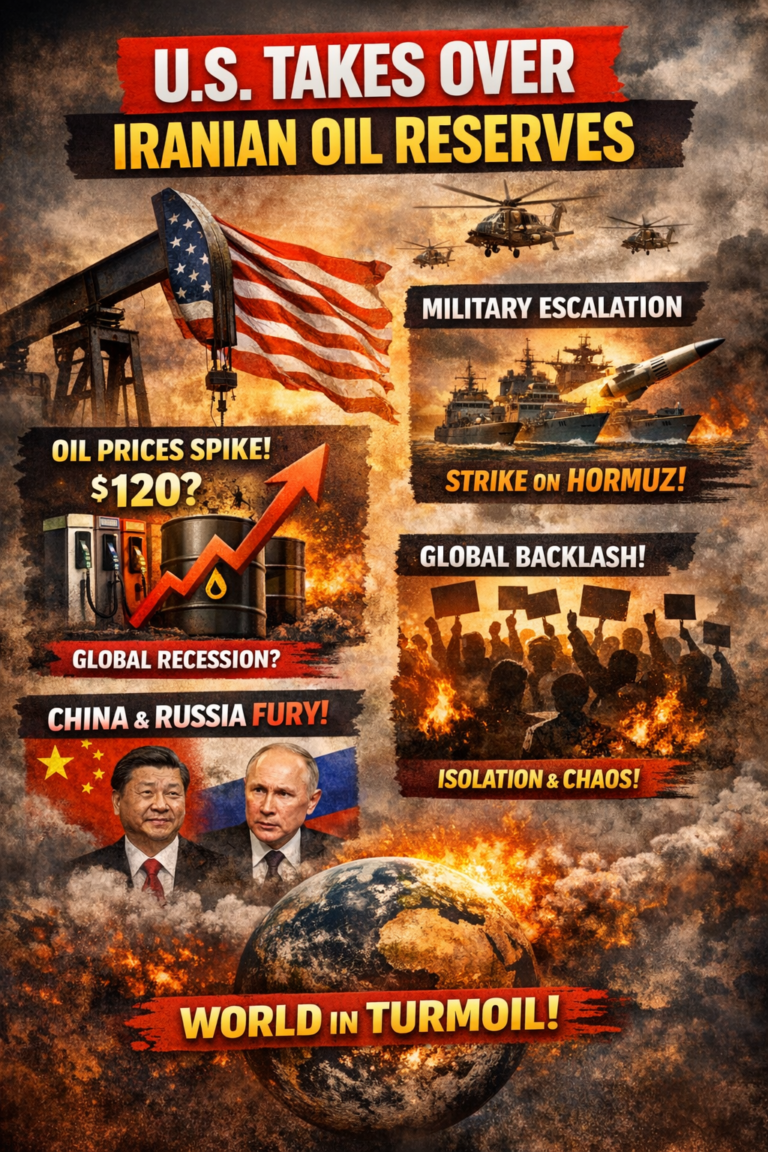
One of the first impacts of the US Takeover of Iranian Oil would be a sharp surge in global oil prices. Markets react instantly to geopolitical instability, and any disruption in Iran’s oil infrastructure would trigger panic. Even if production continued, uncertainty alone would push prices higher, raising fuel, transportation, and manufacturing costs worldwide. Economies dependent on imported oil—especially in Asia and Europe—would face the brunt of these sudden price spikes.
Global Financial Market Volatility
Financial markets would likely experience significant turbulence. Investors tend to move quickly when geopolitical risks rise, and a takeover scenario would generate extreme uncertainty.
Stock markets could experience sharp declines as investors shift money into safer assets such as gold, government bonds, and energy stocks. Energy companies might benefit from higher oil prices, but broader markets could suffer due to rising economic risks.
Emerging markets would be particularly sensitive to this type of crisis. Many developing economies depend heavily on energy imports, and rising oil prices could strain their financial systems.
Currency markets would also react. Oil-importing countries might see their currencies weaken while energy exporters could benefit from stronger demand for their resources.
Escalation of Military Conflict
A direct takeover of Iranian oil reserves would almost certainly be viewed by Iran as an act of war. Such a move could lead to rapid military escalation in the region.
Iran has a variety of strategic responses available, including targeting oil infrastructure, disrupting shipping routes, or mobilizing regional allies. One of the most significant threats would involve the Strait of Hormuz.
If the strait were blocked or disrupted, a substantial portion of the world’s oil supply would be affected. This would intensify the global energy crisis and further drive up prices.
Additionally, U.S. military bases across the Middle East could face increased security threats. The region could experience prolonged instability, drawing other global powers into the conflict.
Diplomatic Fallout and International Law Concerns
A takeover of another country’s natural resources raises serious questions about international law and global norms. Most nations strongly support the principle of sovereignty, which protects a country’s control over its natural resources.
Many governments would likely condemn such a move, creating diplomatic tensions between the United States and its allies or trading partners. Even countries that maintain strong relationships with the U.S. might express concern about the precedent it sets.
International organizations could become involved, and legal challenges might emerge in global courts. These disputes could last for years and complicate diplomatic relations.
In addition, countries might accelerate efforts to reduce their dependence on any single global power controlling critical energy resources.
China and Russia Alarmed
China imports up to 90% of Iran’s oil exports, making Iranian crude critical for its industrial economy. A U.S. takeover would threaten Beijing’s energy security, forcing it to rely more on Russia and other suppliers.
Russia sees the move as a Western power play in the Middle East but could profit from rising oil prices. Both nations are likely to strengthen ties with Iran, potentially reshaping global energy alliances.
Impact on Energy Security and Global Supply Chains
The modern global economy relies heavily on stable energy supplies. Any disruption in oil production or transportation can quickly ripple across supply chains.
Shipping companies, airlines, and logistics firms would face higher costs. Manufacturing sectors could see rising input prices, which might slow economic growth.
Governments might begin releasing strategic petroleum reserves to stabilize markets temporarily. However, these reserves are designed for short-term emergencies and cannot replace long-term supply disruptions.
The crisis could also accelerate investment in alternative energy sources as countries seek to reduce reliance on politically unstable regions.
Political Reactions Inside the United States
Such a dramatic move would not only affect international politics but also create debate within the United States. Political leaders, policymakers, and the public would likely debate the economic and military risks involved.
Questions would arise about the long-term strategy behind controlling foreign oil resources and the potential costs associated with maintaining security in the region.
Economic impacts, such as rising gasoline prices or increased defense spending, could also influence domestic political discussions.
Long-Term Global Strategic Shifts
Beyond the immediate crisis, the long-term implications could reshape global geopolitics. Countries may begin forming new alliances to protect their energy interests and reduce vulnerability to geopolitical conflicts.
Energy markets could gradually shift toward diversification, with greater investment in renewable energy, nuclear power, and regional energy partnerships.
Major powers such as China and Russia might also play larger roles in global energy politics, particularly if tensions escalate between Western nations and Middle Eastern producers.
Over time, these shifts could transform the global energy landscape and redefine the balance of power in international relations.
Final Take
The scenario of the United States taking control of Iranian oil reserves would represent one of the most significant geopolitical developments in modern history. The consequences would extend far beyond the Middle East, affecting global energy markets, financial systems, and diplomatic relationships.
Oil prices would likely surge, financial markets could experience severe volatility, and military tensions in the region might escalate rapidly. At the same time, the situation would raise complex legal and political questions that could reshape international norms.
Ultimately, the global economy depends on stability in energy supply. Any disruption involving a major oil-producing nation such as Iran has the potential to create widespread economic and geopolitical consequences that last for years.