
Statiq: Powering the Next Wave of EV Charging in India
Introduction: Accelerating EV Adoption
India’s electric vehicle (EV) market has been growing rapidly, driven by rising environmental awareness, supportive government policies, and increasing consumer interest. Within this evolving ecosystem, Statiq has emerged as a leading player in EV charging infrastructure. The startup provides end-to-end charging solutions that cater to both urban commuters and commercial fleet operators. By integrating hardware, software, and smart network management, Statiq ensures that EV drivers across Tier I and Tier II cities experience reliable, efficient, and accessible charging options.
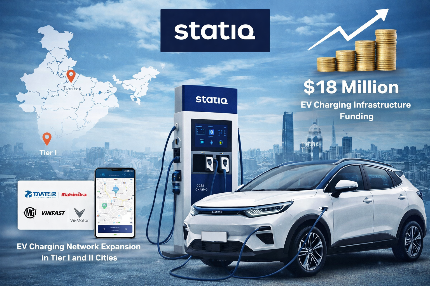
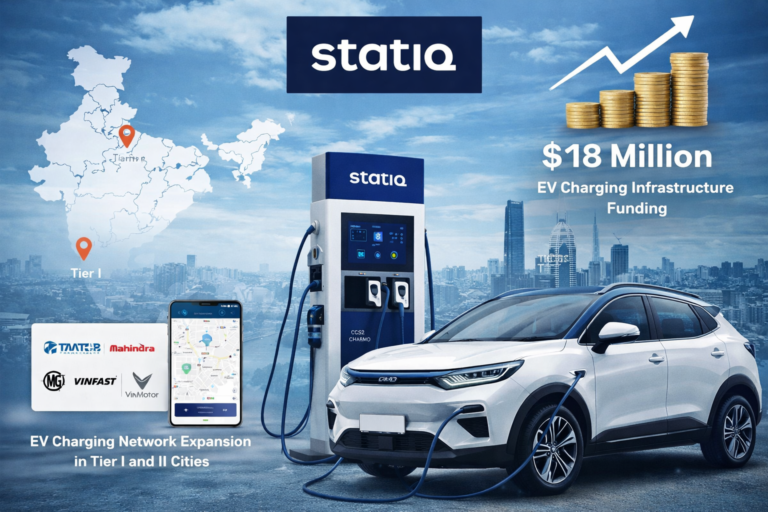
In mid-March 2026, Statiq successfully raised $18 million from a combination of venture and strategic investors, including Tenacity Ventures, Y Combinator, and Shell Ventures. This funding enables the startup to double its charger base by the end of the year, expand into new cities, and enhance the technology behind its charging stations. This development underscores the company’s role in driving India’s EV revolution.
Hardware Capabilities: AC and DC Charging Solutions
Statiq’s technical edge stems from its comprehensive hardware portfolio, which spans AC and high-power DC fast chargers. AC chargers, ranging from 3.3 kW to 22 kW, cater to residential complexes, office spaces, and commercial establishments. These units draw electricity from the grid and rely on onboard vehicle systems to convert AC to DC for battery charging.
In contrast, DC fast chargers supply high-voltage DC directly to the battery, significantly reducing charging times. This capability is crucial for highway corridors and public stations, where efficiency and speed are key to adoption. Statiq’s chargers also support multiple standards, including CCS2, CHAdeMO, and Type-2 connectors, ensuring compatibility with a diverse range of vehicles. By addressing both everyday and long-distance charging needs, Statiq builds a versatile network capable of serving India’s growing EV population.
Software and Network Intelligence
Statiq leverages cloud-connected software to monitor, manage, and optimize its charging network. Real-time telemetry captures critical metrics such as power delivery, temperature, and fault codes. Operators can quickly identify issues, schedule maintenance, and ensure uptime across stations. This predictive approach reduces downtime and increases reliability.
On the consumer side, the Statiq mobile app provides live availability data, enables seamless session initiation, and supports digital payments. Users can locate nearby chargers, monitor charging progress, and plan trips more efficiently. Additionally, a Charge Station Management System (CSMS) allows partners and fleet operators to optimize station usage, schedule preventive maintenance, and analyze performance metrics. By combining hardware and software, Statiq creates a smart, responsive network that enhances user experience while improving operational efficiency.
Strategic Expansion: Tier I and Tier II Cities
Statiq currently operates one of India’s largest public charging networks, with over 7,000 installed stations across more than 60 cities. Its expansion strategy focuses on Tier I and Tier II cities, where EV adoption is rising due to urbanization, government incentives, and growing consumer awareness.
The latest $18 million funding round supports multiple initiatives:
- Geographic Expansion: Adding chargers in underserved markets to improve accessibility.
- DC Fast Charger Deployment: Establishing high-power stations on highways and major corridors.
- Hardware Upgrades: Replacing older units with more durable and efficient models.
- Enhanced Telematics: Implementing advanced monitoring and predictive maintenance systems.
These initiatives ensure that Statiq can rapidly scale its network while maintaining high service reliability and catering to diverse EV user needs.
Ecosystem Partnerships and Collaboration
Statiq actively collaborates with automakers, fleet operators, and commercial hosts to strengthen its network. Partnerships with OEMs allow integration of chargers in dealerships and fleet depots, ensuring that EVs can charge conveniently. Collaborations with commercial properties, including malls, hotels, and office complexes, increase public access and maximize charger utilization. By aligning infrastructure with vehicle deployment, Statiq ensures strategic growth and enhanced user convenience.
Competitive Landscape
India’s EV charging market includes players such as Charge Zone, ElectricPe, Bolt.Earth, and IPEC. Statiq differentiates itself through its robust software integration, reliable hardware, and strategic urban expansion. By combining technology, operational insight, and strategic partnerships, the company positions itself as a leader in the sector, setting benchmarks for others to follow.
EV Vehicle Brands Driving Charging Demand
The demand for charging infrastructure in India is closely linked to the diversity of EV manufacturers. While BYD has a presence, several other domestic and international brands are shaping the market:
- Tata Motors: India’s market leader with models like Nexon EV, Tiago EV, and Punch EV, contributing to frequent charger usage.
- JSW MG Motor India: Offers premium EVs such as ZS EV, Comet EV, and Windsor EV, appealing to urban consumers.
- Mahindra & Mahindra: Produces SUV-centric EVs like XUV400 and BE6, catering to both urban and suburban markets.
- Hyundai and Kia: Introduce advanced EV models, driving technology adoption and increasing charger utilization.
- VinFast: Emerging international entrant, adding premium EV demand in India’s competitive landscape.
- Tesla, BMW, and Mercedes-Benz: Luxury and premium EVs add pressure on fast-charging infrastructure in metropolitan areas.
This diverse ecosystem necessitates multi-standard charging solutions and drives demand for both slow AC chargers and high-power DC fast chargers, creating significant opportunities for infrastructure providers like Statiq.
Technical Challenges and Opportunities
Deploying a widespread charging network in India presents challenges:
- Grid Constraints: Ensuring stable power delivery across urban and rural areas.
- Charger Reliability: Maintaining uptime under heavy usage conditions.
- Interoperability: Supporting diverse vehicle standards and protocols.
These challenges also offer opportunities for innovation. Advanced predictive maintenance, smart grid integration, and data-driven operational optimization can enhance performance, reduce costs, and attract more EV users.
Future Outlook
As EV adoption accelerates in India, Statiq stands at the forefront of infrastructure development. Its combination of AC and DC charging solutions, cloud-connected software, and strategic partnerships positions the company to meet the diverse demands of India’s growing EV fleet. With the recent $18 million funding, Statiq plans to double its charger base, expand into new markets, and deploy advanced technologies that ensure a reliable and accessible network.
By supporting a wide range of EV models — from mass-market Tata Nexon EVs to premium Tesla and VinFast vehicles — Statiq is shaping the backbone of India’s electric mobility ecosystem. Its technical focus, operational excellence, and strategic growth initiatives make it a key enabler of India’s EV transition.
✅ Key Takeaways:
- Technical Strengths: AC and DC chargers, multi-standard compatibility, cloud-connected network.
- Expansion Strategy: Tier I and Tier II cities, fast-charging corridors, predictive maintenance.
- Ecosystem Role: Partnerships with OEMs, fleet operators, and commercial properties.
- Market Drivers: Diverse EV brands like Tata, Mahindra, MG Motor, Hyundai, and VinFast.
- Investment Potential: $18 million funding enables scaling, upgrades, and technology deployment.