
Qure.ai: Indian Startup Transforming Medical Diagnostics with Artificial Intelligence
The global healthcare sector is experiencing a profound transformation as artificial intelligence increasingly powers medical diagnostics, clinical decision-making, and patient care. Amid this rapid evolution, the Indian startup ecosystem has emerged as a hub for healthcare innovation, producing companies that leverage AI to address critical diagnostic challenges and improve patient outcomes.
Among these trailblazers is Qure.ai, a Mumbai-based healthtech startup that has developed advanced AI tools to interpret medical imaging and assist doctors in diagnosing diseases faster and more accurately. Founded in 2016, Qure.ai has quickly become one of India’s most influential healthcare AI startups, helping hospitals and clinicians streamline diagnosis while tackling the global shortage of radiologists.
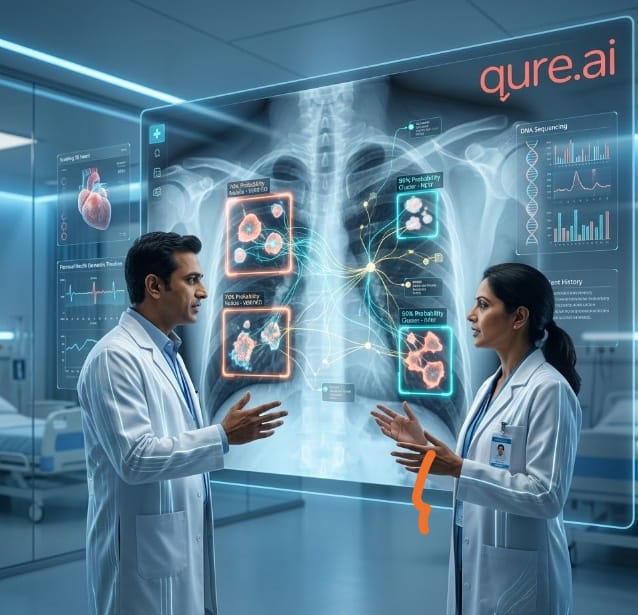
By combining deep learning, radiology expertise, and large datasets of medical scans, the company has created diagnostic platforms capable of detecting critical diseases such as tuberculosis, lung cancer, and stroke within seconds. Today, Qure.ai’s solutions operate in thousands of healthcare facilities worldwide, demonstrating how innovations from the Indian startup ecosystem are shaping the global AI healthcare landscape. With rising demand for rapid diagnostics—from imaging backlogs at Queen’s Medical Center to high-volume lab testing at providers such as LifeLabs and patient management pressures at HealWELL Canada—AI-driven tools are becoming essential for early disease detection and efficient clinical workflows.
The Founders’ Vision
Qure.ai was founded by Prashant Warier and Pooja Rao, who recognized an opportunity to apply machine learning to one of healthcare’s most data-rich areas: radiology. Medical imaging generates massive volumes of data through X-rays, CT scans, and ultrasounds, yet interpreting these scans often requires highly trained specialists—who remain in short supply, particularly in developing countries.
The founders believed AI could assist doctors by rapidly analyzing medical scans and identifying abnormalities that might otherwise take hours to detect. Importantly, their goal was not to replace radiologists but to support them—by prioritizing urgent cases, improving diagnostic accuracy, and reducing delays in treatment.
Initially incubated within Fractal Analytics, Qure.ai developed deep learning models trained on millions of radiology scans. Over time, these models evolved into commercially deployable products that hospitals could seamlessly integrate into diagnostic workflows.
AI-Powered Medical Imaging
At the heart of Qure.ai’s technology lies deep learning algorithms that interpret complex medical images. Trained on vast datasets of annotated scans, these AI models can detect subtle patterns associated with diseases.
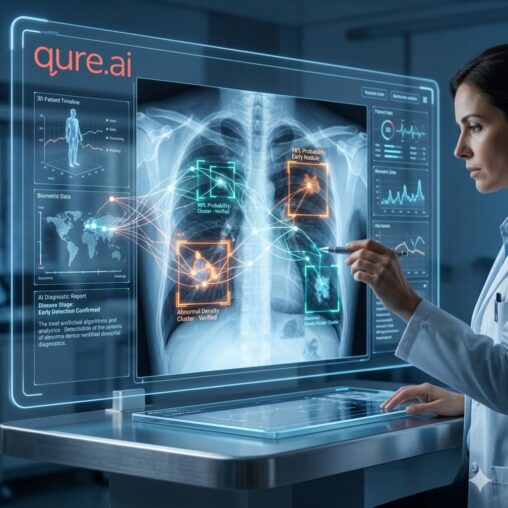
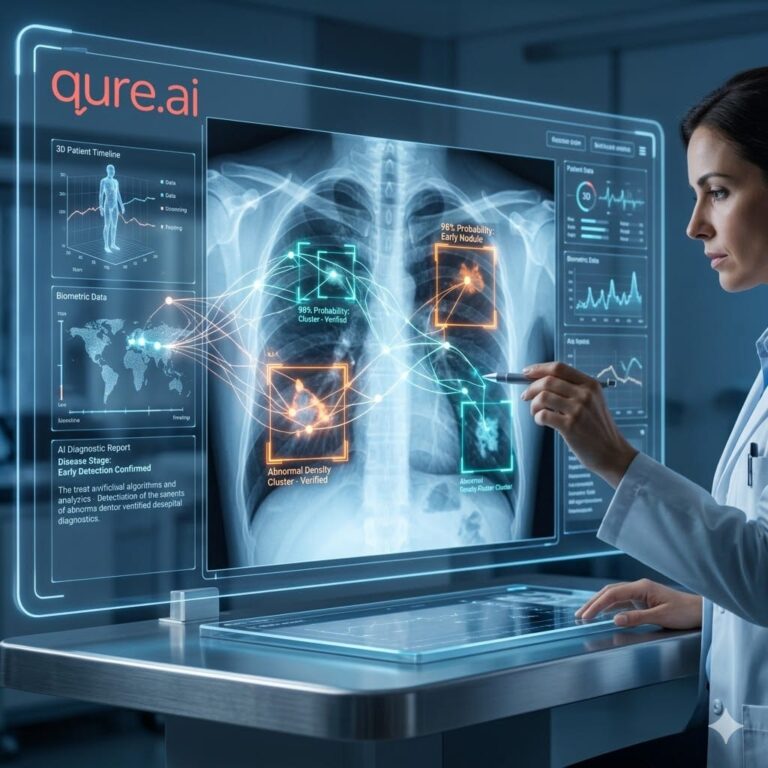
One flagship product, qXR, analyzes chest X-rays to identify tuberculosis, pneumonia, lung nodules, and other abnormalities. The system automatically generates reports and flags suspicious findings, helping physicians quickly identify patients who require further investigation or treatment.
Another key solution, qER, focuses on emergency radiology. It analyzes head CT scans to detect life-threatening conditions such as brain hemorrhages and skull fractures. By prioritizing these scans for immediate review, qER enables doctors to intervene quickly, saving precious time in critical cases.
These AI solutions significantly reduce the time required for diagnosis. Instead of waiting hours for manual analysis, clinicians can obtain insights within seconds, making healthcare faster, safer, and more precise.
Global Expansion and Impact
Although Qure.ai started in India, it quickly expanded internationally. Today, its AI solutions operate in more than 90 countries and over 3,000 medical imaging sites, demonstrating the global appetite for AI-powered diagnostics.
The technology is especially valuable in regions with limited access to radiologists, including parts of Africa, Asia, and Latin America. In these areas, AI assists general physicians or technicians in interpreting scans, effectively bridging the diagnostic gap.
Qure.ai also collaborates with major healthcare organizations and pharmaceutical companies such as AstraZeneca, Medtronic, and Johnson & Johnson, working to accelerate early disease detection and improve patient outcomes. The company’s solutions are estimated to support the diagnosis of approximately 15 million patients annually, highlighting the scale at which AI is already transforming healthcare systems worldwide.
Funding and Growth
Qure.ai has raised significant venture capital to fuel research, product development, and global expansion. The company secured $16 million in initial funding from investors including Sequoia India and MassMutual Ventures, enabling it to expand its product portfolio and obtain regulatory approvals.
Subsequent rounds included a $40 million investment to strengthen its presence in the U.S. and Europe, followed by a $65 million Series D round led by Lightspeed Venture Partners. This funding supports the development of generative AI models, international expansion, and strategic acquisitions.
To date, Qure.ai has raised over $125 million in total funding and continues to grow rapidly, with annual revenue increasing by 60–70%.
Regulatory Approvals and Credibility
Qure.ai’s solutions have earned regulatory approvals from major authorities worldwide. Several AI products have received FDA clearance in the United States and CE certification in Europe, demonstrating their safety and clinical reliability.
Additionally, Qure.ai’s tuberculosis screening tool has been endorsed by the World Health Organization (WHO) for TB triage programs, cementing the startup’s credibility and highlighting its potential to tackle global health challenges.
Growing Demand for Medical Imaging and Diagnostics
Recent developments illustrate why AI tools like Qure.ai’s are becoming indispensable. Hospitals face surging demand for diagnostic scans—X-rays, CT scans, and MRIs—while shortages of radiologists have created large backlogs. Reports from Queen’s Medical Center revealed thousands of scans awaiting interpretation, sparking discussions about pressures on radiology departments.
Similarly, laboratory testing services, such as LifeLabs, are under immense pressure, highlighting the broader diagnostic bottleneck. Canadian healthcare providers like HealWELL also manage high volumes of patient diagnostics, prompting exploration of AI solutions to increase efficiency and reduce delays.
These examples demonstrate a global reality: healthcare systems generate more patient data than clinicians can efficiently process. AI-driven platforms like Qure.ai bridge this gap. By analyzing medical scans in seconds, these solutions prioritize urgent cases, flag abnormalities, and allow clinicians to make faster, more informed decisions.
The Future Role of AI in Healthcare
Artificial intelligence is rapidly becoming a cornerstone of modern healthcare. Hospitals face increasing pressures due to growing patient populations, limited staff, and rising diagnostic workloads. AI-powered solutions help automate routine analysis and spotlight urgent cases for human review.
Looking ahead, AI is expected to expand its role in drug discovery, predictive diagnostics, robotic surgery, and personalized treatment planning. Qure.ai positions itself at the forefront of this transformation, exploring advanced models—including generative AI—to further improve diagnostic accuracy and workflow efficiency.
Final Take
Qure.ai represents a new generation of Indian deep-tech startups harnessing AI to solve global healthcare challenges. By combining deep learning, medical expertise, and massive datasets of radiology scans, the startup has created powerful diagnostic tools that enable earlier detection and treatment of diseases. With mounting pressures on imaging centers like Queen’s Medical Center, laboratories like LifeLabs, and Canadian providers such as HealWELL, AI solutions from startups like Qure.ai are helping healthcare systems work faster, smarter, and more effectively—shaping the future of medicine worldwide.