
Drones and the Future: Transforming Tech, Warfare, and Investment
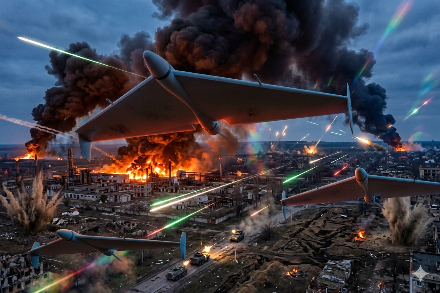
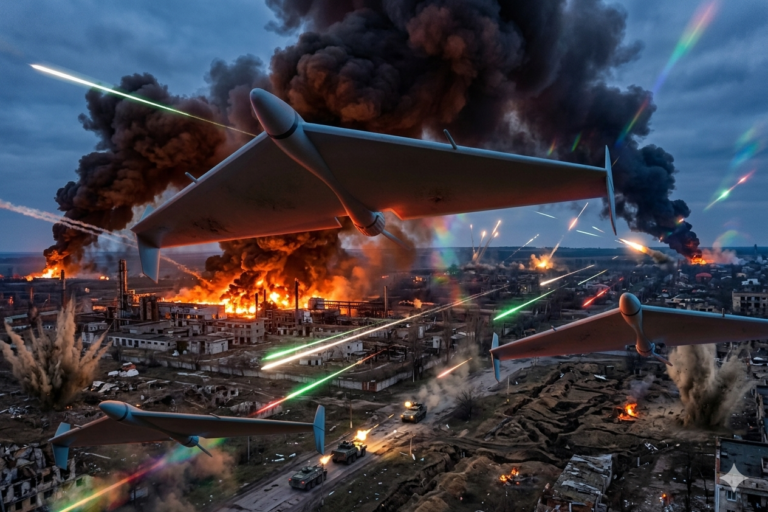
In the ongoing U.S.–Iran conflict, drones and the future of warfare are being tested as unmanned systems give militaries a hard time and challenge the dominance of traditional fighter jets. Waves of UAVs have saturated the skies, forcing defenders to deploy expensive interceptors and manned aircraft in new ways. Some of these drones — including Iran’s Shaheds — even function as flying weapons capable of carrying explosives or acting as loitering munitions, blurring the line between drones and missiles in modern combat.
This shift in aerial strategy highlights a broader technological transformation. Drones have evolved well beyond simple reconnaissance tools or affordable gadgets. Today, they are integral to industries ranging from logistics and agriculture to defense and urban mobility. As artificial intelligence (AI), autonomy, and networked communication systems improve, drones are poised to reshape how we live, work, and defend nations.
The Rising Role of Drones in Modern Warfare
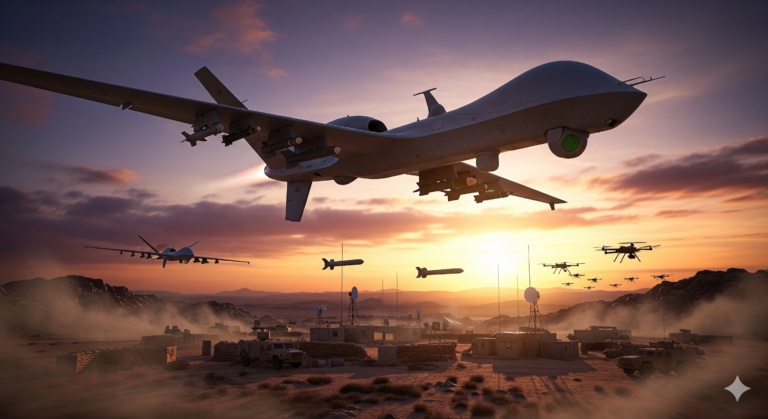
Military drones and the future of combat are now central to operations in ways once unthinkable. The American Reaper drone exemplifies this evolution. Built for long-endurance missions, the Reaper can fly over 20 hours, carry advanced sensors, and deploy precision weapons like missiles and laser-guided bombs. Its endurance and firepower make it invaluable for continuous surveillance and strategic strikes without putting pilots at risk.
Meanwhile, Iran’s Shahed drones illustrate a different approach to aerial warfare. These systems — including the Shahed-136 loitering munition and larger strike UAVs — are produced affordably and in large numbers. Some Shahed models function like cheap cruise missiles, preprogrammed to impact targets with explosives, forcing opposing forces to expend expensive interceptors to stop them.
The combination of high-end drones like the Reaper and low-cost platforms like the Shahed demonstrates how unmanned warfare is shifting — from high-cost, low-volume deployments to a mix of precision strikes and attrition strategies. Defenders must now prepare for a wide range of threats, from advanced armed UAVs to swarms of inexpensive attack drones.
Turkish Drones: A Growing UAV Power
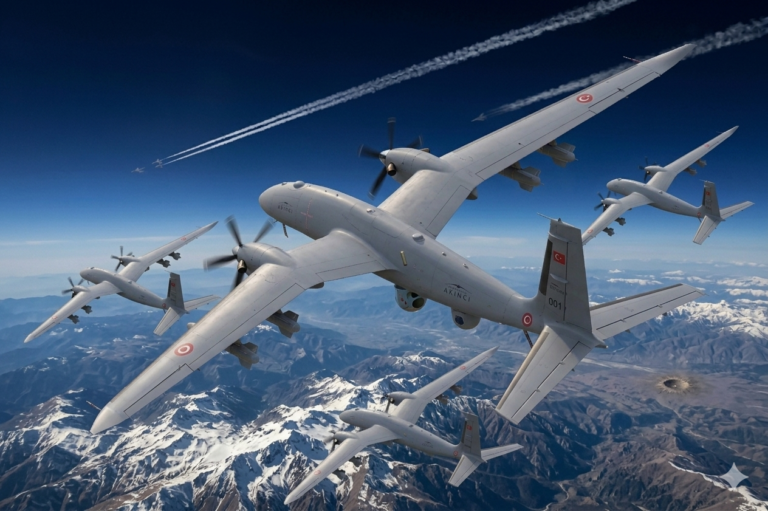
Turkey has emerged as one of the world’s leading producers in drones and the future of unmanned technology, particularly through the Baykar Bayraktar TB2 and Bayraktar Akıncı. These drones combine long endurance with combat and surveillance capabilities and have been widely exported.
The Bayraktar TB2 has seen extensive action in conflicts such as the Libya war, supporting allied forces in real-world combat scenarios. The Akıncı, a higher-end UCAV, features sophisticated sensors, long-range strike capabilities, and the potential to carry heavier smart munitions. These developments highlight how drone technology has matured beyond reconnaissance, becoming a key factor in strategic defense operations.
Turkey’s success illustrates how nations outside traditional aerospace powers are now leading in UAV innovation, inspiring other countries to invest in unmanned technologies for both defense and civilian applications.
From the Battlefield to Logistics and Delivery
While military uses grab headlines, civilian industries are transforming because of drones as well. In logistics, companies are experimenting with autonomous delivery networks where drones ferry packages, meals, or medicines directly to consumers. Unlike trucks, drones can avoid traffic and deliver essentials to remote regions efficiently — especially vital during emergencies like natural disasters or medical crises.
Improved connectivity — including 5G and satellite communications — paired with AI-assisted navigation is enabling drones to operate autonomously in complex urban skies. These networks promise to reduce road congestion, cut emissions, and create more resilient delivery infrastructure.
Agriculture: Smarter Farming from Above
Drones are revolutionizing agriculture. Equipped with multispectral and thermal sensors, they monitor crop health, soil moisture, and pest infestations at scale. Farmers can then apply resources like water and fertilizers only where needed, increasing yields while minimizing waste and environmental impact.
In the future, fleets of autonomous drones could continuously monitor large farms, sending real-time insights to operators and optimizing agricultural decisions without constant human intervention.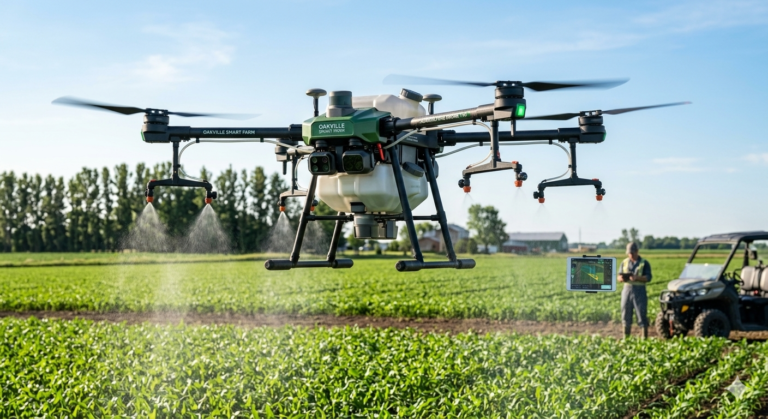
Environmental Monitoring and Conservation
Environmental applications of drones are equally transformative. From tracking deforestation and glacier retreat to surveying wildlife and assessing post-disaster damage, drones provide high-resolution data that satellites alone cannot capture. AI enables these systems to detect ecological changes and alert scientists or policymakers promptly — enhancing conservation efforts and disaster response planning.
Urban Mobility and Passenger Drones
Looking ahead, drones may redefine urban transportation. Passenger drones, or air taxis, could fly commuters across congested cities, offering faster, cleaner transit than ground vehicles.
These vehicles will rely on AI to navigate dynamically changing airspaces, communicating with integrated traffic systems to maintain safety. As infrastructure for these services develops — including designated air corridors and robust regulatory frameworks — cities may see a new dimension of urban mobility unfold above ground.
Security, Emergency Response, and Ethical Challenges
Drones enhance public safety and emergency response. In search and rescue missions, UAVs can quickly survey disaster zones, locate missing persons, or deliver urgent supplies. Law enforcement uses drones for aerial monitoring and crowd assessment without risking officers’ lives.
However, widespread drone adoption raises ethical, regulatory, and privacy concerns. Military drones carrying missiles prompt questions about rules of engagement and accountability. Civilian drones with cameras must be balanced with individuals’ rights to privacy. Building responsible governance frameworks will be as important as the technology itself.
Investing in Drone Technology: Hot Stocks and Trends for Investors
As drone technology becomes essential across defense, logistics, agriculture, and commercial sectors, it’s attracting serious investor interest. The global drone market is projected to grow significantly over the next decade, making publicly traded companies in this space attractive long-term opportunities. Investors can gain exposure through individual stocks or broader ETFs focused on drone technology.
Notable Drone Stocks
- AeroVironment (AVAV): Specializes in small tactical UAVs and loitering munitions. Its defense contracts provide stable revenue and long-term growth potential.
- Kratos Defense & Security Solutions (KTOS): Focuses on high-performance military and autonomous drones, including jet-powered tactical UAVs and support systems.
- Ondas Holdings (ONDS): Develops communication infrastructure that enables drones to operate safely and efficiently over long distances.
- Red Cat Holdings (RCAT): Offers autonomous aerial systems and counter-drone technology for military and commercial applications.
- Boeing (BA) and Northrop Grumman (NOC): Aerospace giants integrating drone technology with broader defense solutions, providing a more diversified investment approach.
- Draganfly Inc. (DPRO): Focuses on AI-enabled civilian and defense drones compliant with regulatory standards.
Why Drone Stocks Are Worth Watching
- Defense demand is rising with countries investing in autonomous UAVs for surveillance, tactical strikes, and strategic operations.
- Commercial applications in logistics, agriculture, and infrastructure inspection are creating new revenue streams.
- AI and autonomy are enhancing drone capabilities, driving adoption across markets.
- Market growth projections indicate significant expansion in the next decade.
The Sky Is Only the Beginning
From armed military platforms like the Reaper and Shahed to Turkish Bayraktar drones and civilian delivery networks, drones are no longer niche technology. They shape how nations wage war, manage supply chains, monitor the planet, and imagine future cities in flight.
Powered by AI, autonomy, and connectivity, drones will continue to evolve, creating opportunities for defense, commercial innovation, and investment. The sky is not the limit — it’s the opening chapter of a new era in innovation, capability, and growth.